

In the fast-paced world of mobile technology, we are constantly seeking ways to make our lives more streamlined and efficient. One of the most significant shifts in recent years is the transition from physical SIM cards to eSIM technology. But what exactly is an eSIM, and why is everyone talking about it? In this guide, we’ll dive deep into everything you need to know about this digital revolution.

1. Understanding eSIM: What Is It Exactly?
The term eSIM stands for embedded SIM. Unlike the traditional plastic SIM cards that you’ve been sliding into your phone for decades, an eSIM is a small chip built directly into your device’s motherboard during the manufacturing process.
Think of it as a “virtual SIM.” It performs the exact same function as a physical SIM—identifying you to your carrier so you can make calls, send texts, and use data—but it is completely digital. It measures approximately $5 \times 5 \text{ mm}$, making it much smaller than even a Nano-SIM.
2. The Key Benefits of Switching to eSIM
Why are giants like Apple, Samsung, and Google pushing for an eSIM-only future? The advantages go far beyond just “not losing a tiny piece of plastic.”
Ultimate Convenience
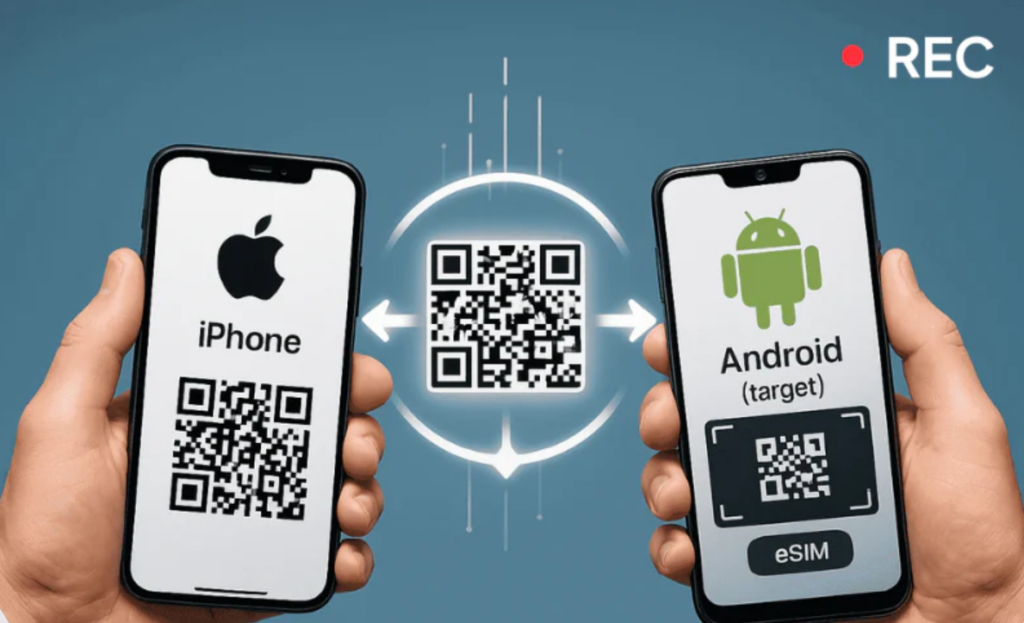
The biggest draw of an eSIM is the ability to change carriers or data plans instantly. You no longer need to wait for a SIM card to arrive in the mail or visit a retail store. You can activate a new plan simply by scanning a QR code or using a carrier’s app.
Travel-Friendly Solutions
For frequent travelers, eSIM technology is a game-changer. Instead of paying exorbitant roaming fees or hunting for a local SIM card at an airport kiosk, you can download a local data plan before you even land. This allows you to stay connected the moment you touch down.
Dual SIM Capabilities
Most modern smartphones now support “Dual SIM” functionality through a combination of one physical SIM slot and one eSIM. This is perfect for users who want to keep their work and personal numbers on a single device, or for those who want a separate data-only plan for travel.
Enhanced Security
Physical SIM cards can be stolen and used in other devices to bypass two-factor authentication (2FA) for bank accounts. An eSIM cannot be removed. If your phone is stolen, the thief cannot take the SIM out to stop you from tracking the device, making it a much more secure option.
3. How to Set Up and Activate an eSIM
Setting up an eSIM is incredibly straightforward. While the steps may vary slightly depending on your carrier, the general process is as follows:
- Check Compatibility: Ensure your phone is “Carrier Unlocked” and supports eSIM technology.
- Purchase a Plan: Sign up for an eSIM plan via your carrier’s website or app.
- Scan the QR Code: * On iPhone: Go to Settings > Cellular > Add eSIM.
- On Android: Go to Settings > Network & Internet > SIMs > Add more.
- Confirm Activation: Once scanned, your phone will register with the network, and you’re ready to go!
4. Popular Devices That Support eSIM
As of 2024, most premium devices come equipped with eSIM hardware. Here are the most common ones:
Apple Devices
- iPhone: All models from iPhone XS, XS Max, and XR onwards (including iPhone 13, 14, 15, and 16 series).
- iPad: Pro, Air, and Mini models with Cellular capabilities.
- Apple Watch: All Cellular models since Series 3.
Android Devices
- Samsung Galaxy: S20 through S24 series, Z Fold, and Z Flip models.
- Google Pixel: Pixel 2 and all newer models.
- Others: Many flagship models from Motorola, Sony, and Huawei.
5. eSIM vs. Physical SIM: Which is Better?
| Feature | Physical SIM | eSIM |
| Installation | Manual (requires tool) | Digital (QR code/App) |
| Durability | Can be damaged or lost | Built-in, cannot be lost |
| Switching Carriers | Need a new card | Instant digital switch |
| Device Space | Takes up physical space | Saves space for battery/tech |
| Security | Easy to steal/remove | Harder to tamper with |
6. Frequently Asked Questions (FAQ)
Q: Can I use both an eSIM and a physical SIM at the same time? A: Yes! Most modern phones allow you to use both simultaneously, which is great for managing two different phone numbers.
Q: What happens if I lose my phone? A: Because the eSIM is embedded, a thief cannot remove it to hide the phone’s location. You can contact your carrier to deactivate the eSIM and transfer your number to a new device remotely.
Q: Does an eSIM use more battery? A: No. Research shows that eSIM technology is highly efficient and has no noticeable impact on your device’s battery life compared to a standard SIM.
7. Conclusion: Is It Time to Make the Switch?
The transition to eSIM is no longer a matter of “if” but “when.” With its unparalleled convenience for travelers, enhanced security features, and the ability to manage multiple lines without carrying extra hardware, it is clearly the superior choice for the modern user.
If your current device supports it, switching to an eSIM is one of the easiest ways to upgrade your mobile experience. Say goodbye to the paperclip and the tiny plastic cards—the future of connectivity is digital.


