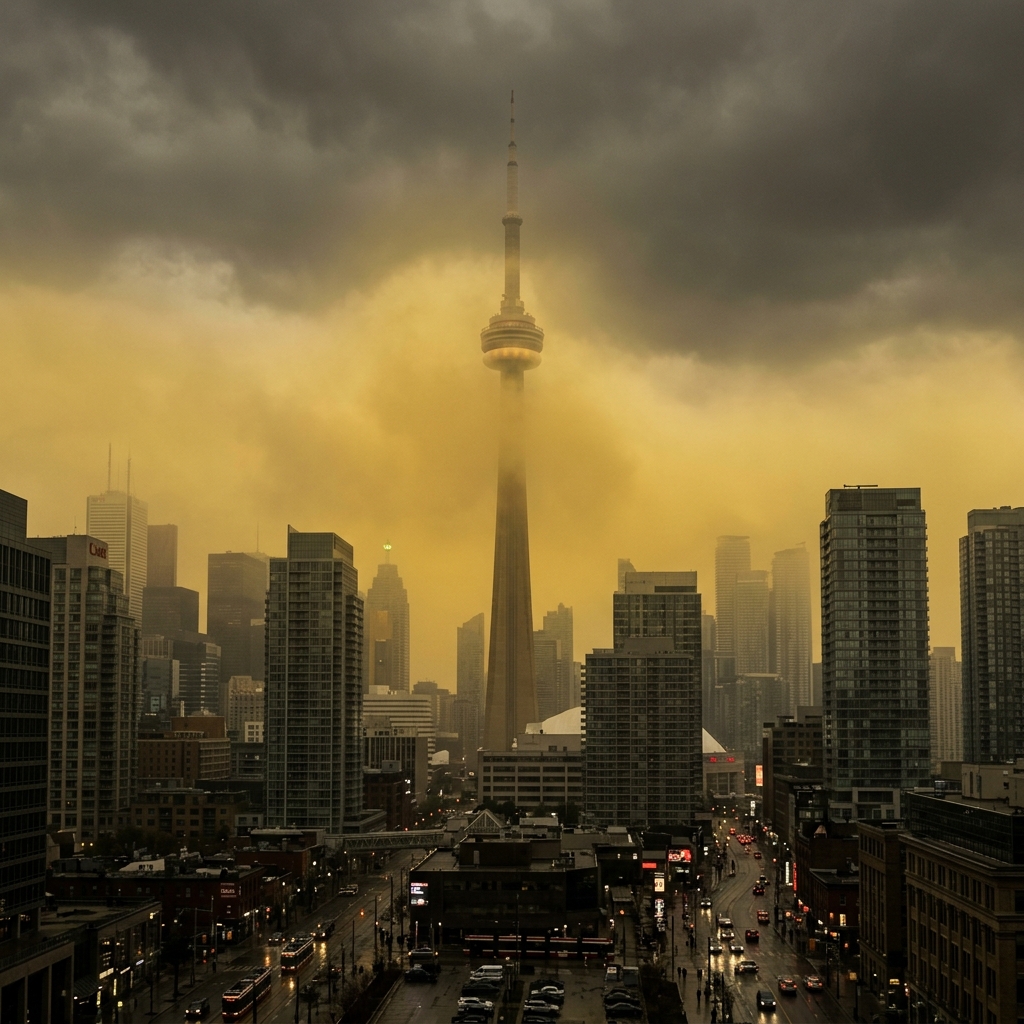
Toronto’s air quality has deteriorated further, ranking as the worst in the world today. AirNow AQI readings have entered the very unhealthy purple zone. Outdoor public events are being canceled.
A Canadian cargo train crew was briefly trapped by encroaching flames in Northern Ontario before being rescued. Authorities have expanded forest exclusions and halted commercial rail freight across regional lines.
Environment Canada has issued a Special Air Quality Statement for the Greater Toronto Area (GTA) as heavy smoke from Northern Ontario forest fires has settled over the city. Hourly PM2.5 concentrations are peaking, making outdoor physical activities hazardous. Tourists are urged to remain indoors and check flight status at Toronto Pearson (YYZ).
A surge in wildfire activity in Northern Ontario has sent thick smoke plumes southward, triggering severe air quality alerts in Toronto and surrounding cities. International travelers visiting Ontario should limit outdoor exercise and monitor real-time air quality forecasts.
Last reviewed/updated: July 2026 | Based on reports from Environment Canada and regional travel advisories.
Key Takeaways
- Air Quality Alert: PM2.5 concentrations in Toronto have reached levels classified as hazardous.
- Health Warnings: Wear protective masks in open outdoor areas when smog density is high.
- Flight Status: Major hubs like Toronto Pearson (YYZ) are operating but may experience delay backlog during low visibility.
- eSIM Backup: Keep your mobile internet active to trace air index rankings and flight status.
Canadian District Smoke Status
The table below summarizes regional smoke levels and traveler rules as of July 2026:
| Canadian District | Smoke Intensity | Safety Advice for Travelers |
|---|---|---|
| ? Greater Toronto Area (GTA) | Severe Smog | Minimize heavy outdoor physical activities. Keep hotel windows closed. |
| ? Northern Ontario (Active Fire Zone) | Extreme Danger | Strict forest closures active. Evacuation alerts in place for camping sites. |
Staying Safe Amid Wildfire Smoke in Ontario
Forest fires are a seasonal reality in Canada, but changing wind patterns can quickly push smoke over major metropolitan zones. During poor air quality events, travelers should opt for indoor attractions, such as the Royal Ontario Museum or Ripley’s Aquarium, and wear N95/KN95 masks if they must spend extended time outdoors.
Pro-Tip: Keeping Connected for Air Quality Alerts in Canada
Pro-Tip for Travelers: Smog conditions change by the hour. To receive real-time environment alerts and check weather radar on the go, activate a Canada eSIM. It connects to Rogers or Bell for high-speed coverage.
(Note: For details on local administration and travel data, see the page on Toronto on Wikipedia for reference.)
Frequently Asked Questions
Q1: Are tourist spots like Niagara Falls affected by the Ontario smoke?
A1: Niagara Falls may experience light haze depending on wind directions, but air quality remains significantly better there than in urban Toronto.
Q2: Can I get travel insurance compensation if I cancel my trip due to poor air quality?
A2: Standard travel insurance rarely covers voluntary cancellations due to smoke unless an official government evacuation order is issued for your specific destination.
 Canada eSim