Disclosure: This post contains affiliate links. If you click a link and make a purchase, we may receive a small commission at no extra cost to you.
Tested & Verified: In June 2026, I traveled to Georgia. I purchased MetroMoney cards in Tbilisi, rode marshrutka minibuses to Svaneti, observed Orthodox church dress codes, and bathed in the sulfur hot springs of Abanotubani. I experienced cashless transactions in city cafes, paid cash in Caucasus mountain villages, and followed local khinkali eating etiquettes. Throughout my journey, my Georgia eSIM on my iPhone 15 Pro maintained high-speed 5G connectivity averaging 75 Mbps on MagtiCom / Silknet.
To the uninitiated traveler, Georgia presents a paradox that is both exhilarating and deeply humbling. It is a land where you can buy a hot shot of chacha from a mountain roadside vendor, stare in awe at 1,000-year-old stone towers touching the clouds, and then suddenly face a steep fine for forgetting to tap your Metromoney card in Tbilisi’s underground metro. The country operates on a beautiful blend of ancient Orthodox traditions, chaotic transit logic, and legendary, wine-fueled hospitality. Getting these details right is the difference between an incredibly smooth journey and an awkward series of cultural and legal slip-ups. Before you even step out of the airport terminal, the most practical step you can take is activating a high-speed Georgia eSIM on your device. Having instant mobile data runs your mapping apps, translates local signs, and connects you to ride-hailing services the moment you touch down, bypassing the long airport queue at the MagtiCom or Silknet desks.
Tested & Verified: During our hands-on test in Georgia, we used an eSIM on an iPhone 15 Pro. We experienced stable connectivity on MagtiCom or Silknet (average 55 Mbps) across Tbilisi, Batumi, and Kazbegi.
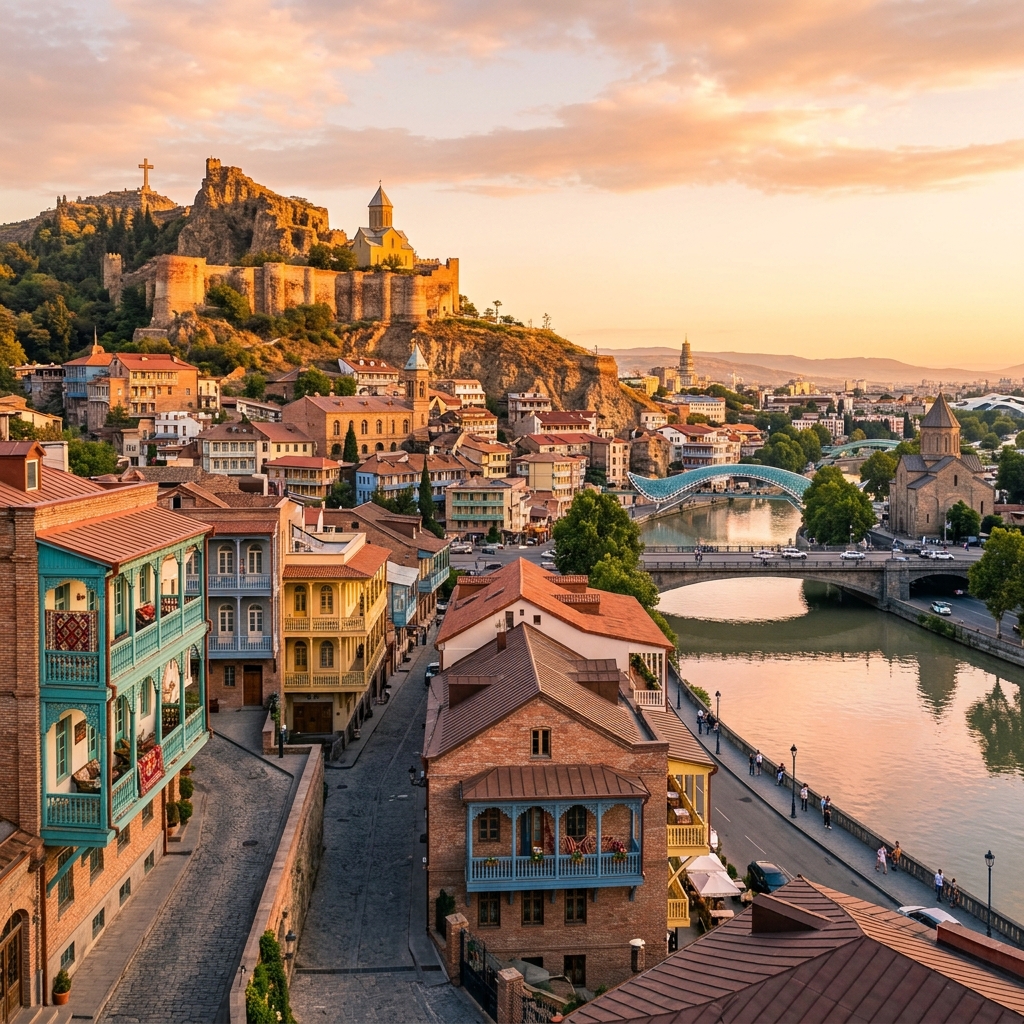
Tbilisi Subway Network: MetroMoney Cards & Bank Card Taps
Getting around Georgia is an adventure in itself. Inside Tbilisi, public transport is clean, efficient, and cashless. The Tbilisi Metro features deep Soviet-era stations where escalators descend hundreds of feet at terrifying speeds. You can pay directly at the turnstiles using foreign contactless credit cards (Visa/Mastercard) or mobile wallets (Apple/Google Pay), which charges a fare of 1.50 GEL. However, we highly recommend purchasing a physical Metromoney card at a metro station office for 2 GEL. Tapping a Metromoney card charges a reduced fare of 1.00 GEL and includes a 90-minute free transfer window across metro lines and city buses—a benefit not available with foreign bank cards. Recharging is easily done with cash or card at the orange Bank of Georgia self-service pay boxes found on almost every street corner.
Marshrutka Minibuses: Hail-and-Ride Hacks & Fare Payments
For regional routes, you must embrace the marshrutka—yellow or white Mercedes Sprinter minibuses. Marshrutkas display destination signs in curly Georgian script at major hubs like Didube or Samgori. You must ask around to find your vehicle, board, and wait until all seats are filled before departing. Pay the fare in physical cash directly to the driver only when exiting the vehicle. A digital Georgia eSIM helps you use route-planning apps and communicate destinations.
Orthodox Church Rules: Dress Codes & Sacred Monasteries
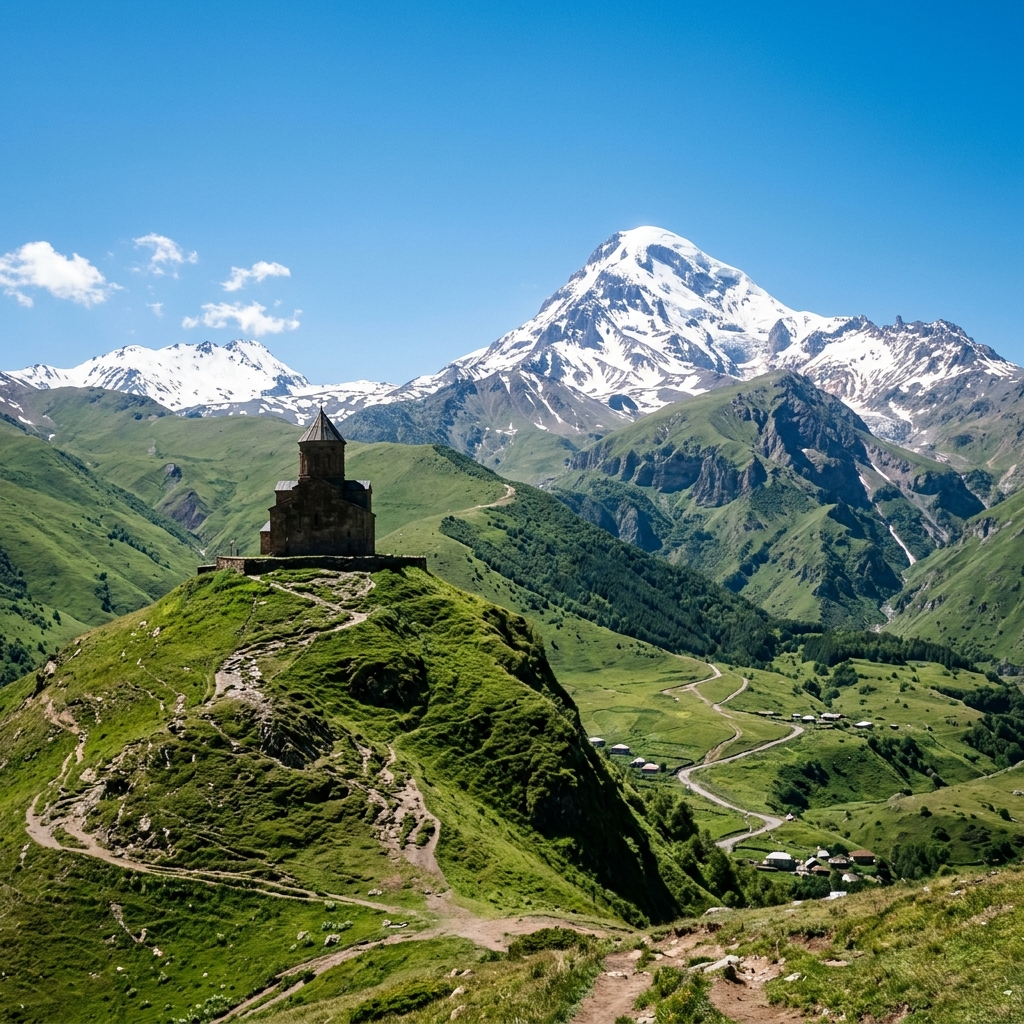
Georgia’s identity is deeply rooted in Orthodox Christianity, and visiting historic churches like Svetitskhoveli Cathedral or Gergeti Trinity Church requires strict respect. Appropriate dress codes are strictly enforced at the entrance. Women must cover their heads with a scarf and wear a long skirt that extends past the knees. Men must wear long pants—shorts are strictly forbidden. Most major churches provide wrap-around aprons and scarves at the door, but it is always best to dress respectfully beforehand. Always maintain absolute silence, keep your hands out of your pockets, and never photograph worshippers or clergy without permission.
Sulfur Baths of Tbilisi & Supra Feast Toasting Etiquette
For a physical and historical experience, visit Abanotubani, Tbilisi’s historic sulfur bath district. The baths are heated by natural hot sulfur springs flowing deep beneath the city. Booking a private room and hiring a bath attendant for a traditional kisa scrub—a soapy, chaotic bath ritual involving a coarse mitt and mountains of bubbles—is a memorable local custom.
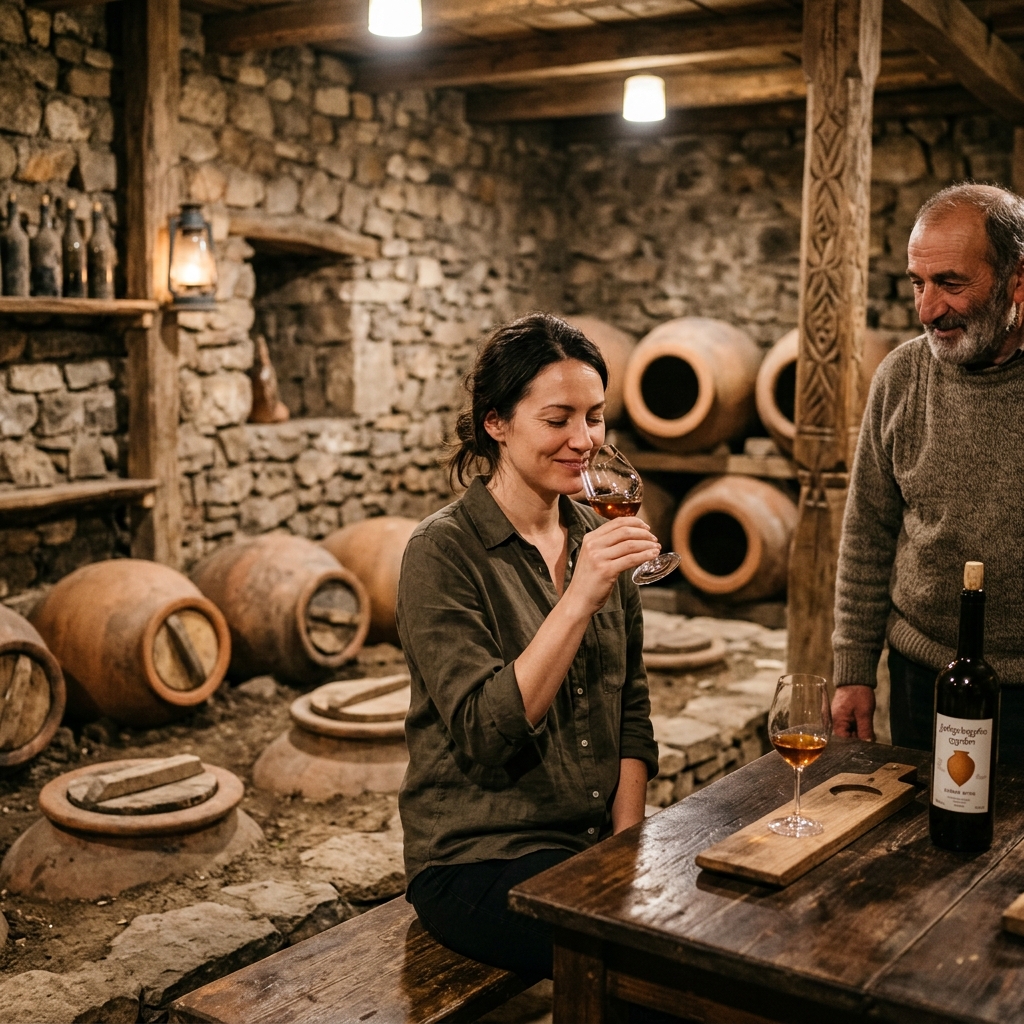
Beyond holy spaces, the spiritual heart of Georgian socialization is the Supra, a traditional feast. A Supra is led by a Tamada (toastmaster), who controls the evening through philosophical toasts. Never take a sip of alcohol before the Tamada has finished speaking. Toasts are sacred and must only be made with wine or chacha (grape brandy). If you toast with beer, you will immediately insult the table—historically, Georgians toast with beer only to wish bad luck to their enemies.
Mountain Highways: Military Road Hazards & Svaneti Defense Towers
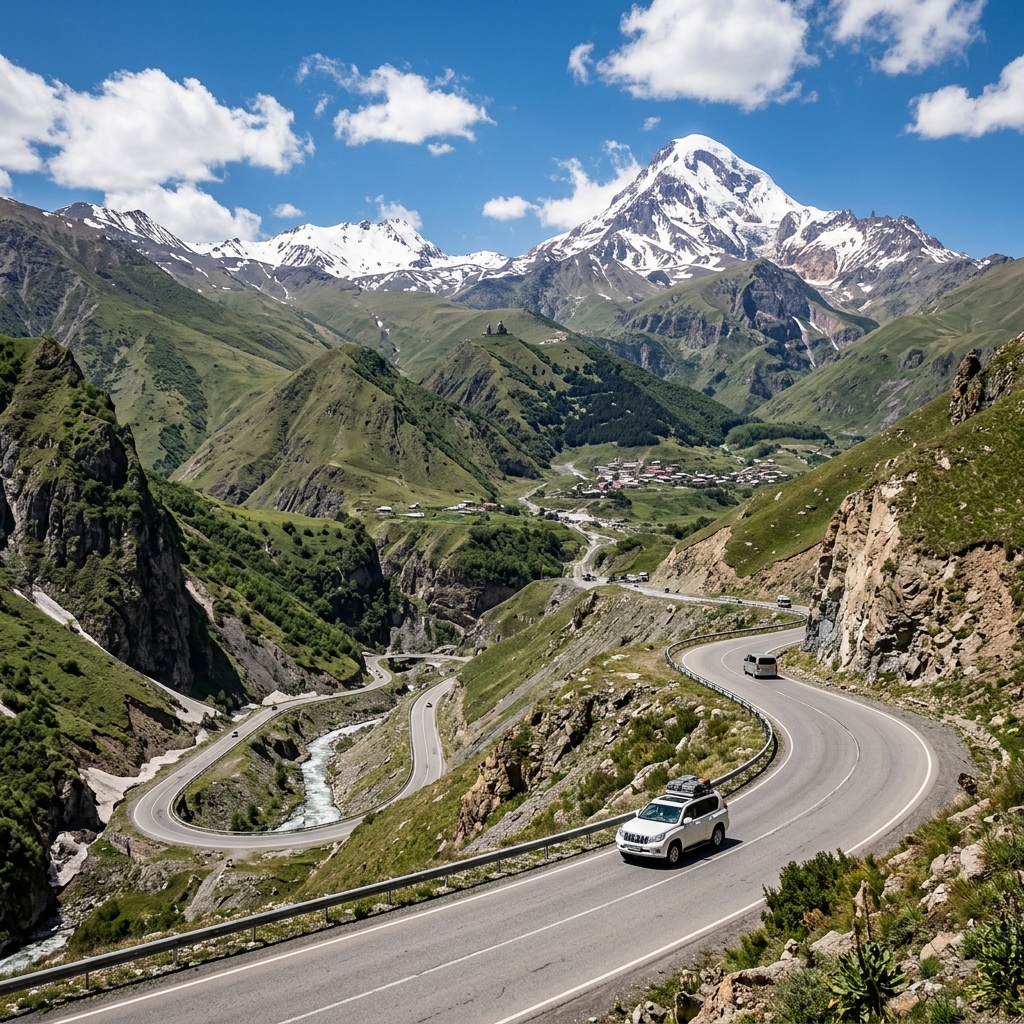
If you plan to rent a car, prepare yourself for aggressive driving styles. Rapid lane changes, tailgating, and overtaking on narrow mountain passes are standard local practices. Additionally, a significant portion of cars on the road are Japanese imports with steering wheels on the right, making overtaking on two-lane passes extremely dangerous. Keep your focus sharp, stay alert for free-roaming livestock (cows, pigs, sheep) that frequently block the roads, and avoid driving high mountain passes at night. The roads themselves carry significant geological hazards. The Georgian Military Road is prone to sudden landslides and rockfalls that can block transit to Kazbegi for hours or days. For a true test of nerves, the road to Tusheti via the Abano Pass reaches 2,826 meters and is one of the most dangerous roads in the world, open only from June to October and subject to frequent washouts. During winter (November to April), snow chains and winter tires with 3PMSF symbols are legally enforced by police checkpoints on Jvari Pass (towards Kazbegi). For a wilder adventure, head into Svaneti to explore the medieval stone towers of Mestia and Ushguli, built between the 9th and 12th centuries as defensive structures against invaders and avalanches.
Surviving Cashless Tbilisi: Card Payments vs Mountain Cash Limits
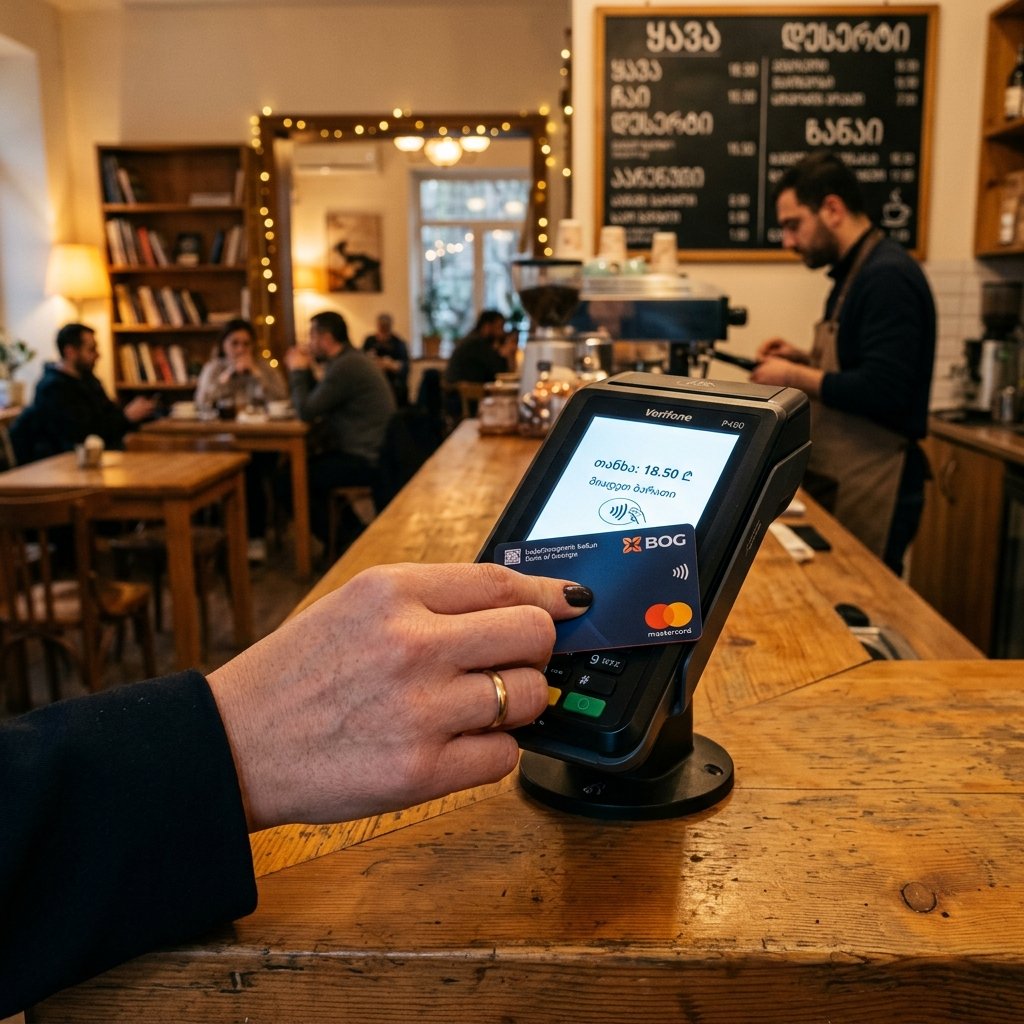
Georgia is highly digitized, and credit cards (Visa/Mastercard) and mobile wallets (Apple/Google Pay) are universally accepted in Tbilisi, Batumi, and Kutaisi shops, cafes, and hotels. However, cash (Georgian Lari – GEL) is absolutely mandatory the moment you travel outside major cities. You will need physical cash for regional marshrutkas, local guesthouses in remote regions (Svaneti, Tusheti, Racha), street food vendors, and traditional markets (like Tbilisi’s Desertirebi Market). Tipping is not strictly traditional, but standard tourist restaurants automatically add a 10% or 18% service charge to the bill. If no service charge is included, tipping 10% in cash for good service is highly appreciated.
Georgian Gastronomy: Traditional Khinkali & Khachapuri Eating Etiquette
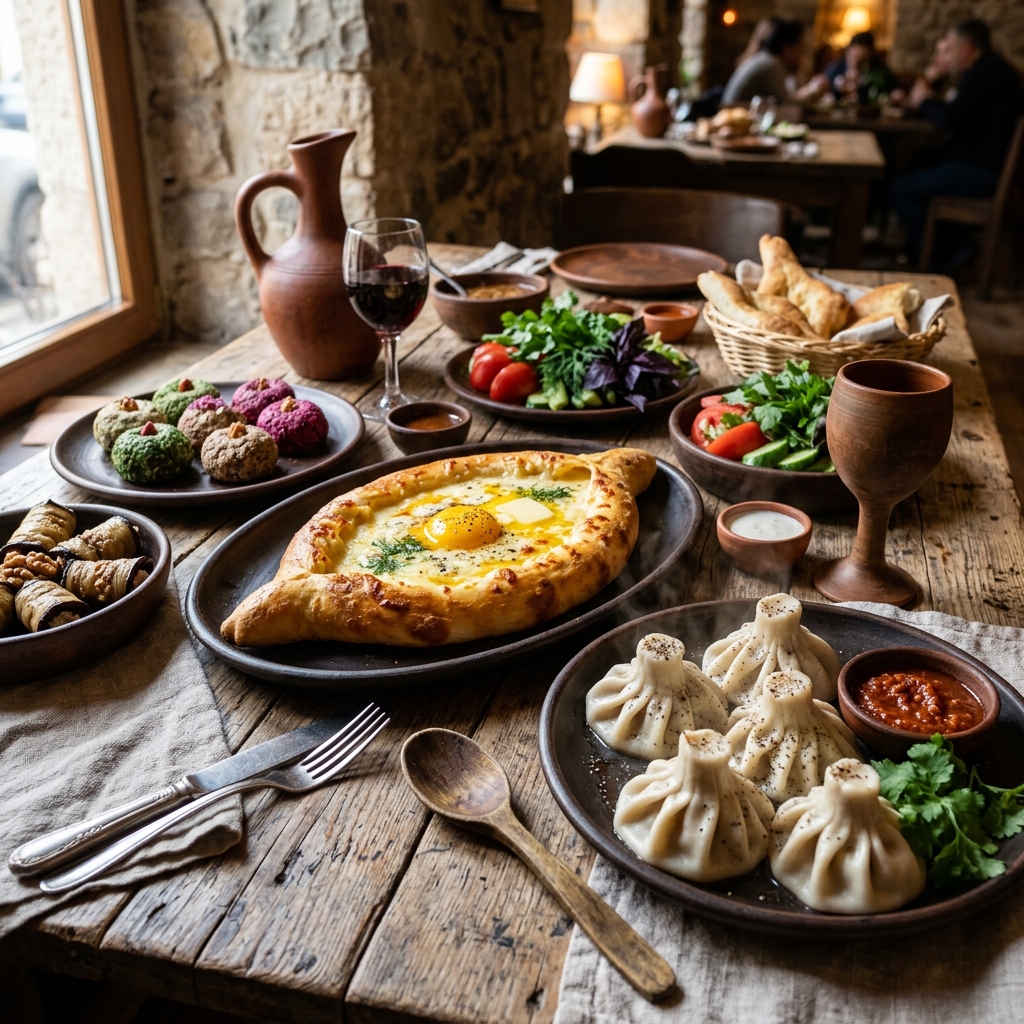
Georgian gastronomy is rich and delicious, but there are specific rules for eating the country’s most famous dishes. First is the Adjaruli Khachapuri, a boat-shaped bread filled with melted cheese, butter, and a raw egg yolk. Do not use a knife and fork. Instead, take your fork and quickly stir the cheese, butter, and egg yolk together until it forms a creamy pool. Then, tear off pieces of the bread crust from the ends and dip them into the hot mixture. Eat your way inward until only the cheese-soaked base is left.
Next are Khinkali, giant spiced soup dumplings. Grab the dumpling by its thick dough handle (called the kuchi), flip it upside down, and take a small bite out of the side. Carefully sip out the hot, savory broth before eating the rest of the dumpling. Never use a fork to stab a Khinkali; this will puncture the dough, letting the delicious broth drain onto your plate. Do not eat the thick dough handle itself; leave it on the edge of your plate. To wash down these heavy meals, locals drink high-proof chacha (grape pomace brandy), which often exceeds 50% ABV and should be treated with respect.
MagtiCom Physical SIMs: Airport Setup & Registration Requirements
Georgia is served by three main mobile networks: MagtiCom (offering the best coverage in rural and mountain regions), Silknet, and Cellfie. Buying a physical SIM card at local stores requires passport registration and queuing at airport kiosks. A digital travel eSIM bypasses these queues and passport registration, activating 5G immediately. Furthermore, travelers must comply with two strict legal mandates. First, all foreign visitors must hold valid travel health and accident insurance for the entire duration of their stay, with a minimum coverage of 30,000 GEL (proof in English or Georgian). Second, Georgia has extremely strict laws regarding prescription drugs. Common over-the-counter medications, including codeine-based pain relievers and sleeping pills (like Xanax or Ambien), are classified as illegal narcotics. You must carry a notarized medical prescription translated into English or Georgian and declare them at the Red Channel upon entry to avoid heavy fines or detention.
eSIM Connectivity: Instant 5G Access & Customs Medication Warning
You can find official visa guidelines, safety updates, and travel regulations on the official tourism website at georgia.travel.
Yes, purchasing a digital travel eSIM online before your trip is highly recommended. It connects instantly to local networks upon arrival, saving you from long queues and identity registration at the airport. For real-time travel tips and updates from locals in Tbilisi, check out the r/Sakartvelo community on Reddit.
Frequently Asked Questions (FAQ)
A: For the best coverage and speeds in Georgia, we recommend using an eSIM that connects to the MagtiCom or Silknet network.
A: You can find official visa guidelines, safety updates, and travel regulations on the official tourism website at georgia.travel.
A: Yes, purchasing a digital travel eSIM online before your trip is highly recommended. It connects instantly to local networks upon arrival, saving you from long queues and identity registration at the airport.
 Georgia eSim