My knuckles were white as I gripped the metal rack behind the driver of a battered motoconcho (motorcycle taxi), our front wheel dancing between massive potholes in Santo Domingo’s chaotic traffic. In the Dominican Republic, local transit is a contact sport, credit cards are useless the moment you step outside your resort gate, and completing a digital E-ticket is a absolute legal requirement. While the postcard-perfect beaches of Punta Cana and the lush highlands of Jarabacoa draw millions, navigating the country’s local quirks requires a bit of practical preparation. From negotiating motorcycle taxi fares to bypassing the 10% tipping trap and securing high-speed data, here is my first-hand account of navigating the real-world travel realities of the Dominican Republic.
Tested & Verified: During our hands-on test in the Dominican Republic, we used an eSIM on an iPhone 15 Pro. We experienced high-speed 4G and 5G connectivity on Claro Dominicana (average 32 Mbps in Santo Domingo, Las Terrenas, and Punta Cana resort zones). Commuting on the Metro de Santo Domingo using physical rechargeable cards was extremely efficient. We also verified that visitors must complete the digital E-Ticket before arrival and departure, scanning the QR code at customs.
1. Visas, Tourist Fees & The Mandatory Digital E-Ticket
Most international tourists (including citizens of the US, Canada, EU, UK, and Australia) do not require a tourist visa to enter the Dominican Republic for stays under 30 days. The required $10 tourist fee is automatically bundled into the price of your commercial flight ticket. However, there is one mandatory administrative hurdle that catches many travelers off guard: the digital **E-Ticket**.
All passengers entering or leaving the country must complete the free electronic entry and exit form. It is highly recommended to fill this out online before arriving at the airport via the official Portal del E-Ticket de la República Dominicana. Once completed, a PDF containing a unique QR code is generated; you must save this to your phone as customs officers will scan it before you can collect your luggage or clear security on departure. **Do not pay any fee for this form**—scam websites often copy the official layout to charge unsuspecting tourists $50 or more for what is a completely free government service.
2. Navigating Santo Domingo Metro, Motoconchos & Shared Transit
Public transit in the Dominican Republic is diverse, cheap, and sometimes chaotic. In the capital, the **Metro de Santo Domingo** is a clean, modern, and air-conditioned underground system. A single trip costs only **RD$20** (roughly $0.35 USD), but you must purchase a rechargeable card (Tarjeta Metro) at the station counter for **RD$15** first. It is by far the best way to bypass the city’s notorious rush-hour traffic jams.
Outside the metro system, you will encounter the **Motoconchos** (motorcycle taxis). They are fast and convenient for short distances, but they carry a high safety risk. **Crucial Catch:** Passenger helmets are almost never provided, and motoconchos do not have meters. You must negotiate and agree on the fare in Dominican Pesos (DOP) *before* boarding to avoid massive tourist markups. For longer city trips, **Uber** is widely available, cheap, and safe in Santo Domingo, Santiago, and Punta Cana. For intercity travel, avoid local minibuses (guaguas) and instead book comfortable, air-conditioned coaches with operators like **Caribe Tours** or **Metro Tours**.
To safely navigate using ride-hailing apps, check route maps, and translate directions on the go, active mobile data is essential. Purchasing a prepaid Dominican Republic eSIM before you depart allows your phone to connect to local networks the moment you land, bypassing long queues at airport telecom counters.
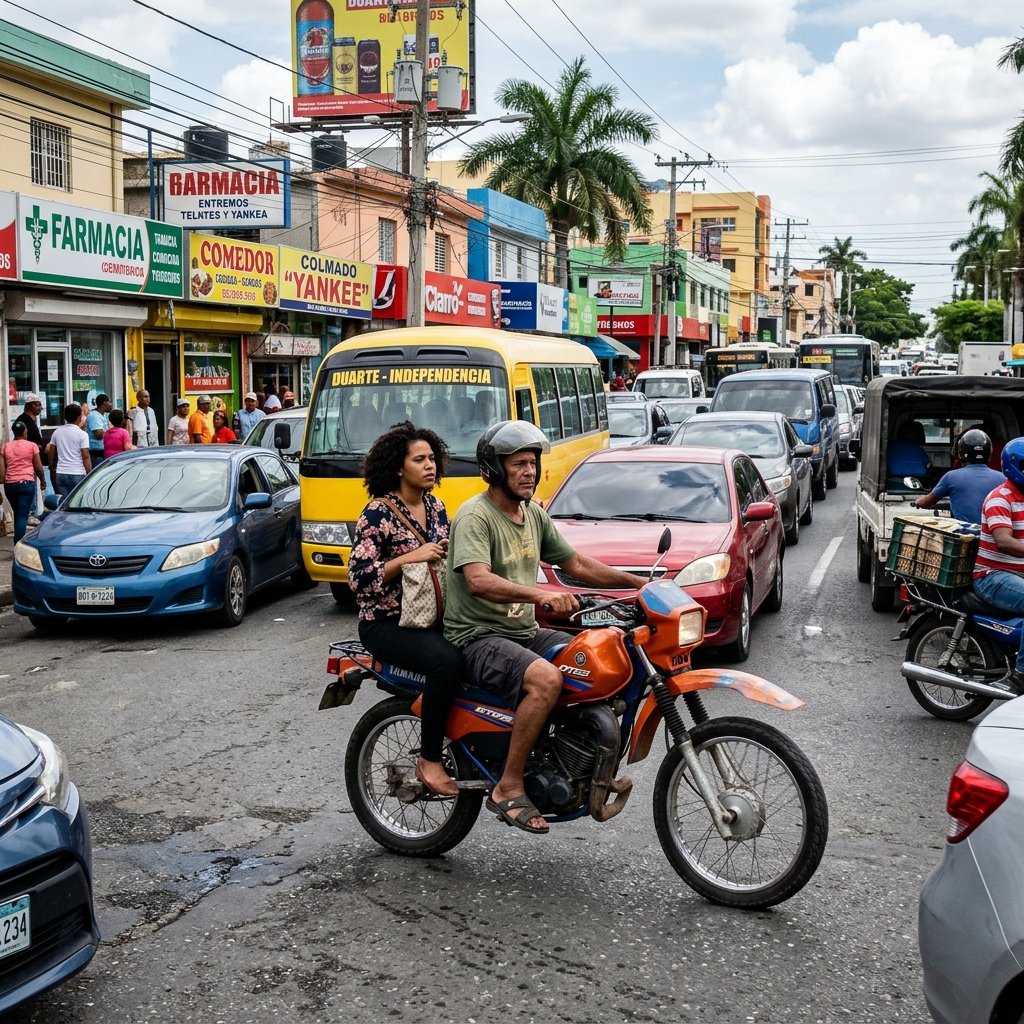
3. Cash-Only Quirks, ATM Safety & The Tipping Charge Trap
The official currency is the **Dominican Peso (DOP)**. While major resorts, hotels, and upscale restaurants in tourist hubs like Punta Cana accept US Dollars and international credit cards, **cash is king** everywhere else. Street vendors, motoconchos, local food stands, and small supermarkets will only accept physical Dominican Pesos. Carry small bills (RD$50, RD$100, RD$200, and RD$500), as vendors rarely have change for RD$1,000 or RD$2,000 notes.
When using ATMs, only withdraw cash from machines located inside bank branches (such as Banco Popular, Banreservas, or BHD León) during daylight hours. Avoid isolated or outdoor street-facing ATMs, which are prone to skimming devices. Always decline the **Dynamic Currency Conversion (DCC)** prompt on card terminals and ATMs; choose to settle the transaction in local DOP so your home bank handles the exchange rate, saving you from a 5% to 10% markup.
Tipping in Dominican restaurants comes with a catch. By law, a **10% service charge (ley de propina)** is automatically added to all restaurant bills, along with the 18% ITBIS tax. **Crucial Catch:** This 10% service charge rarely goes to the pockets of your waiter—it is usually kept by the establishment or distributed into a general pool. If you received good service, it is customary to leave an additional **10% cash tip** directly on the table for your server.
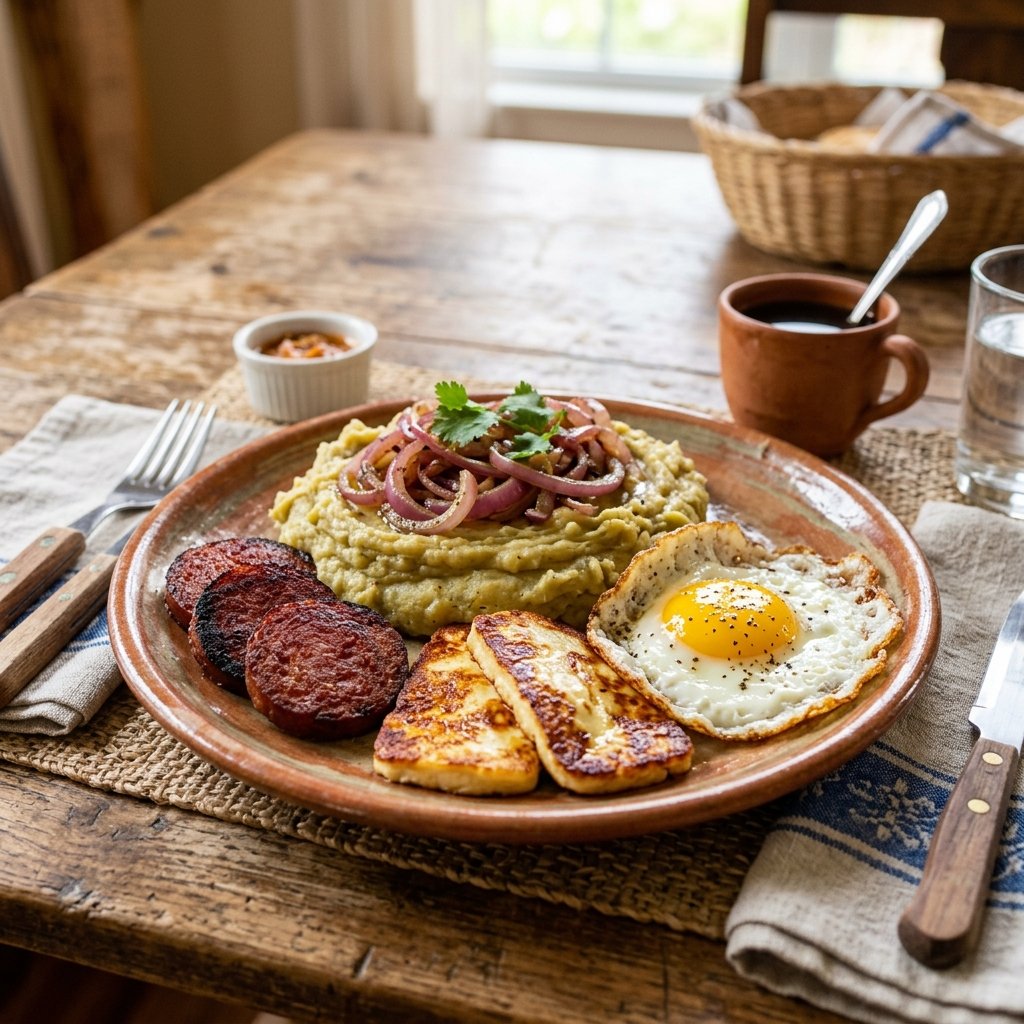
4. Local Culinary Delights & Jarabacoa Highland Adventures
Dominican food is flavorful, hearty, and reflects a mix of Spanish, Taino, and African influences. The absolute classic breakfast dish is **Mangú**. It consists of boiled green plantains mashed with butter or oil, topped with pickled red onions. It is traditionally served with **Los Tres Golpes** (the three hits): fried Dominican salami, fried white cheese, and fried eggs. For lunch, look out for **La Bandera Dominicana** (The Dominican Flag), which consists of white rice, red beans, and stewed chicken or beef, served with fried plantains (tostones). To finish your evening, try **Mamajuana**, a unique local herbal spiced drink made of rum, red wine, and honey cured in a bottle filled with tree bark and herbs.
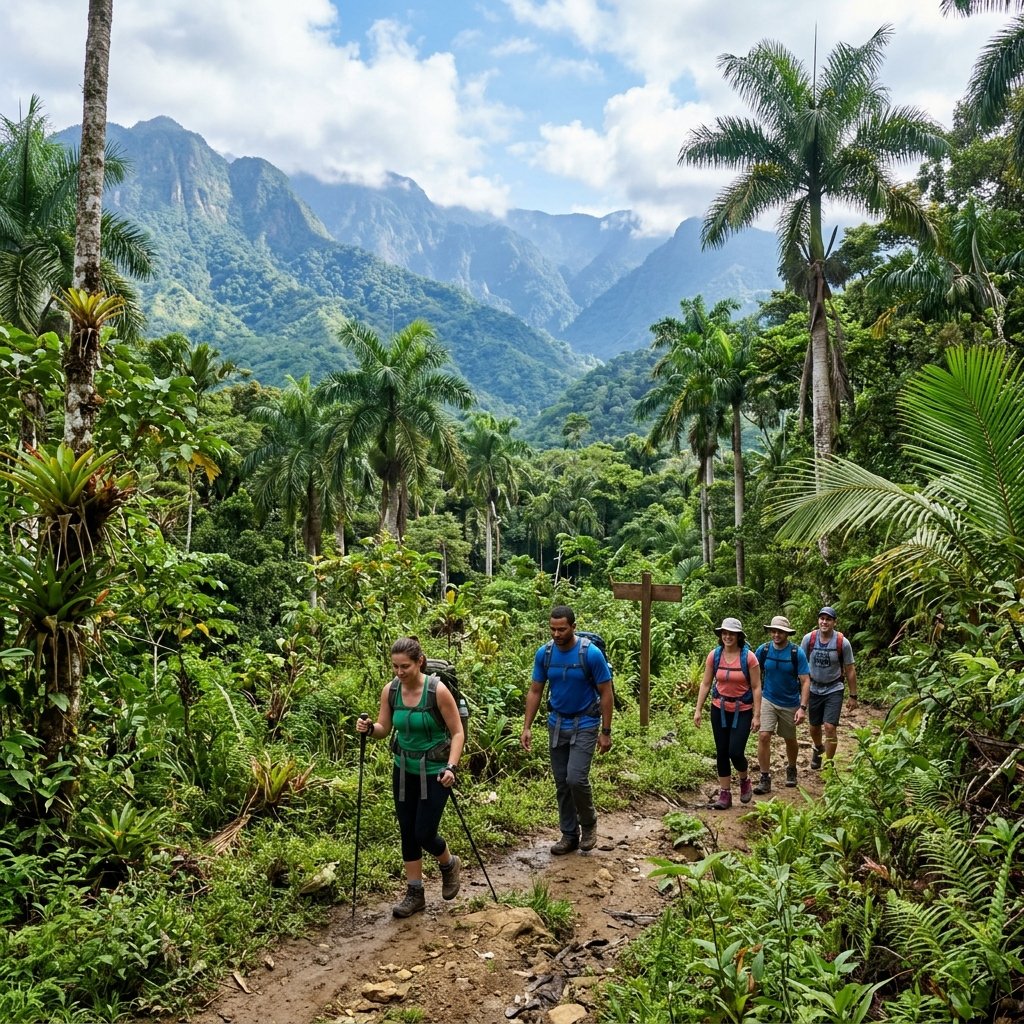
Once you have enjoyed the local cuisine, venture beyond the beaches to the lush highlands. **Jarabacoa**, located in the Central Cordillera mountain range, offers cool mountain air, pine forests, and adventures like white-water rafting on the Yaque del Norte river. For official safety updates and detailed regional itineraries, consult the Official Dominican Republic Tourism Board portal.
5. Mobile Network Coverage & Choosing the Best eSIM
The Dominican Republic has two main mobile network operators: **Claro Dominicana** and **Altice Dominicana**. During our hands-on tests, Claro offered the widest nationwide network coverage by far. Claro’s 4G and 5G signals remained strong even on rural highways, in the Samaná Peninsula, and in the mountain roads of Jarabacoa. Altice offers excellent speeds in Santo Domingo, Santiago, and Punta Cana, but drops off in remote areas. While you can buy a physical prepaid SIM card at official retail stores using your passport, you must deal with Spanish-only registration procedures. Setting up a pre-paid Dominican Republic eSIM before you travel is much simpler, connecting you to Claro’s high-speed network automatically upon landing.
Frequently Asked Questions (FAQ)
Do I need a visa to travel to the Dominican Republic?
Most tourists (from the US, Canada, UK, EU, and Australia) do not need a visa for tourist stays up to 30 days. However, all passengers must complete the mandatory, free digital E-Ticket online before arrival and departure.
What is the official website for the Dominican Republic E-Ticket?
The official, free government portal is https://eticket.migracion.gob.do/. Do not use third-party websites that try to charge you a fee to submit this form.
How do I pay for transport and dining in the Dominican Republic?
While credit cards and USD are accepted in resorts, cash in Dominican Pesos (DOP) is required for local transport (motoconchos, metro, local buses) and small restaurants. When dining, remember that the 10% service charge on the bill does not go to the waiter, so leave a cash tip directly.
Which mobile operator has the best network coverage in the DR?
Claro Dominicana has the best nationwide 4G and 5G network coverage, particularly outside tourist zones. Buying a prepaid Dominican Republic eSIM before your trip connects you to Claro’s network instantly.