Planning a trip to Chile? Flanked by the towering Andes and the vast Pacific, this narrow South American gem is a land of jaw-dropping contrasts. But before you get lost in the pastel-colored hills of Valparaíso or sip Cabernet Sauvignon in the Casablanca Valley, you need to understand that Chile runs on its own unique rules. From strict biosecurity officers at the airport to contactless metro gates, minor details can make or break your trip.
1. Chilean Customs & Biosecurity Rules: Filling the SAG Sworn Declaration
Chile takes agricultural biosecurity and customs enforcement incredibly seriously. As a narrow country protected by natural barriers, the government protects its domestic ecosystem aggressively. When you pass through baggage claim at Santiago Airport (SCL), you and your luggage will be screened by customs dog patrols and x-ray scanners.
You must fill out the digital SAG (Servicio Agrícola y Ganadero) sworn declaration form online at djsimple.sag.gob.cl within 24 hours of landing. You must declare any dried fruits, seeds, nuts, cheese, honey, or raw souvenirs. If customs agents find a single undeclared apple or a bag of almonds in your backpack, you will face an immediate, non-negotiable fine of $200 USD or more. The gold rule is simple: when in doubt, declare YES.
2. The PDI Tourist Card & Hotel Tax Exemptions (IVA)
Additionally, passport control will hand you a receipt-sized paper slip called the Tarjeta de Turismo (PDI Tourist Card). Keep this paper safe inside your passport! Presenting your foreign passport along with this card allows hotels to exempt you from Chile’s 19% Value Added Tax (IVA) when paying with an international credit card.

3. Santiago Metro & Public Transit: Using the Bip! Card
Navigating public transport in Santiago is straightforward once you know how the ticketing works. The city’s clean, modern Metro network is the fastest way to travel between neighborhoods like Providencia, Lastarria, and Las Condes.
Traditionally, passengers had to purchase a physical Bip! card for $1,550 CLP at station booths and load it with cash. While multiple travelers can share a single Bip! card by tapping it sequentially, only the first traveler gets the 2-hour free transfer benefit between buses and the metro.
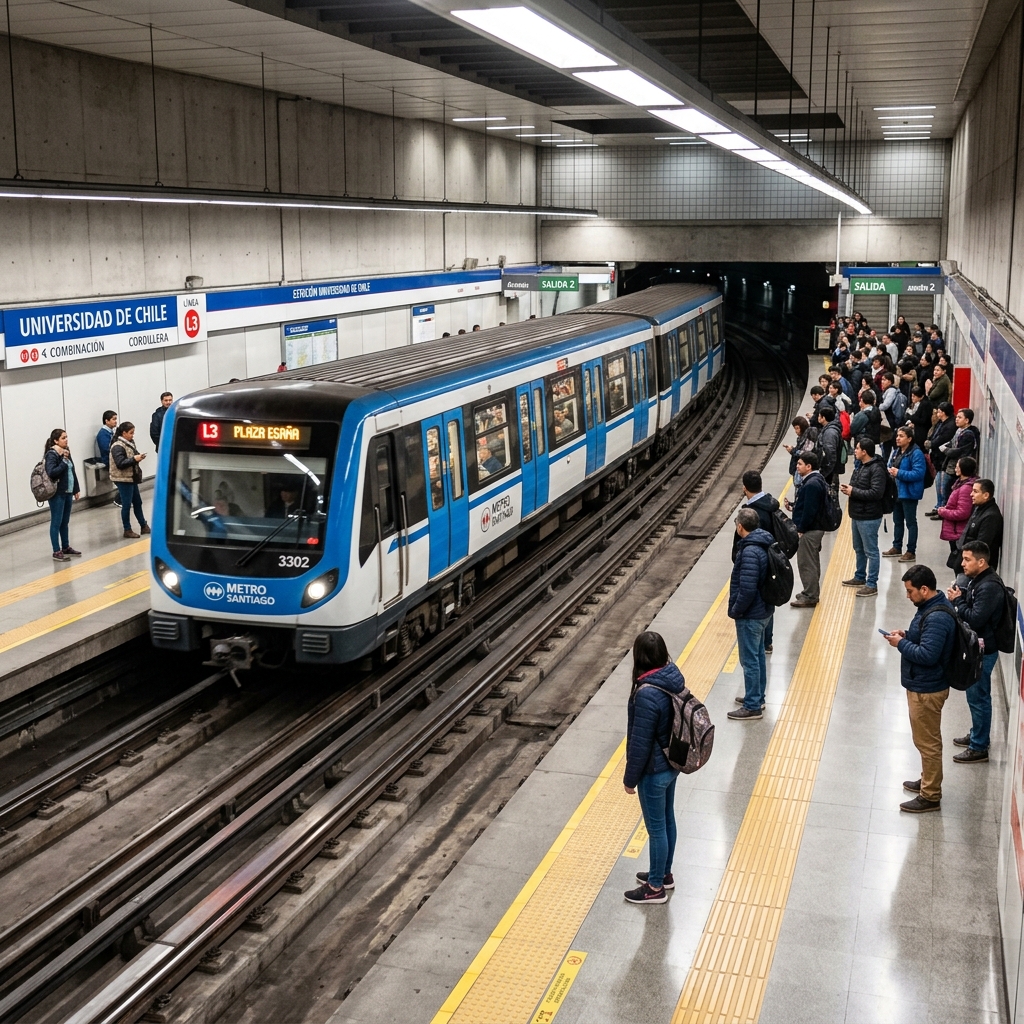
4. Contactless Turnstile Taps: The Pago Ágil System
However, as of February 2026, Metro Santiago has introduced the “Pago Ágil” contactless payment system. You can now tap your contactless Visa, Mastercard, or digital wallet (Apple Pay/Google Pay) directly at the turnstiles. The fare is identical to the Bip! card. Keep in mind that direct contactless tapping does not support bus transfers as seamlessly as the Bip! card, so get a physical card if you plan to explore the broader Red Metropolitana bus network.

5. Driving in Chile: Navigating Electronic Highway Tolls (TAG)
Renting a car in Chile gives you immense freedom, but managing highway tolls requires special attention. Santiago’s urban highways (like the Autopista Central and Costanera Norte) use an electronic “free-flow” toll system with no physical booths to stop and pay.
All rental vehicles in Chile are pre-installed with an active TAG transponder. Never purchase a temporary “Pase Diario” (Day Pass) from a gas station, as it is redundant for rental cars. The rental agency will track your highway passages and bill the accumulated tolls to your credit card after your return, usually with an added administrative convenience fee.
Always ask the agent at the rental desk: “Is this vehicle equipped with an active TAG, and what are the administrative toll billing fees?”. For intercity highways (such as Route 5 towards the Casablanca wine region), traditional manual toll plazas still exist, where you can pay with cash or card.

6. Card Payments & Tipping: The Redcompra Network
Chile is a highly digital economy where credit cards are accepted almost everywhere. From high-end restaurants in Vitacura to street vendors selling mote con huesillo, card terminals are universal.
When paying, the local Redcompra debit network is only for Chilean accounts. Foreign cards are processed directly via international Visa/Mastercard networks. The terminal will often ask “¿Cuántas cuotas?” (How many installments?). Foreign credit cards do not support installment plans. You must always select “Sin cuotas” or “Una sola” to avoid terminal errors.
Check the r/chile community on Reddit for local advice.

7. Cash Withdrawals: High ATM Fees & Recommended Local Banks
If you need cash, be prepared for high ATM fees. Local banks charge a flat fee of $5,000 to $8,500 CLP per transaction on international cards. Banco Estado ATMs located inside official bank branches generally support higher withdrawal limits (up to $800,000 CLP per transaction), helping you minimize the fee-to-cash ratio. Always choose to be billed in the local currency (CLP) and decline the ATM’s Dynamic Currency Conversion (DCC) to secure your home bank’s superior exchange rate.
8. Seamless Connectivity: Why a Chile eSIM is Essential
Staying connected in Chile is easy thanks to its advanced 5G infrastructure. The country boasts some of the fastest mobile speeds in South America across major national carriers: Entel, Movistar, Claro, and WOM.
Entel provides the most reliable nationwide 5G coverage, especially when heading out of Santiago to the Casablanca vineyards or south to Patagonia. Movistar excels in raw download speeds in urban areas, while Claro is highly praised for connection stability. To avoid local physical SIM registration locks—which require a Chilean RUT (tax ID) to keep the SIM from being deactivated—you should purchase a pre-arrival Chile eSIM. This gives you instant data upon landing, allowing you to bypass long airport queues and navigate SCL Airport immediately.

Frequently Asked Questions (FAQ)
Do I need a physical Bip! card to ride the Santiago Metro?
No, you can tap a contactless Visa/Mastercard or digital wallet directly at turnstiles, but a Bip! card is still recommended for bus transfers.
What is the penalty for not completing the SAG form in Chile?
Failing to declare agricultural goods via the online SAG form (djsimple.sag.gob.cl) carries an immediate, non-negotiable fine of $200 USD or more.
Can I pay in installments with a foreign credit card in Chile?
No, installment options (cuotas) are only for local cards. Select ‘Sin cuotas’ or ‘Una sola’ on the payment terminal.
Which ATM is best for avoiding high fees in Chile?
Banco Estado ATMs charge standard foreign fees but offer higher withdrawal limits (up to $800,000 CLP), reducing your fee-per-dollar ratio.
 Chile eSim