
Fiji Travel Summary: From Nadi Airport, metered yellow cabs start at FJD 7.00. Cash is preferred for taxis, while buses are cashless via e-Transport cards. Vodafone offers the best coverage, but TravelyData eSIM provides auto-switching with zero KYC.
| Carrier | Coverage | eSIM Suitability |
|---|---|---|
| 📶 Vodafone Fiji | Best nationwide | Requires KYC |
| 📶 Digicel Fiji | Good in cities | Requires KYC |
| 📶 eSIM TravelyData | Auto-switch (Vodafone/Digicel) | Zero KYC, instant |
| Route/Option | Cost | Rules/Pickup |
|---|---|---|
| Yellow Taxi | FJD 7.00+ (Metered) | Cash preferred, Airport ranks |
| Bus | Varies | Requires e-Transport card (Cashless) |
| Private Transfer | FJD 30+ | Pre-booked, meet & greet |
The first thing that greets you at Nadi International Airport isn’t the humid ocean breeze or the scent of frangipani—it’s the acoustic harmonies of local musicians singing “Bula” to arriving passengers. It feels like stepping straight into a postcards paradise. But as you clear customs and look to head out to your resort, the island’s unique logistical realities quickly come into play. Staying connected, navigating the islands, and managing payments in Fiji require knowing a few critical local rules before you even leave the arrivals terminal.
Touchdown in Nadi: Getting Online, Airport Cabs, and e-Transport Bus Cards
To travel from Nadi Airport (NAN) to Nadi Town or Port Denarau, official yellow airport taxis are metered starting at FJD 7.00 (fares cost FJD 15–20 to Nadi Town or FJD 30–35 to Port Denarau resorts). Cash is highly preferred, as card payments at resorts incur a 3% to 5% surcharge. Local buses strictly prohibit cash; you must buy a disposable e-Transport card from Vodafone or Digicel airport kiosks before boarding.
Fiji’s public transport system is highly regulated, particularly when it comes to cashless ticketing. Under the Land Transport Authority (LTA) regulations, bus drivers are legally barred from handling cash fares. If you intend to take a local public bus, you must purchase a disposable pre-loaded e-Transport card from the mobile provider kiosks in the arrivals hall. These cards are sold in fixed denominations of FJD 2, 5, 10, 20, or 50, and you simply tap them on the bus reader when boarding.
For those opting for taxi transport, look only for the official yellow airport cabs parked directly outside the exit. Unlike private or unmetered vehicles, these yellow taxis are legally required to run on meters. The fare begins at FJD 7.00, and a trip to Nadi Town will cost you FJD 15–20, while reaching the luxury resort strip of Port Denarau runs about FJD 30–35. Ensure your driver resets the meter before pulling out into traffic.
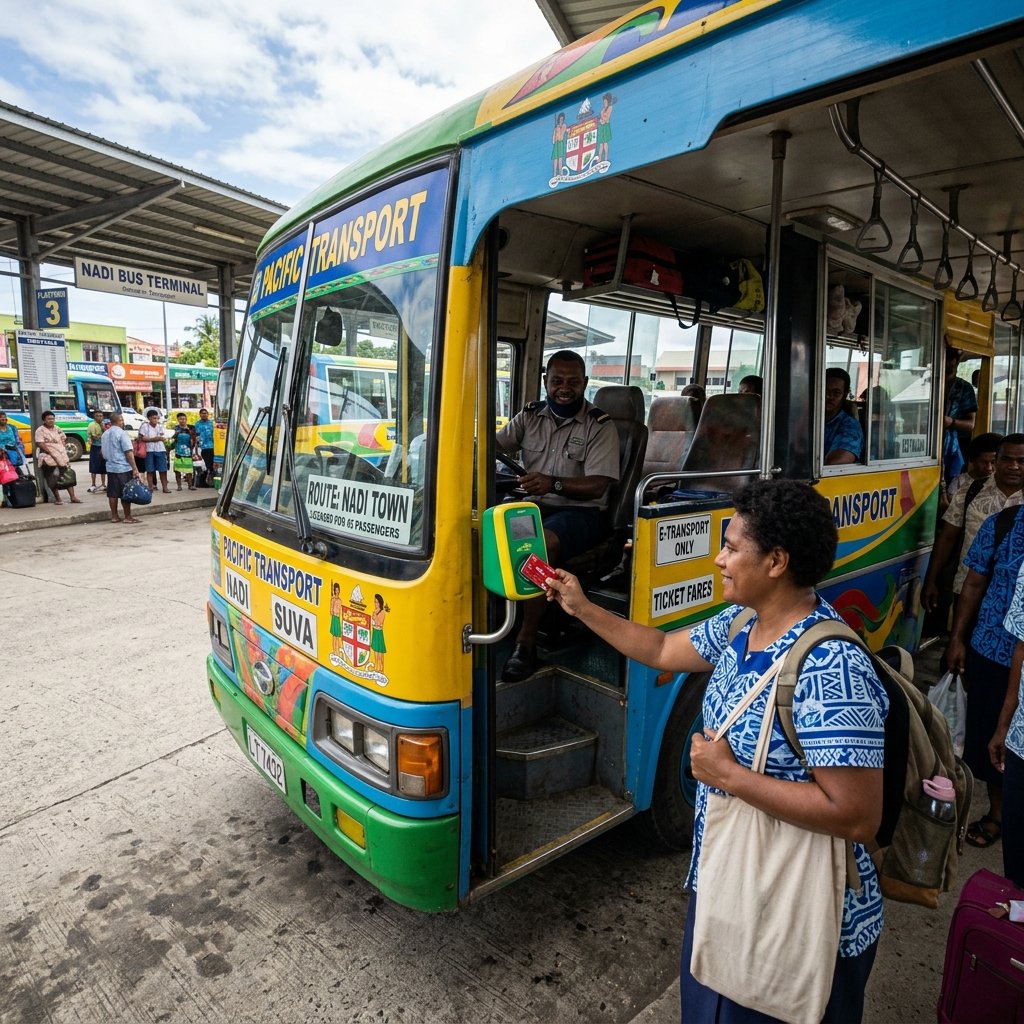
Cash vs Card Surcharges: Surviving the Resort Payment Trap
Fiji operates heavily on a cash-first economy outside resort walls. While luxury hotels and tour agencies in Denarau accept major credit cards, they routinely impose a 3% to 5% administration surcharge on all card transactions. To avoid paying hundreds of dollars in extra fees, withdraw Fijian Dollars (FJD) at city center ATMs and use cash for local meals, water taxis, and tipping.
While checking into a five-star resort on Denarau Island feels seamless, the checkout bill can bring an unpleasant surprise. Most resorts, upscale restaurants, and diving companies add a credit card processing fee directly to your bill. Over a week-long stay, a 3.5% surcharge on dining, spa treatments, and excursions can easily add up to FJD 150 or more. ATMs are readily available at Nadi Airport and in major towns like Nadi, Lautoka, and Suva, though local bank ATMs typically charge a FJD 10–15 access fee for international cards. Westpac and ANZ ATMs are generally the most reliable for foreign credit cards.
Carrying physical cash is not just about avoiding card fees—it is a necessity if you plan to explore the real Fiji. Street vendors, local fruit markets, and small family-run diners (known as “hot bread shops”) do not accept credit cards. Tipping is not mandatory in Fiji, but leaving a cash tip for resort staff in the communal “Staff Christmas Fund” box is a highly respected local gesture.

Gridlock on the Water: Vodafone vs Digicel Outer-Island Coverage
For reliable mobile internet across Fiji’s remote outer islands, Vodafone Fiji is the top recommendation. While Digicel provides excellent LTE speeds in Nadi, Suva, and main roads, its signal drops off significantly once you cruise into the Yasawa or Mamanuca Island chains. A local eSIM provides the easiest setup, bypassing the airport queuing lanes.
Fiji’s telecom landscape is dominated by two major operators. Vodafone Fiji on Wikipedia operates the most extensive network, stretching its LTE signals to remote islands and maritime lanes. Its main competitor, Digicel on Wikipedia, offers robust urban networks but has noticeably weaker reception on the outer islands. If you are staying at a resort in the Yasawas or taking a catamaran cruise, a Vodafone-supported eSIM is essential to maintain a stable internet connection.
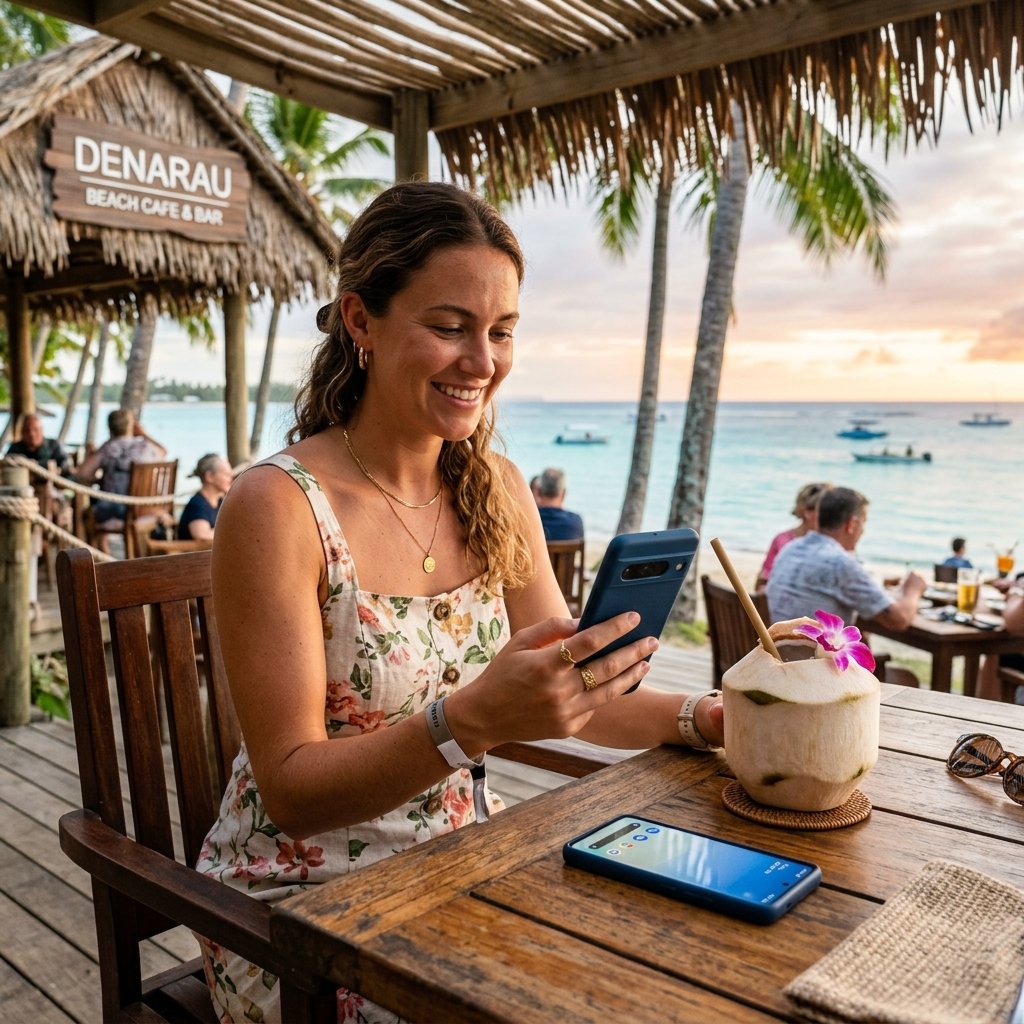
Purchasing a physical SIM card at Nadi Airport often means waiting in long queues at the arrivals kiosks, followed by a passport registration process (KYC) that can take up to an hour to activate. An eSIM bypasses this hassle entirely. You can purchase and download your eSIM profile before landing, allowing you to connect to the local network the moment your plane touches down, without sharing passport scans or waiting in line.
Entering the Village: Sevusevu, Kava Etiquette, and Cultural Norms
When visiting traditional villages or heading into the outer Yasawa highlands, you must respect local customs by presenting a gift of Kava root (sevusevu) to the village chief. Always dress modestly, remove hats and sunglasses when entering a village, and wait for the chief’s formal invitation before exploring or taking photos.
Beyond the beaches, the heart of Fijian culture lies in its traditional villages. If you take a day trip off the resort grounds to visit a local community, you are expected to participate in “sevusevu”—a formal greeting ceremony. You should purchase a bundle of dried Kava root (known locally as *yaqona*) from a market in Nadi Town (usually costing FJD 20–30) and present it to the chief upon arrival. This gesture signifies that you are entering the village as a respectful guest.
Fijian etiquette is deeply rooted in respect. Heads are considered sacred in Fijian culture, so you must never touch anyone’s head, and you should always remove hats, caps, and sunglasses when walking through a village. Dress conservatively, covering shoulders and knees; wrapping a traditional *sulu* (sarong) around your waist is the standard practice. Once the kava ceremony is complete and you have taken a sip of the earthy drink from the wooden *tanoa* bowl, you are welcomed as family. For more cultural guidelines, consult the official Fiji Tourism Portal before planning your village excursions.

Frequently Asked Questions
Can I use Australian or New Zealand Dollars in Fiji?
No, Fijian Dollars (FJD) are the official currency. Some large resorts may display prices in AUD or NZD, but transactions will be processed in FJD, and cash must be in local notes.
Where can I buy an e-Transport card?
You can buy disposable e-Transport cards at the Vodafone and Digicel shops inside the Nadi Airport arrivals hall, or at local convenience stores and bus depots throughout the country.
Does Fiji have Grab or Uber?
No, ride-sharing apps like Grab, Uber, or Bolt do not operate in Fiji. You must rely on official metered taxis, local buses, or resort-arranged shuttle buses.
What is the ATM withdrawal fee in Fiji?
Local banks (ANZ, Westpac, BSP) charge FJD 10–15 per transaction for foreign cards, in addition to whatever fees your home bank charges. It is best to make fewer, larger withdrawals.
Is 5G available in Fiji?
5G is currently being rolled out in major urban pockets of Suva and Nadi by Vodafone. However, LTE/4G is the standard and provides sufficient speeds for streaming and navigation across the main islands.
 Fiji eSim