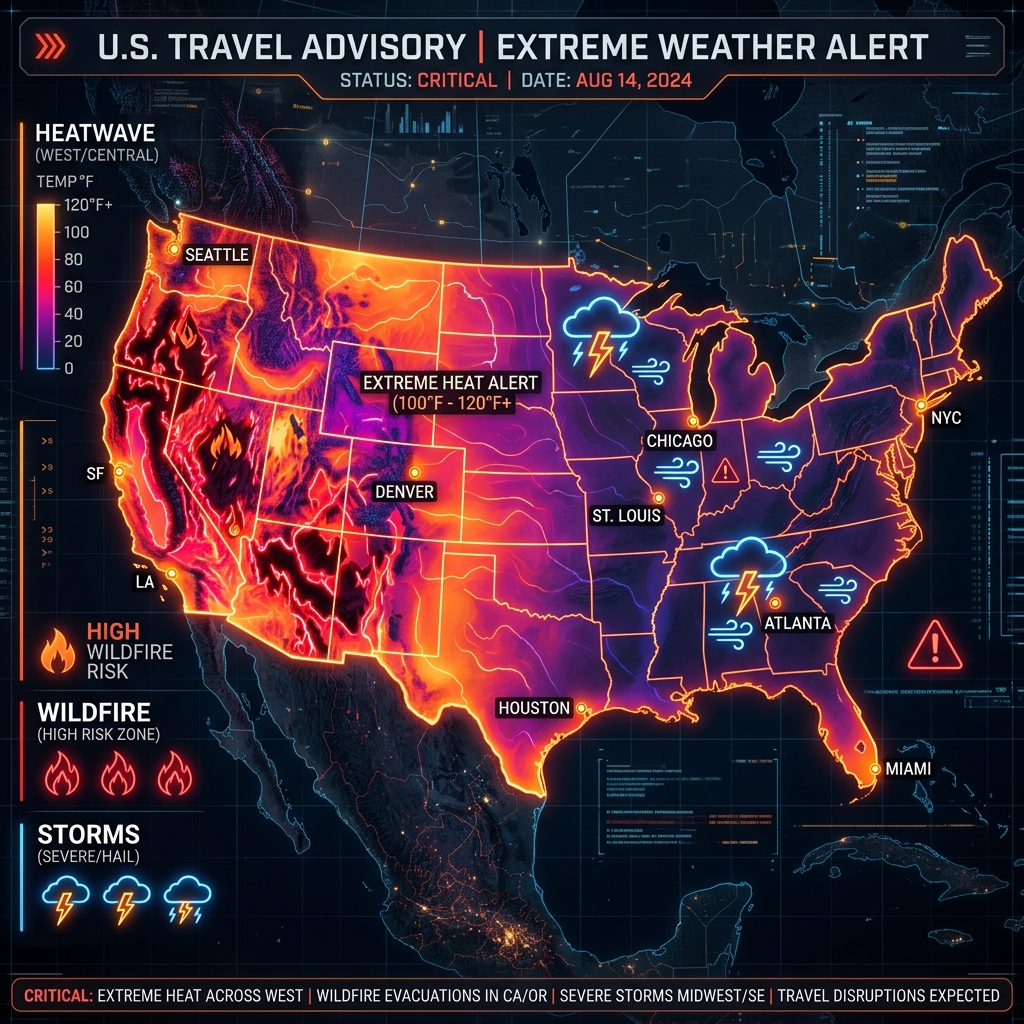
A series of extreme weather warnings have been issued across the United States as severe heatwaves, raging wildfires, and destructive thunderstorms affect millions of residents and travelers. Significant flight delays are rising at major transit hubs, and power grid failures are threatening local cellular towers. Travelers are urged to monitor real-time weather alerts, restrict outdoor activities during peak hours, and keep backup communication channels active.
Last reviewed/updated: July 2026 | Based on the latest updates from the National Weather Service (NWS).
Key Takeaways
- Alert Status: Extreme heat dome and severe weather watches issued by the National Weather Service (NWS).
- Impacted Zones: Central US, Western states (wildfires), and Eastern seaboard (thunderstorms).
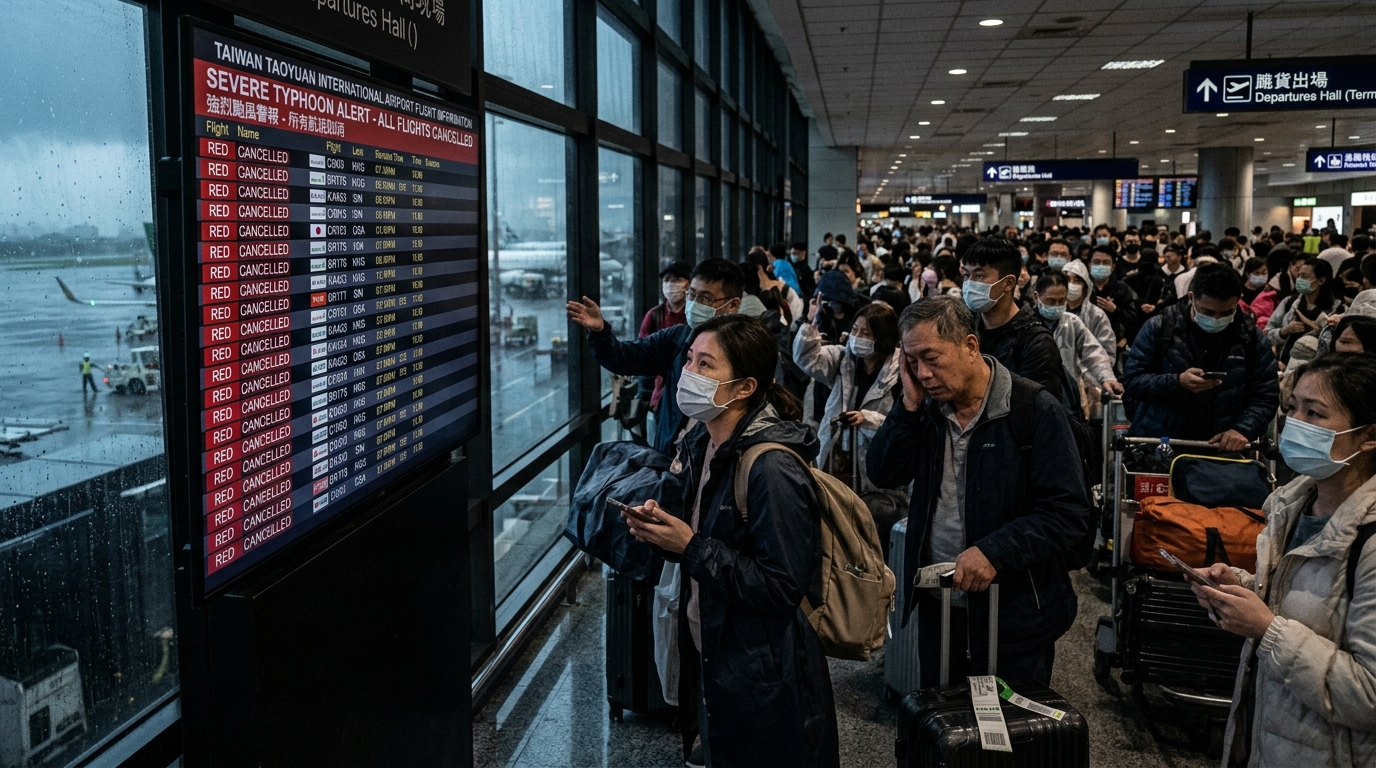
- Flight Delays: High delay rates reported at Chicago O’Hare (ORD) and Dallas-Fort Worth (DFW).
- Power Grids: Local power utilities caution against potential load shedding and rolling blackouts.
- Emergency Services: Dial 911 for all immediate safety or medical emergencies.
- Connectivity Hack: Activate a backup eSIM to switch carriers if local power grids cause cell tower outages.
Current Regional Weather & Travel Impacts
The table below summarizes the weather threats and required actions for travelers in the United States as of July 13, 2026:
| Region / State | Current Weather Threat | Traveler Advisory & Action |
|---|---|---|
| ? Western U.S. (California, Oregon) | Wildfires & Air Quality Alerts | Stay indoors; avoid outdoor trails. Keep windows closed and check AQI indexes. |
| ? Midwest Hubs (Chicago, Dallas) | Severe Thunderstorms & Wind Advisory | Expect ground stops at ORD and DFW. Monitor flight apps before departing. |
| ? Southern U.S. (Texas, Arizona) | Extreme Heat Dome (110°F+) | Restrict activity between 10 AM and 4 PM. Drink plenty of water and seek air conditioning. |
Navigating Severe Weather Outages & Evacuations
Extreme summer weather in the US places immense stress on public infrastructure. Severe thunderstorms can knock down local power lines, while wildfire evacuations can disrupt regional transit corridors. If you are staying in active advisory zones, ensure your accommodation has a backup power generator or locate the nearest public cooling center.
For flight travel, ground stops are frequently issued during peak storm hours to ensure safety. Check your airline’s digital portals regularly. If a flight is delayed by several hours, request a cancellation certificate directly from the gate agent or the mobile app.
Pro-Tip: Keeping Connected During Power Load Shedding
Pro-Tip for Travelers: Local power grid failures can temporarily disable specific mobile network towers. To avoid losing connection, buy a prepaid USA eSIM that allows roaming on multiple carriers. If your primary local SIM loses signal, manually toggle your phone settings to switch between national carriers to restore cellular data instantly.
(Note: For details on major U.S. cellular networks and coverage maps, check T-Mobile US on Wikipedia or Verizon on Wikipedia for reference.)
Frequently Asked Questions
Q1: Will my travel insurance cover flight delays caused by U.S. summer storms?
A1: Yes, most comprehensive travel insurance policies cover delays caused by severe weather. However, you must obtain a formal Delay/Cancellation Certificate from your airline to document the incident and qualify for reimbursement claims.
Q2: How do I track active wildfire zones and air quality index levels?
A2: Monitor real-time maps on AirNow.gov for air quality and the official U.S. Forest Service active fire portals. Follow all local police department evacuation warnings immediately.
Q3: Does the USA eSIM support mobile hotspot sharing?
A3: Yes. The TravelyData USA eSIM supports mobile hotspot sharing, letting you connect your laptop or secondary devices to high-speed 5G/4G networks if hotel Wi-Fi goes offline during power outages.
Q4: What is the best way to stay safe during an extreme heatwave?
A4: Drink water frequently, stay in air-conditioned spaces, and never leave children or pets inside locked vehicles. Seek immediate medical attention if you experience signs of heat exhaustion or heat stroke.
 United States eSim