Answer-First Summary
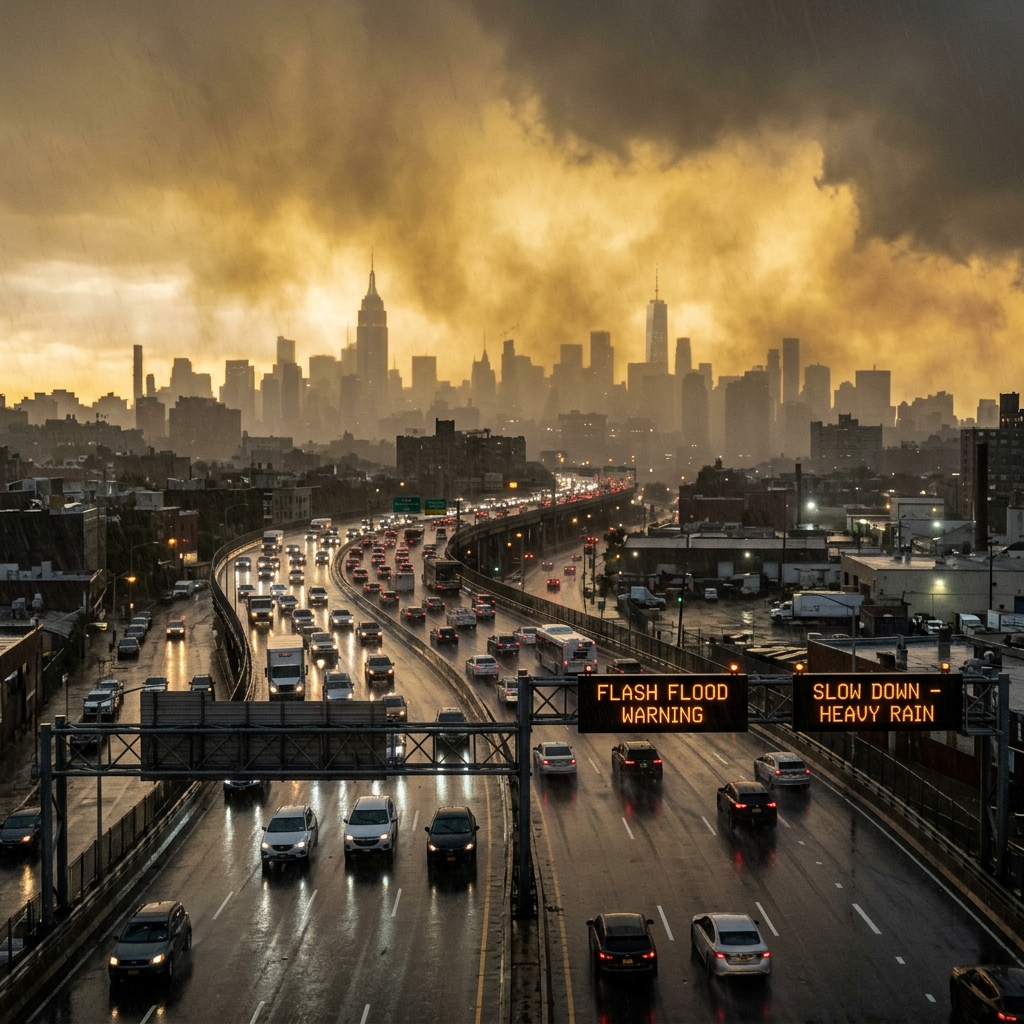
Overlapping warnings for severe flash floods and drifting Canadian wildfire smoke have triggered travel alerts across the Northeast United States as of July 18, 2026. Travelers in New York City and adjacent regions face flight delays and flooded subway lines. Short-stay visitors should shelter indoors, verify airline timetables, and maintain backup mobile connectivity for emergency routing.
Key Takeaways
- Current Status: Double alerts for flash floods and smoke active in New York and Northeast US as of July 18, 2026.
- Transit Impact: Submerged rail networks and delays reported at Newark (EWR) and JFK airports.
- Health Advice: Wear N95 protective masks outdoors and avoid driving through pooled rainwater.
- Emergency Contact: Dial 911 for immediate rescue or medical aid in the US.
- Connectivity Tip: Local cellular tower loads can peak during weather-related delays; keep a backup US eSIM active.
Phase 1: Airport Arrivals and Flight Advisory
Travelers arriving in the Northeast US should brace for delays. Severe thunderstorms combined with thick haze from Canadian forest fires have caused reduced runway visibility. If you are transiting through JFK, Newark (EWR), or LaGuardia (LGA), expect ground stop programs. Stay updated via your airline’s mobile notifications.
Upon landing, verify your mobile data connection immediately. Reliable data access is essential to receive emergency safety alerts and coordinate alternative transportation options.
Phase 2: Transiting Safely Through City Commutes
Torrents of rain can rapidly flood municipal subway stations and highway underpasses. In New York City, select subway lines have faced service suspensions. Refrain from entering flooded stations. If you are taking taxis or rideshares, ensure the driver is aware of low-water road advisories.
Avoid walking or commuting through stagnant water, as hidden electrical hazards or open storm drains can present serious safety risks.
Phase 3: Postponing Regional Excursions and Road Warnings
Outdoor activities, including hiking in upstate parks, should be suspended due to high flash flood risks and poor air quality. The National Weather Service has issued warnings advising residents and visitors to limit travel. Keep headlights active if driving through regional haze.
Check the national meteorological status portal before embarking on any intercity road trips in the Mid-Atlantic states.
Phase 4: Savoring Local Food and Dining Tipping While Sheltering
Remaining indoors at your hotel or apartment is the safest course of action. If ordering food delivery during severe weather, please be considerate of the delivery riders. In the United States, a tipping rate of 18% to 22% is standard for couriers working during severe weather events.
Card and digital wallet payments are accepted by all major food delivery applications, making it easy to purchase meals without needing to go outside for cash.
Current Safety & Transit Status
| Location / Transit Hub | Current Advisory Status | Action Required for Travelers |
|---|---|---|
| 📶 TravelyData eSIM | Active Emergency Backup | Verify roaming is active; switch network operators if signal weakens |
| 📶 NYC Subway System | Submerged stations; partial halts | Check MTA live maps; avoid low-lying stations |
| 📶 Newark Airport (EWR) | Ground stop programs active | Confirm flight departure times before leaving for terminal |
Frequently Asked Questions
Q1: What should I do if a subway station starts filling with rainwater?
A1: Exit the station immediately. Do not attempt to board trains if water is on the tracks. Climb to street level and seek shelter in a secure building.
Q2: How do I track real-time air quality updates in the Northeast?
A2: Use the official government website AirNow.gov or check local weather channels. If the AQI exceeds 150, wear an N95 mask outdoors.
Q3: Will my credit card be accepted if local power grids fail?
A3: Localized flooding can cause brief power cuts. Keeping a small amount of USD cash is highly recommended for emergency expenses.
 United States eSim