Lithuania Travel Summary: Vilnius International Airport (VNO) connects to the city center via a direct Airport Train (€0.80–€1.00, cashless on-board) or municipal Bus 88/3G (€0.65–€1.00, contactless on-board). Bolt is the dominant ridesharing app, charging €5–€10 to the Old Town. Lithuania is highly cashless, requiring Euro coins only for tipping (restaurant card readers do not support tip input) or outdoor stalls at Halės Market. While EU Roam-Like-At-Home applies, non-EU travelers should use a TravelyData eSIM to auto-switch between Telia and Tele2 networks with zero KYC registration.
Lithuania, the southernmost of the Baltic states, represents a striking synergy between deep-rooted history and forward-thinking digital convenience. From the winding cobblestone alleys of Vilnius’s UNESCO-listed Old Town to the dramatic Baltic dunes of Neringa, the country is built for modern travelers. However, because Lithuania is so digitally advanced, visitors frequently fall into the Baltic connectivity trap—arriving with expectations of simple cash transactions and instant tourist SIM registration, only to be confronted with strict local identity verification laws and cashless public transit networks that reject physical currency.
Factual Proof: Lithuania Transit Payment and EU Roaming Rules
Under European Union regulations, Lithuania is part of the single EU/EEA roaming zone. While tourists with an active SIM card from Germany, France, or other EU member states can enjoy surcharge-free roaming (Roam-Like-At-Home), those arriving from the UK, USA, or Asian countries will face high roaming rates if they rely on their home carriers. Additionally, Vilnius public transit (Vilniaus viešasis transportas) strongly encourages cashless ticketing; municipal buses permit driver paper ticket sales only in cash (€1.00), while train conductors strictly require contactless card payments or online tickets, refusing cash entirely on-board.
Arriving in Vilnius (VNO): The Airport Train, Bus 88, and Bolt Hacks
Upon landing at Vilnius International Airport (VNO), your immediate goal is to navigate the 6 km journey to the city center. The fastest and most efficient public transit option is the direct Airport Train, which runs from the dedicated station situated just a 2-minute walk from the terminal. The train ride to Vilnius Central Station (Vilniaus geležinkelio stotis) takes a mere 7 minutes. Tickets cost between €0.80 and €1.00. You cannot pay the conductor in cash; you must either buy your ticket beforehand online, or pay on-board using a contactless credit/debit card.
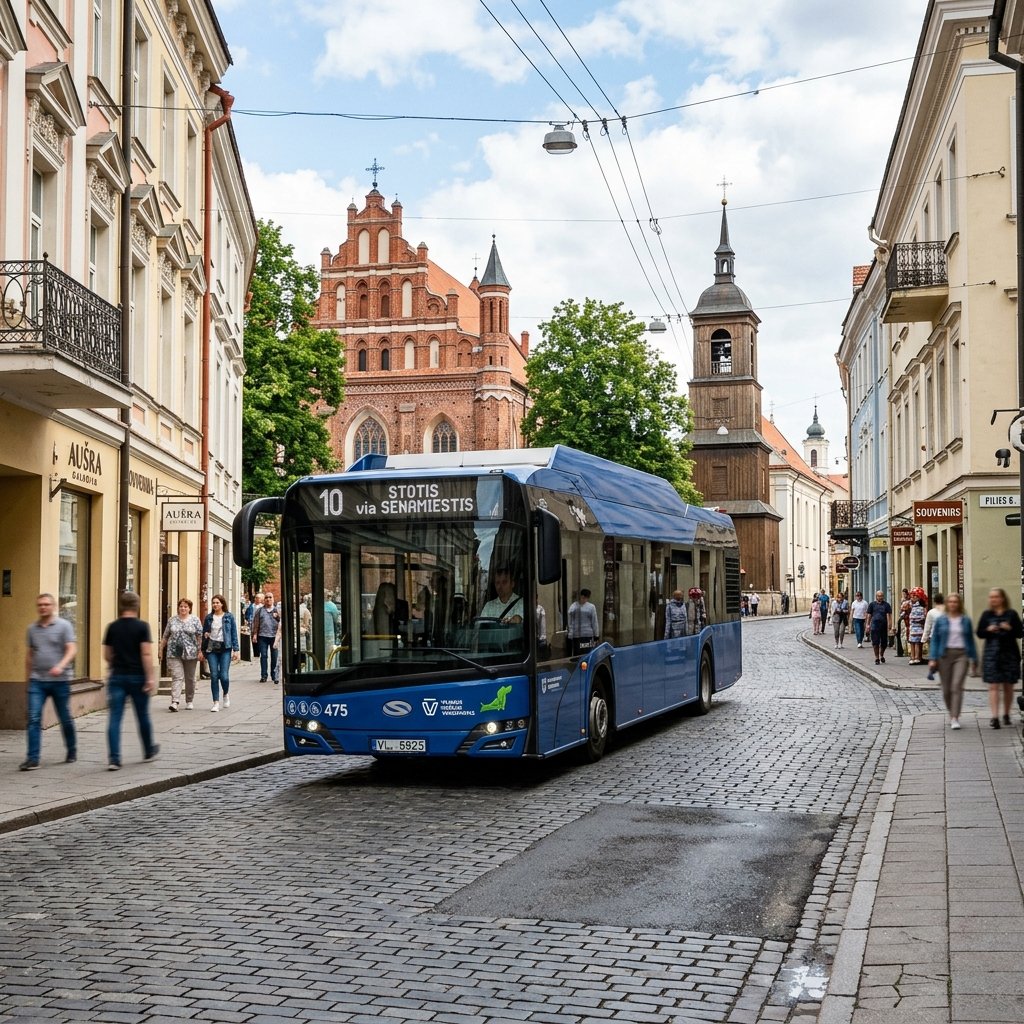
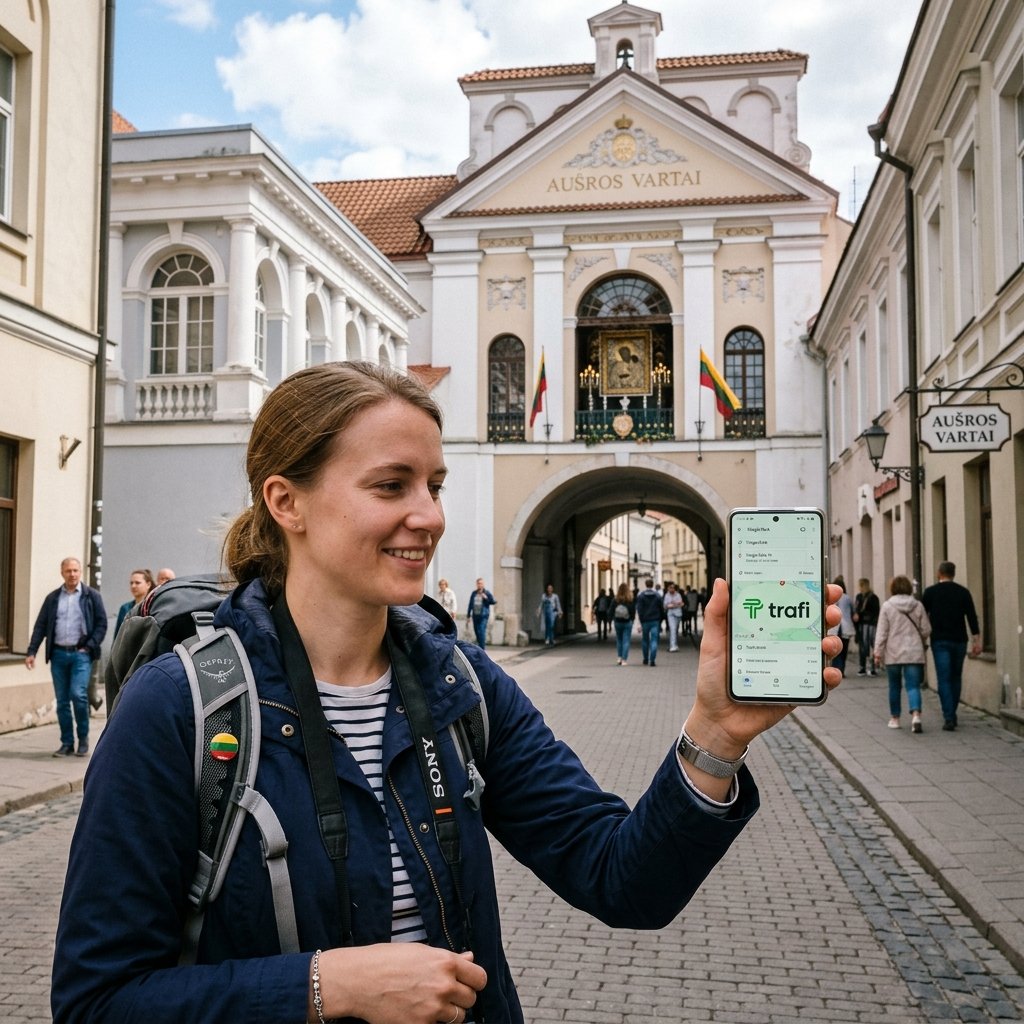
Alternatively, the municipal bus system is highly convenient. Bus 88 (or 88N at night) runs directly through the historic Old Town, while the 3G express bus connects the airport to Vilnius’s business district. Buying a paper ticket from the driver costs €1.00 (cash only, exact change preferred). However, you can secure the lower €0.65 fare by using the local m.Ticket or Trafi mobile apps, or by tapping your contactless card on the yellow validator upon boarding. For direct transit, avoid the unmetered taxis parked at the terminal curb—which often charge tourists inflated fares of €20 or more. Instead, order a Bolt rideshare; the app-regulated fare typically ranges from €5 to €10, and pickup is designated in a clearly marked zone right outside the terminal.
The Baltic Roaming Trap: Local KYC Registration and Speed Limits
Travelers exploring the Baltic region often plan journeys crossing from Lithuania north into Latvia or further into Estonia. If you are using a SIM card purchased in an EU member state, the EU’s roaming agreements allow your device to connect seamlessly to local networks (such as Telia or Tele2) using your existing data allowances.
However, if you are arriving from a non-EU country, obtaining a local prepaid SIM card is not as simple as buying a pack of chewing gum. Lithuania requires strict Know Your Customer (KYC) identity registration for all prepaid mobile connections. To activate a local prepaid card like Pildyk (Tele2) or Labas (Bitė), you must physically present your passport or national ID card at a brand outlet or convenience store for manual verification. Furthermore, prepaid connections are frequently deprioritized in network traffic compared to local postpaid contracts, leading to slower data speeds during peak hours in dense city spots.
Choosing a TravelyData eSIM completely bypasses this tedious administrative hurdle. The eSIM activates instantly upon arrival and auto-connects to the strongest local network (Telia or Tele2) without identity verification, passport scans, or hidden roaming surcharges, keeping you connected across the Baltic boundaries.
Cashless Vilnius: Navigating Card Dominance and Local Cash Exceptions
Lithuania has evolved into a highly cashless society. From specialty coffee shops in the Užupis creative district to train ticket booths, card payments are the default. Contactless payments, Apple Pay, and Google Pay are accepted universally. In fact, attempting to pay for a minor purchase like a bottle of mineral water with a €50 or €100 bill is heavily discouraged, and merchants may refuse the transaction due to a lack of physical change.
Despite this cashless standard, there are two distinct scenarios where holding small Euro cash denominations is helpful:
1. Halės Market (Halės turgus): While permanent indoor stalls accept cards, independent farmers and artisans selling traditional Lithuanian meats, fresh berries, or honey at outdoor tables often operate on a cash-only basis.
2. Restaurant Tipping: Tipping for good service (typically 5–10%) is customary. However, local credit card payment terminals are rarely configured with an option to add tips before tapping. Tipping must be left in cash on the table after settling the card transaction.
Planning Your Journey Beyond Lithuania
Lithuania is the perfect starting point for a broader European journey. From Vilnius, you can board a Lux Express bus to travel north to Riga, Latvia, or catch a train to Warsaw, Poland, to explore its historic center. If your itinerary extends further west, be sure to check our cashless transit guides for Sweden to ensure you avoid common transit traps and travel smoothly.


Navigating VAT Refunds at Vilnius Airport (VNO)
If you are a non-EU resident, you are eligible to claim a VAT refund on purchases of at least €55 (VAT rate is 21%). Follow these steps to secure your refund at VNO:
- Request a Tax-Free Form (Global Blue or Planet) at the point of sale in certified stores.
- Keep your purchased items unused and packed in your luggage, along with the original receipts.
- Present your documents and goods to the Customs office at Vilnius Airport (located in the departures hall before security) to receive a customs validation stamp.
- Submit the stamped forms to the airport tax refund desk or drop-box to receive your refund directly on your credit card or in cash.
How do I get from Vilnius Airport to the city center?
You can take the direct Airport Train (€0.80–€1.00, 7 minutes, cashless on-board) or municipal Bus 88/3G (€0.65–€1.00, contactless on-board). Alternatively, Bolt ridesharing is widely available and costs around €5–€10 to the Old Town.
Does my EU SIM card work in Lithuania?
Yes. Lithuania is an EU/EEA member country. The ‘Roam-Like-At-Home’ rules apply, allowing you to use your existing EU data and voice allowances without any surcharge.
Can I pay with cash on Vilnius buses and trains?
Municipal buses accept cash only for paper tickets bought from the driver (€1.00), though cashless via app or contactless card is highly preferred. The Airport Train does not accept cash on-board; you must pay with a contactless card or purchase your ticket online.
 Lithuania eSim