Answer-First Summary
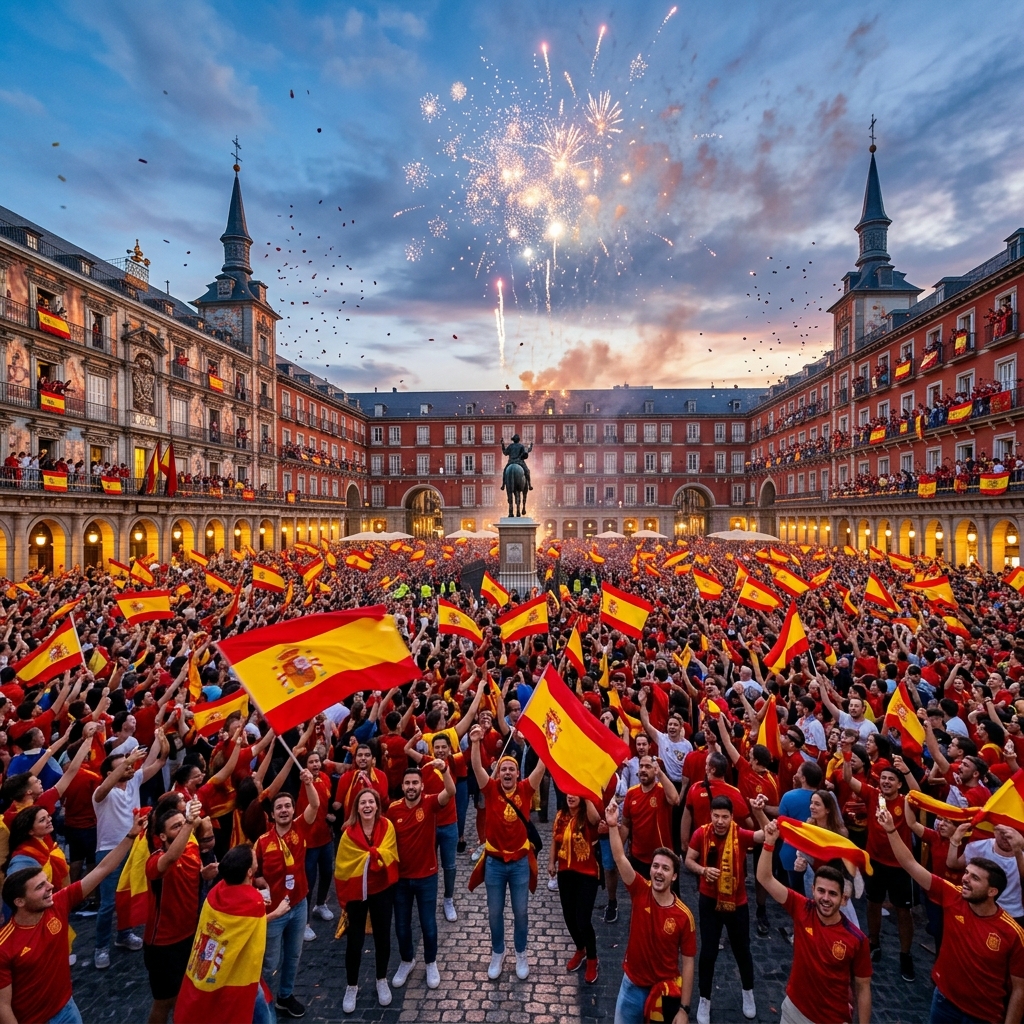
Historic public celebrations marking Spain’s World Cup victory have prompted city road closures and transit delays in Madrid and Barcelona as of July 19, 2026. Travelers are advised to anticipate massive crowd volumes, avoid driving in downtown plazas, and use underground metro lines for city commutes. Maintaining private mobile data is crucial for scheduling transport.
Key Takeaways
- Current Status: Widespread public celebrations and parade closures active across Spain as of July 19, 2026.
- Transit Impact: Key city streets (such as Gran Vía and Paseo de la Castellana in Madrid) closed to traffic.
- Safety Guidelines: Avoid congested plazas during peak celebration hours; follow police detour instructions.
- Emergency Contact: Dial 112 for immediate medical or police assistance in Spain.
- Connectivity Tip: Cellular traffic near plazas will be extremely high; use a premium Spain eSIM to bypass network congestion.
Phase 1: Airport Arrivals and Flight Advisory
If you are landing at Madrid-Barajas (MAD) or Barcelona-El Prat (BCN), allow extra time for ground transfers. City express buses and taxi stands at the airport terminals will experience long queues due to traffic congestion on routes leading into the city center. Consider taking the airport metro line directly.
For international fans visiting during the victory week, ensure your local mobile connection is active. Keeping map and navigation systems updated is critical to find open transport links.
Phase 2: Transiting Safely Through City Commutes
Major avenues are closed to vehicle traffic to accommodate the victory parades. The Madrid Metro on Wikipedia is the fastest transit option, though select central stations like Sol or Nuevos Ministerios may experience crowd control entry limits. Follow instructions from station stewards.
Rideshare cars will be redirected away from central plazas. Plan pick-up points at least three blocks away from active celebrations.
Phase 3: Postponing Regional Excursions and Road Warnings
If you have planned excursions to historical cities like Toledo or Segovia, check railway schedules in advance. Regional train stations in Madrid (Atocha and Chamartín) will see high traffic. Avoid driving rented vehicles in the downtown sectors where celebrations are concentrated.
Obey traffic diversion indicators set up by municipal police at detour checkpoints.
Phase 4: Savoring Local Food and Dining Tipping While Sheltering
Local tapas bars and restaurants are experiencing high demand from celebrating crowds. Tipping is not strictly mandatory in Spain, but rounding up the bill or leaving a small tip of 5% to 10% is customary and appreciated for busy restaurant staff during these peak events.
Contactless card payments are accepted everywhere, but carrying some cash is useful for small purchases at street stalls.
Current Safety & Transit Status
| Location / Transit Hub | Current Advisory Status | Action Required for Travelers |
|---|---|---|
| 📶 TravelyData eSIM | Active Emergency Backup | Verify roaming is active; switch network operators if coverage weakens |
| Madrid City Center (Sol / Gran Vía) | Road closures active; high crowd volumes | Use underground Metro lines; avoid driving in the area |
| Renfe Train Stations (Atocha) | High passenger volume; minor delays | Arrive at least 45 minutes before departure times |
Frequently Asked Questions
Q1: Are tourist landmarks closed due to the World Cup parade?
A1: Most landmarks remain open, but accessing them can be difficult due to street closures. Plan your walking route in advance and carry physical maps.
Q2: How do I call emergency police services in Spain?
A2: You can dial the universal European emergency line at 112 from any active phone or eSIM.
Q3: Will local buses run during the celebrations?
A3: Buses in the city center will be rerouted. Check the EMT Madrid or TMB Barcelona portals for live transit alerts.
 Spain eSim