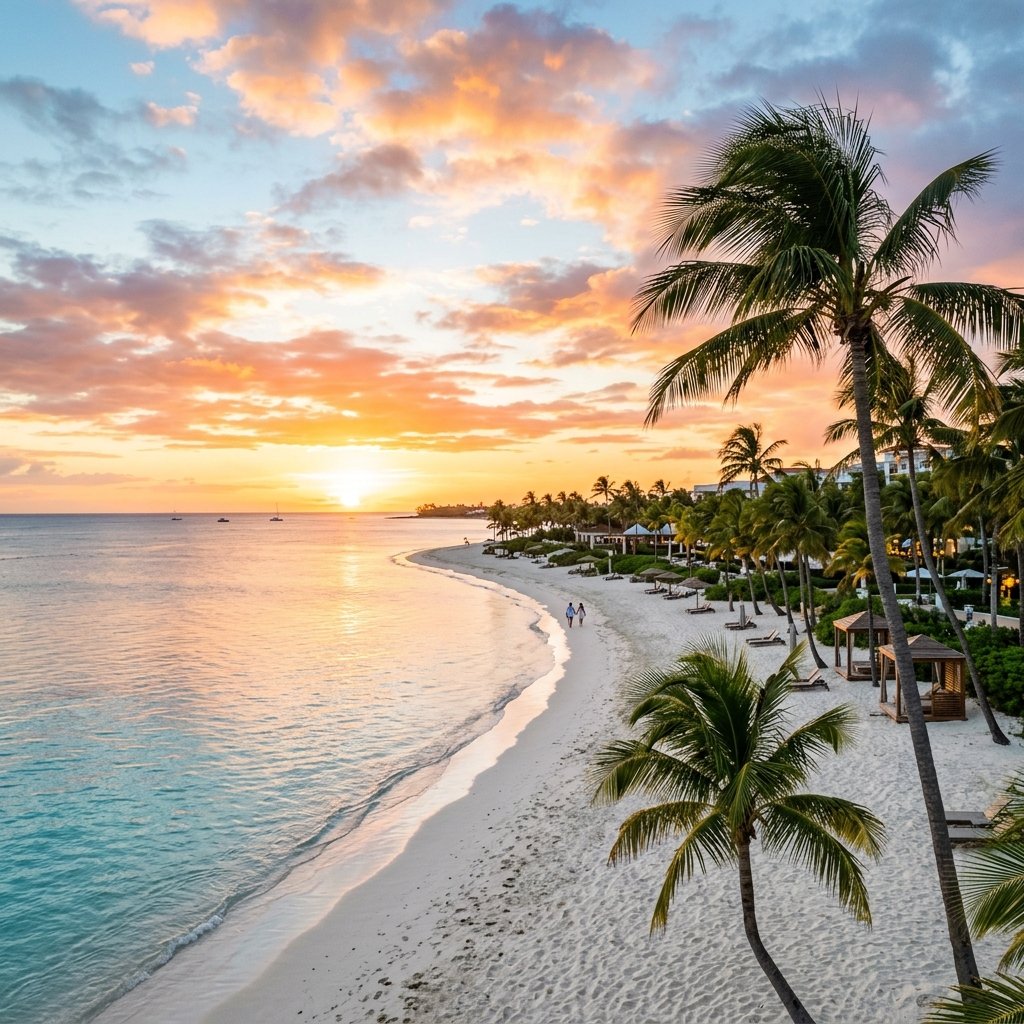
Nassau Travel Summary: There is no Uber or Lyft in the Bahamas. Taxis are zone-priced and cash-only (USD is accepted 1:1 with BSD). Mobile internet is run by BTC and Aliv; tourists should purchase a digital eSIM before arriving to avoid massive roaming fees.
| Carrier | Network Coverage | Tourist eSIM Suitability |
|---|---|---|
| 📶 Aliv | Strong LTE/4G in Nassau and Cable Beach. | Excellent speed, popular for city stays. |
| 📶 BTC | Best coverage across remote Family Islands. | Best choice if island hopping. |
| 📶 TravelyData eSIM | Dual-carrier roaming (BTC/Aliv backup). | Highly Recommended. Instant setup online. |
| NAS Airport to Destination | Official Zone Fare (1–2 Pax) | Transit Time |
|---|---|---|
| Cable Beach (Baha Mar resorts) | $25 – $40 (Cash only) | 15 minutes |
| Downtown Nassau / Bay Street | $32 – $45 (Cash only) | 25 minutes |
| Paradise Island (Atlantis resorts) | $45 – $60 + $2 bridge toll | 35 minutes |
*Note: Taxi fares are regulated by the official Bahamas Tourism Board. Additional passengers are $3–$5 each, and bags are $2–$4 each. Ensure you carry USD cash.*
Nassau Airport Arrival: Evading the Taxi Zone Queue and Getting Connected
Stepping out of the air-conditioned terminal of Lynden Pindling International Airport (NAS) in Nassau, the tropical Bahamian heat hits you immediately. But for most first-time travelers, the real shock is the lack of transport app options. If you open your Uber or Lyft app, you will find a blank map. Unlike other island destinations that have embraced ridesharing, the Bahamas keeps its transportation strictly regulated under a local taxi union.
When I landed at NAS last season, I was immediately approached by several terminal handlers offering private VIP rides for $80 to Downtown Nassau. Knowing the local zones, I politely declined, walked out past the arrival taxi line to the official dispatch desk, and requested a standard zoned taxi. The dispatcher handed me a ticket specifying a $32 fare to Bay Street. Always ask for this official quote before getting in, as unlicensed drivers (locally known as “hackers”) frequently wait near the exit doors to charge tourists double the official rates.
💬 What the Reddit Community Says (Updated 2026):
“There is absolutely no rideshare in Nassau. Do not trust anyone who says they can call an Uber. Go to the official queue outside. They only take cash (USD or Bahamian dollars). If you have extra people or large bags, they will add $3 per passenger and $2 per suitcase on top of the zone base price.” — r/bahamas traveler forum
Having a live internet connection as soon as you land is critical to verifying airport transit routes and prices. While you can stand in line at local kiosks for a physical SIM card from BTC (Bahamas Telecommunications Company) on Wikipedia, the activation queue can easily steal an hour of your vacation. Planning ahead and installing a prepaid Bahamas eSIM or a broader Caribbean Islands eSIM allows you to skip the terminal queues entirely. Like the cashless transit setups we optimized for the Dominican Republic guide and Argentina guide, having mobile data ready before you step out of customs keeps you one step ahead of the airport crowds.
Once you secure your taxi and get connected, your next challenge is managing your travel budget. To understand how card fees compare to cash, browse our global destinations on the shop.
The Bahamian Cash Balance: Navigating Card Payments, 10% VAT, and the BSD Change Trap
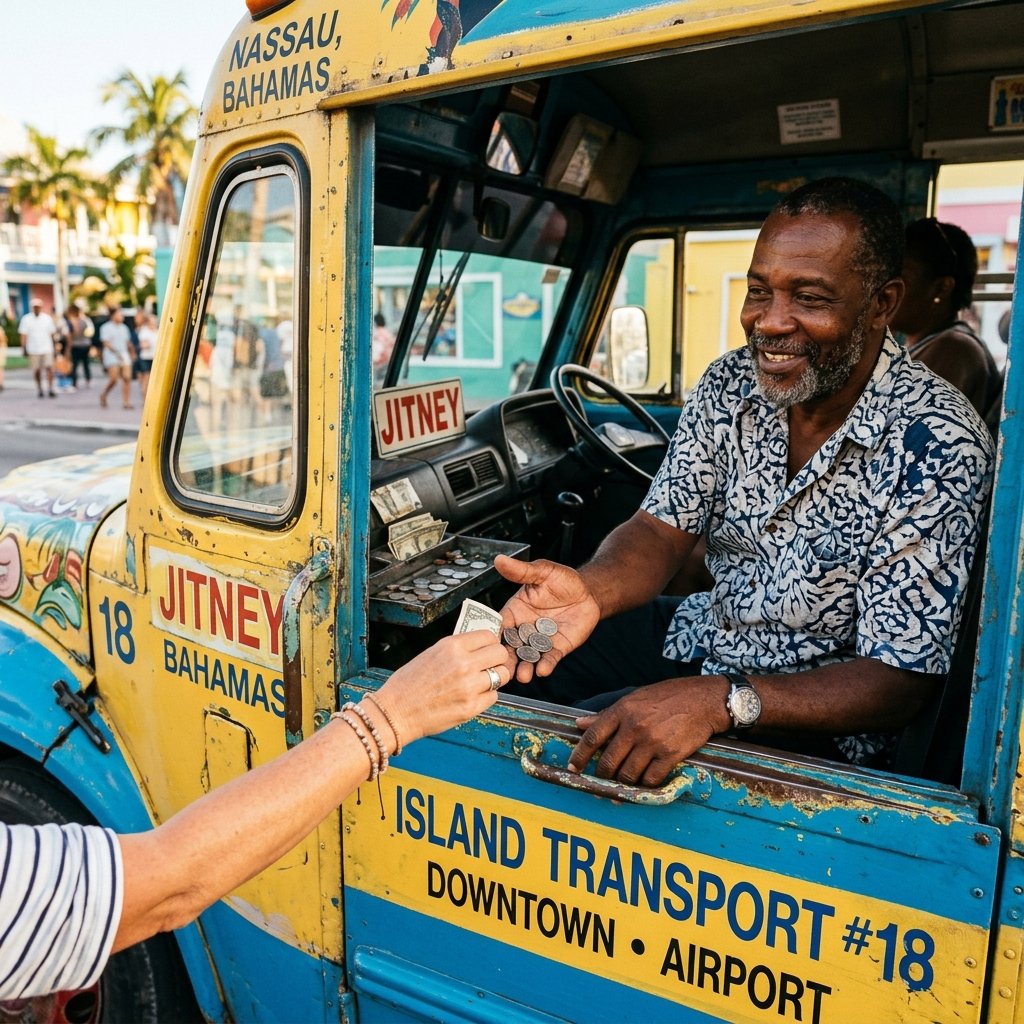
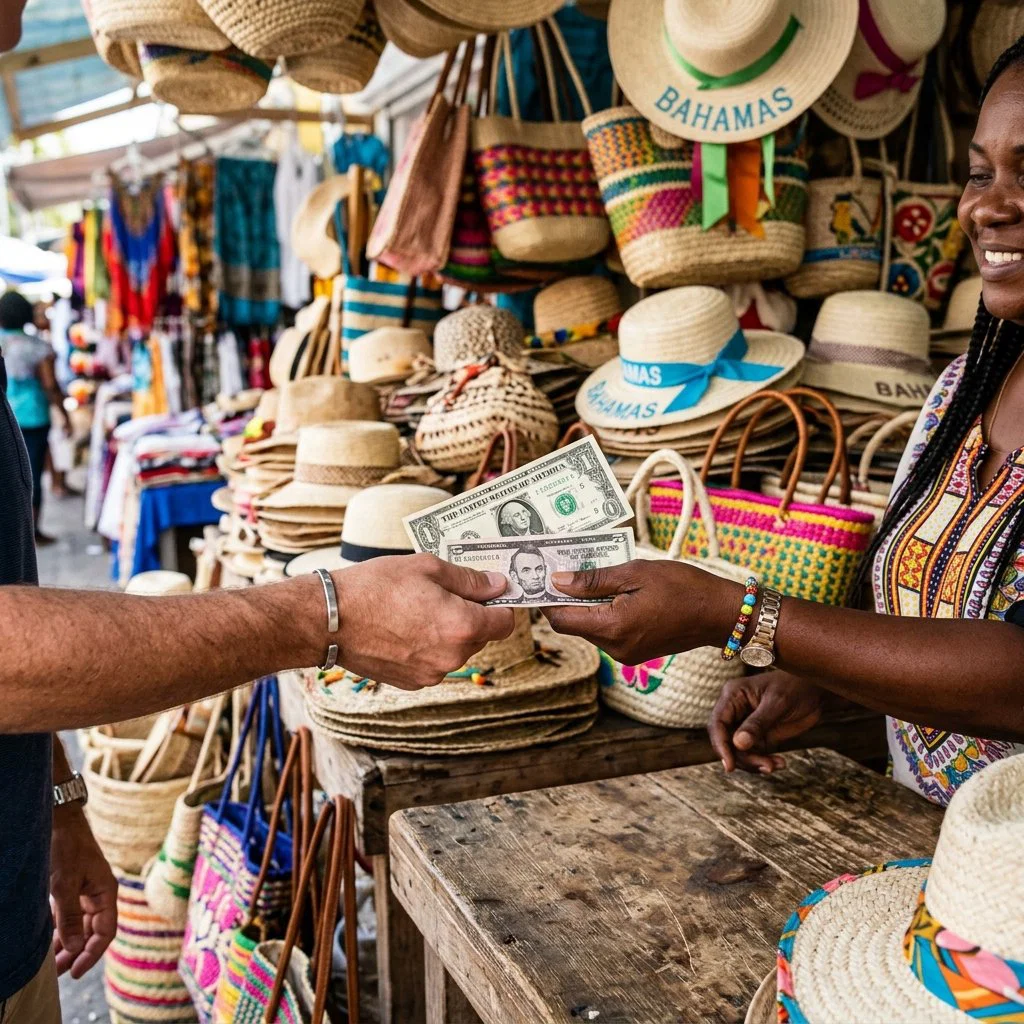
Nassau presents a fascinating payment split. In large resorts like Atlantis on Paradise Island or Baha Mar on Cable Beach, credit cards are king. You can tap your phone or use chip-and-pin for dinner, cocktails, and activities without ever touching cash. However, as soon as you step outside the resort gates, the cashless dream fades. If you want to ride the local public buses (known as Jitneys) or browse the local Straw Market for souvenirs, you must pay in physical bills.
The local currency is the Bahamian Dollar (BSD), which is pegged exactly 1:1 with the US Dollar (USD). Since US cash is accepted interchangeably everywhere, there is no need to visit a currency exchange kiosk. In fact, you should actively avoid withdrawing cash from local ATMs. Bahamian ATMs will dispense Bahamian Dollars, which are virtually impossible to spend or exchange once you leave the country. Keep a stash of small USD bills ($1, $5, and $10) for daily tips and street shopping, and politely ask merchants to give you change in USD bills whenever possible.
When shopping in Nassau, keep in mind that a standard 10% Value Added Tax (VAT) is added to most purchases. For high-value souvenirs, watches, and jewelry, tourists can take advantage of the national tax-free shopping scheme. Look for retailers displaying the Global Blue logo. By presenting your passport at checkout, the merchant will register your purchase digitally, allowing you to reclaim the 10% VAT at the airport before you fly home—provided the transaction exceeds the $25 minimum threshold.

BTC vs Aliv Network: Choosing the Best Coverage for Nassau and the Family Islands
The Bahamian mobile network is shared between two main competitors. BTC remains the historic telecom provider, partially owned by the government, and boasts the most extensive coverage network across the remote Family Islands (such as Exuma, Eleuthera, and Abaco). If your travel itinerary involves sailing, diving, or island hopping away from New Providence, BTC is the most reliable option to stay connected in remote waters.
Aliv, the modern challenger, has built a highly dense 4G LTE/4.5G network that excels in Nassau, Paradise Island, and Cable Beach. For travelers staying within the major resort corridors, Aliv often provides faster data speeds and lower latency. Choosing between them depends entirely on your itinerary. Pre-purchasing a dual-carrier TravelyData eSIM allows you to automatically roam on both networks, ensuring that you maintain the strongest signal whether you are lounging at Baha Mar or swimming with pigs in Exuma.
FAQ: Frequently Asked Questions
Do tourists need a visa to travel to the Bahamas in 2026?
Citizens of the United States, Canada, the United Kingdom, and the European Union do not require a tourist visa for stays up to 90 days. You only need a passport valid for at least 6 months and a return flight ticket.
Can I use credit cards for all public transport in Nassau?
No. Public Jitney buses, water taxis, and street taxis are strictly cash-only. Jitney fares range from $1.25 to $2.50 per ride and must be paid in exact change to the driver when exiting the bus.
Is it better to carry US Dollars or Bahamian Dollars?
US Dollars are widely accepted at a 1:1 ratio. It is highly recommended to carry USD cash to avoid being stuck with Bahamian Dollars (BSD) at the end of your trip, as BSD cannot be spent outside the Bahamas.
 Bahamas eSim