Panama City Travel Summary: Tocumen International Airport (PTY) to the city centre costs a $30 flat cash rate in an official yellow taxi — a regulated rate the airport publishes for “Panamá Centro (City)”, covering up to 2 passengers. Ride-share apps typically run $15–$22 for the same trip. Ride-share pickups are not permitted at the arrivals curb; passengers cross the pedestrian bridge to the visitor parking lot to board.
*Note: Official airport taxis take cash in US dollars only. Ride-share pickups at the terminal curb are not permitted.*
Panama City Airport Arrival: Evading the Taxi Zone Queue and Getting Connected
Leaving the air-conditioned arrivals hall at Tocumen (PTY), the heat hits immediately. The official yellow taxis wait at the arrivals exit. The official airport-taxi flat rate to the city centre is $30 — it appears on the airport’s own destination table and covers up to 2 passengers. This is strictly cash-only (USD bills), and handing the driver a $50 or $100 bill will hold you up, because change is rarely available.
If you prefer digital payments, Uber operates normally and typically runs $15 to $22 for the same trip. Ride-share pickups, however, are not permitted directly at the terminal arrivals curb. To catch an Uber, you must walk across the pedestrian bridge to the public visitor parking lot (Estacionamiento de Visitantes) in Terminal 1 or Terminal 2. You need working data to book the ride and follow the driver to the parking slot.
? What the Reddit Community Says (r/panama):
“Warning to PTY arrivals: Do not walk out expecting Uber at the curb. Airport police will fine the driver. Go up to departures or cross to the main parking lot. It is a 3-minute walk but saves you $15-$20.” — r/panama travel advice thread
With the taxi and the data sorted, the next thing to plan is your budget. To understand how card fees compare to cash across the region, checkout our neighbor Costa Rica guide and Colombia guide, or browse our global destinations on the shop.
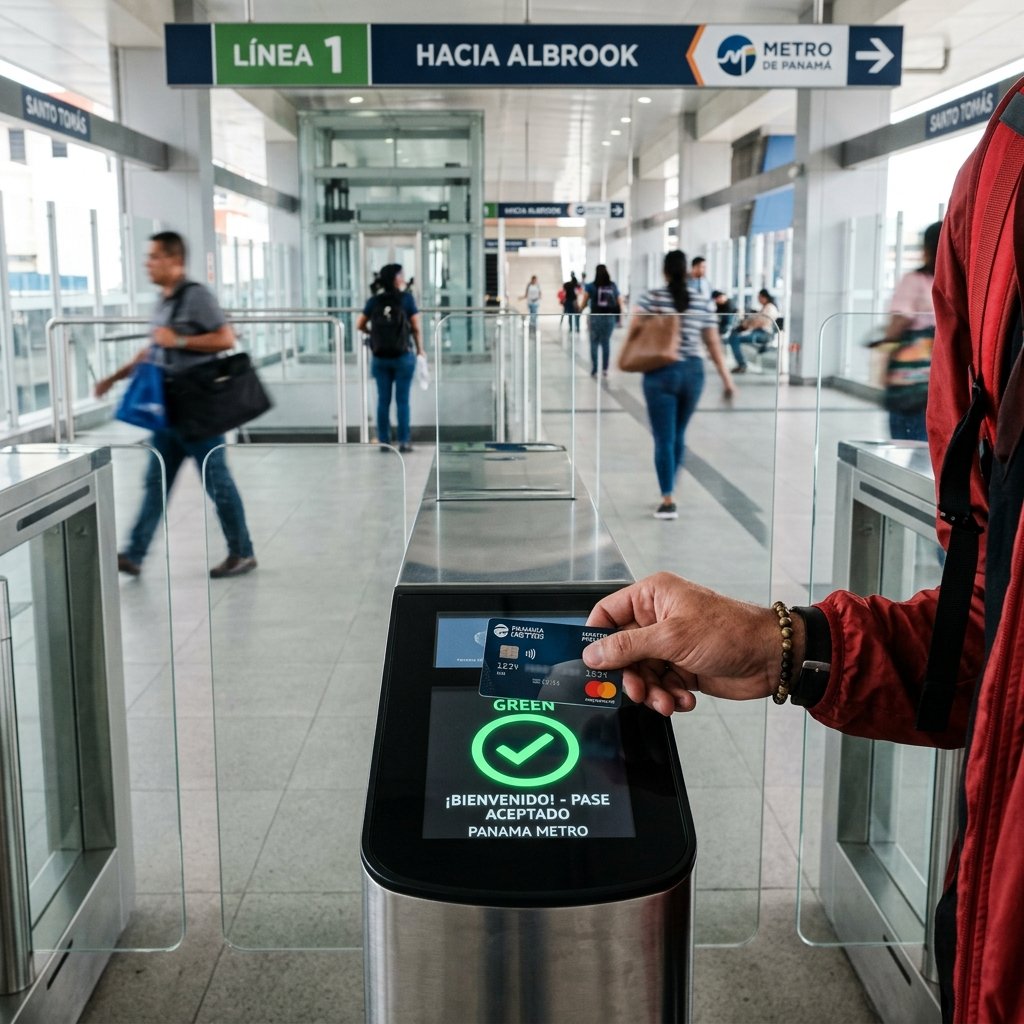
Riding the Metrobus: Cashless Cards and Tap-to-Ride Trains
Panama City’s buses are cashless: drivers do not accept cash, and the bus does not take bank cards, so you need the Metro / Mi Bus stored-value card loaded before you board. Fortunately, the modern Panama Metro train system allows you to tap directly at the turnstiles using contactless Visa or Mastercard credit and debit cards.
Panama City runs an elevated metro alongside the citywide Metrobus fleet. While the buses are strictly cashless and require you to purchase and load a physical transit card beforehand, the metro trains have recently been upgraded with contactless payment readers. I tapped my own Visa card at the turnstile and paid B/.0.35 per trip. For the buses, buy the boarding card at either airport terminal or at a major terminal such as Albrook — you cannot pay the driver in cash or by card. The Metrobus fare runs B/.0.25 to B/.1.25 by route, 2 transfers are included at no extra charge, and the service runs 5:00–23:00 daily.
Exploring San Blas and Bocas: Cash Realities and +Móvil vs. Tigo Network Coverage
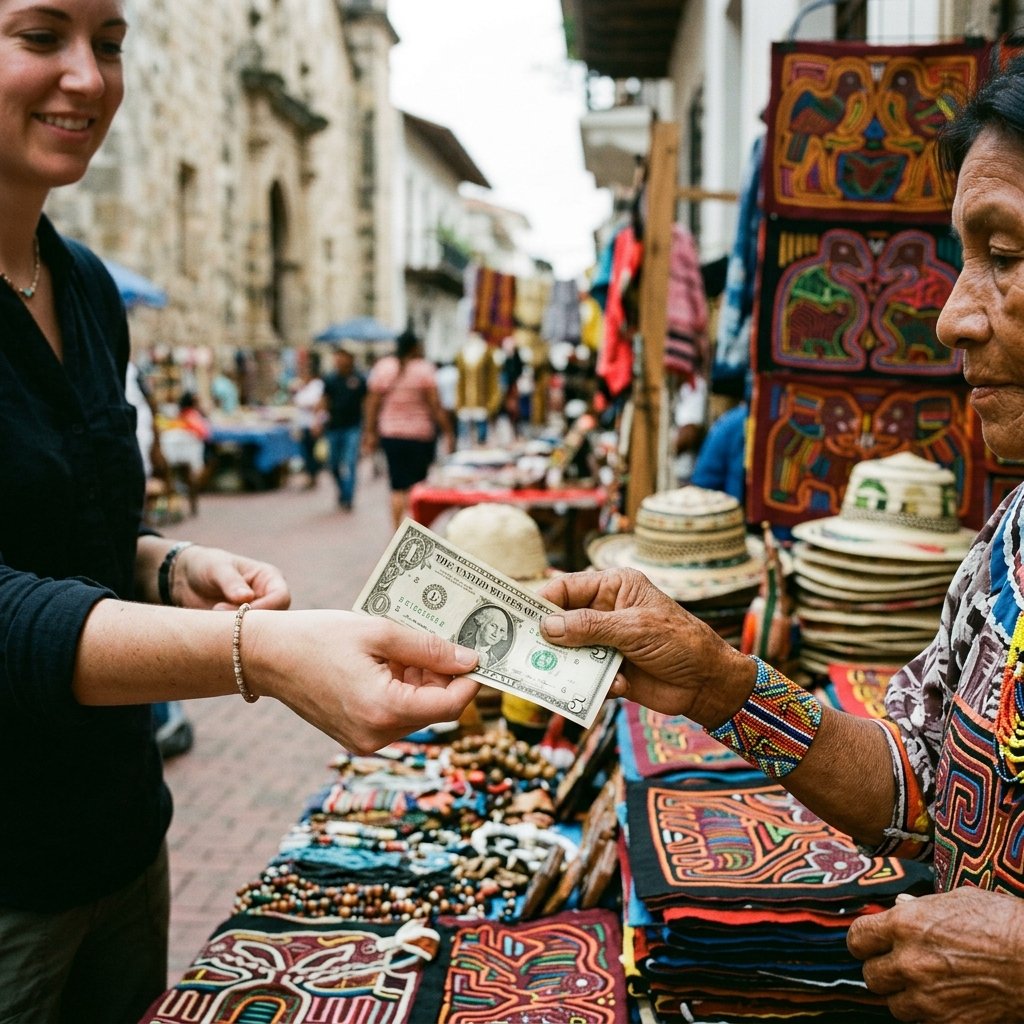
Travellers heading to the outlying cays report that +Móvil (Cable & Wireless) reaches places Tigo does not, while Tigo performs better in the capital. Cash is the practical option for excursions to San Blas and Bocas del Toro, because ATMs are effectively absent on the islands.
For trips to San Blas or Bocas del Toro, plan around cash and patchy signal. San Blas (Guna Yala) is administered as a comarca rather than a conventional province, and in practice island entry fees and meals are settled in small USD notes. There are no ATMs on the cays, and the power supply is intermittent, so card terminals cannot be relied on. For cellular data, +Móvil (Cable & Wireless) is the network most often reported to hold signal across the remote cays and mountain corridors. An eSIM installed before you fly connects to whichever local network has signal.
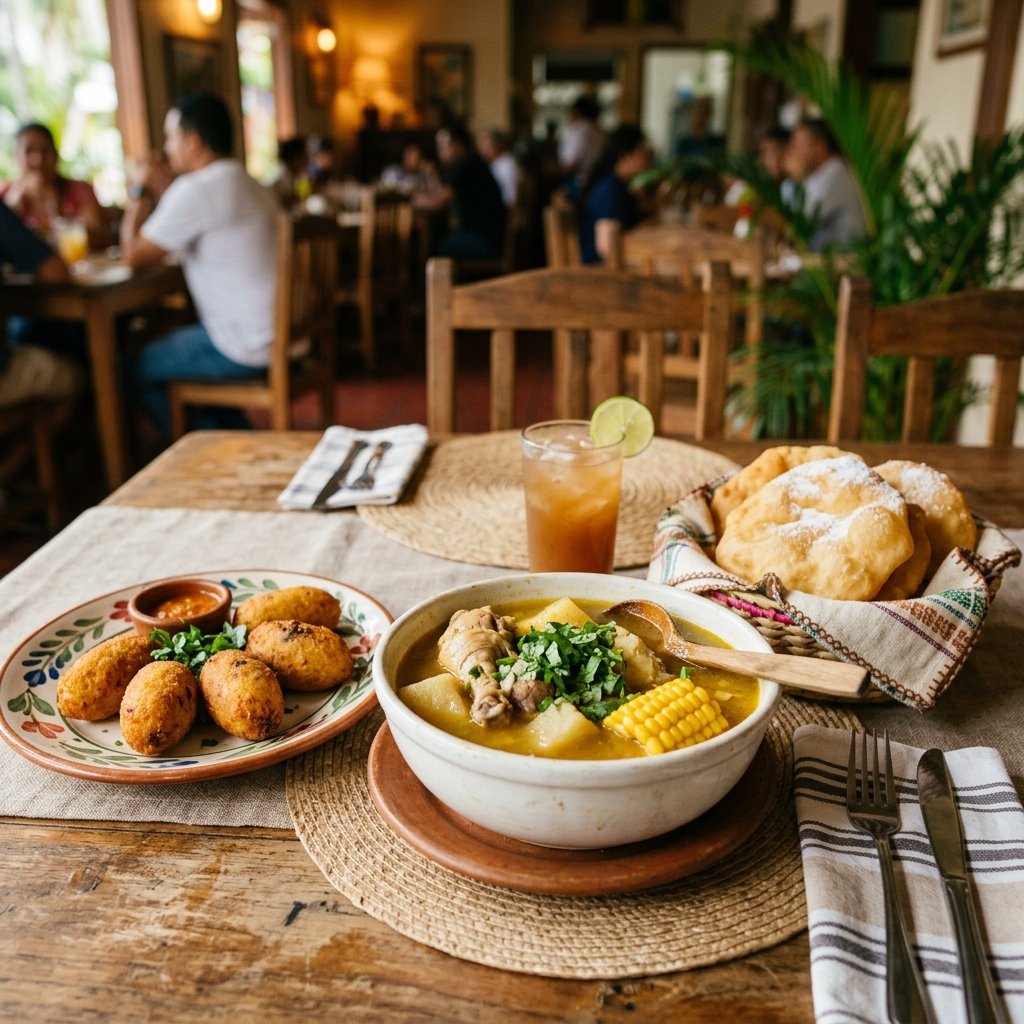
Seafood Ceviche and Sancocho: Mercado de Mariscos Etiquette and Tipping Rules
Street-market meals such as sancocho and fresh ceviche generally land in the $3 to $5 range and are paid in cash at the open-air stalls. Sit-down restaurants commonly add a 10% service charge, and because taxi fares are regulated flat rates there is no expectation to tip the driver.
Panamanian cooking pairs Afro-Caribbean technique with Pacific seafood. For the most authentic experience, head to the Mercado de Mariscos (Seafood Market) at the edge of Casco Viejo. Here, local vendors serve plastic cups of fresh sea bass ceviche cured in lime juice and red onions for a few dollars. Because Panama uses the US Dollar interchangeably with the local Balboa coin at a 1:1 ratio, you can pay with dollar bills and receive change in a mix of coins. When dining at sit-down establishments in the city, check your bill to see if “propina” (tip) is already included. If it isn’t, a 10% cash tip is the local convention. For a complete guide on culinary customs and safety, check the official Panama Tourism Portal.
Stay Connected Throughout Panama
Navigating Casco Viejo and booking boat transfers to San Blas both depend on a working mobile connection. Public Wi-Fi is limited outside hotel lobbies and is not something to rely on.
To avoid roaming charges, buy a travel eSIM from TravelyData. With a high-speed Panama travel eSIM, your phone connects automatically to the best available local network (+Móvil or Tigo) the moment you land. Set up your plan in a couple of minutes and stay connected for the whole trip.
Frequently Asked Questions (FAQ)
Can I pay for the Panama City Metrobus using a credit card?
Correct — the Metrobus does not accept cash, bank cards or mobile payments. Buy a Metro / Mi Bus boarding card at either airport terminal, load it, and tap in. The Metrobus fare is B/.0.25 to B/.1.25 by route and 2 transfers are included at no extra charge. The Metro train is the exception: it takes contactless Visa and Mastercard directly at the turnstile.
Is the US Dollar used in Panama?
Yes. The US Dollar (USD) is accepted interchangeably with the Panamanian Balboa (PAB) at a fixed 1:1 ratio. Only USD bills are used as paper money, while local Balboa coins are used for change.
Which network has the best coverage in San Blas?
For remote areas such as San Blas and the mountain corridors, +Móvil (Cable & Wireless) is the network most commonly reported to hold coverage. Tigo tends to perform best in and around Panama City.
Is a service charge automatically added to restaurant bills in Panama?
Sometimes. Some mid-to-high-end restaurants in Panama City will automatically add a 10% service charge (propina) to your bill. Always check your receipt first to avoid double-tipping.
 Panama eSim