Costa Rica is a tropical wonderland of active volcanoes, wild rainforests, and misty cloud forests. Yet, this eco-tourism pioneer enforces strict rules that catch tourists off guard—from mandatory rental car insurance laws to cashless national park gates. Navigating roads, bookings, and cash payments requires understanding the local laws to ensure a smooth tropical vacation.
1. Costa Rica Car Rental: Compulsory Third-Party Liability Rules
Navigating Costa Rica’s lush terrain requires a smart understanding of local roads, insurance, and apps. Under Costa Rican law, mandatory third-party liability insurance is compulsory for all car rentals, and standard credit card collision damage waivers (CDW) typically do not cover this local liability.
2. Road Quality & Navigating Unpaved 4×4 Mountain Terrain
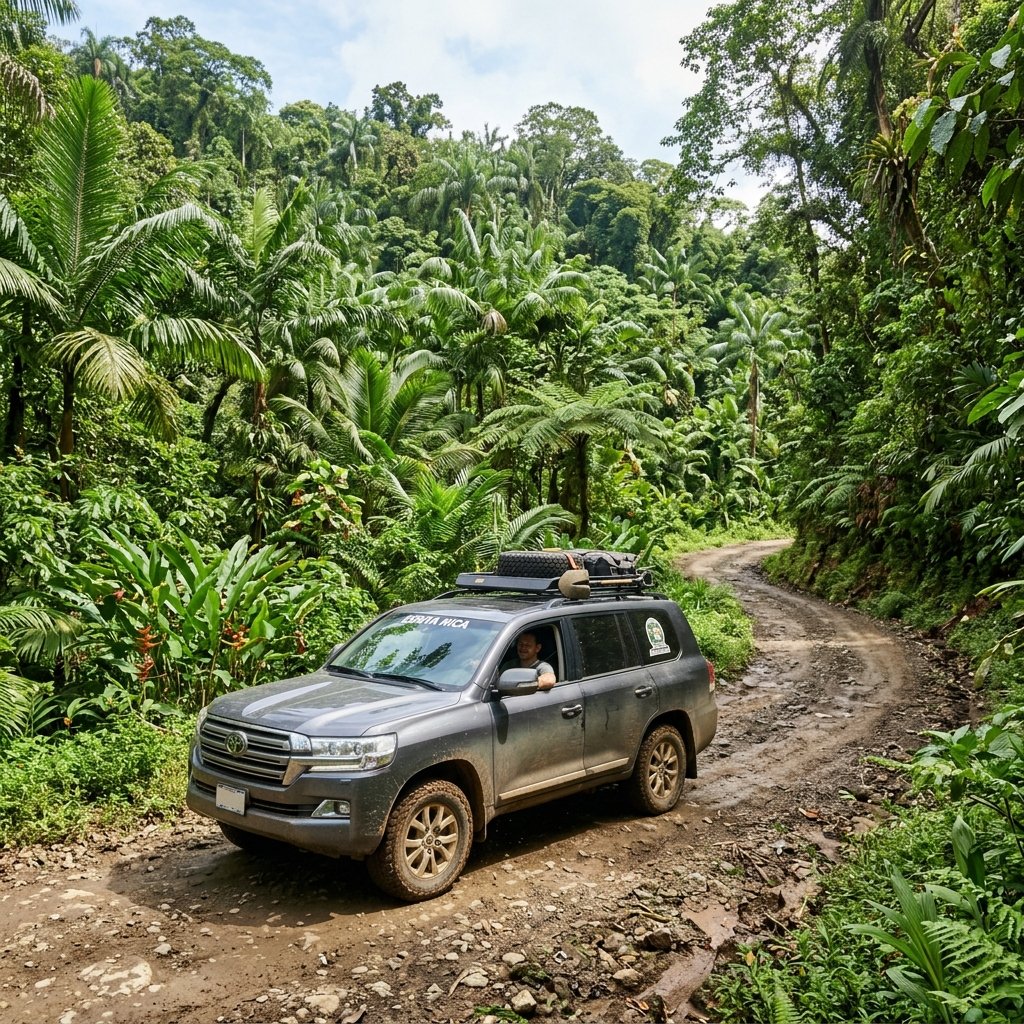
If your itinerary is limited to San José and the major highways, a standard sedan is fine. However, if you are heading to Monteverde, Drake Bay, or the Nicoya Peninsula (Santa Teresa, Nosara), a high-clearance 4×4 is absolutely mandatory. Gravel slopes are steep, potholes are deep, and roads frequently turn to thick mud during the rainy season. Remember: car rental insurance explicitly excludes damage from driving through river crossings.

3. The Dual-Currency System: Managing US Dollars and Colones
Costa Rica uses a dual-currency system of the Costa Rican Colón (CRC) and the US Dollar (USD). Keep a healthy mix of both currencies on hand depending on where you are paying.
4. ATM Withdrawals & Cash Payments for Sodas, Tolls, and Tips
US Dollars are widely accepted for tours, hotels, and national park entries. However, keep colones cash on hand for local roadside fruit stands, toll booths, traditional family diners (sodas), and tipping your wachimán (informal street parking attendants, usually 200 to 600 colones). ATMs at state-owned banks, Banco Nacional (BN) and Banco de Costa Rica (BCR), do not charge transaction fees for international cards.
5. National Park Gates: Pre-booking Timed SINAC Passes Online
You cannot purchase entry tickets at the gate for popular national parks. The government strictly regulates access to protect wild ecosystems.
Every visitor must purchase timed entry tickets online in advance through the official portal of SINAC Portal. Popular parks like Manuel Antonio and Poás Volcano sell out weeks in advance. Inside Manuel Antonio, plastic bags and packaged foods are strictly banned to prevent wild monkeys and raccoons from feeding on trash.


6. Traditional Costa Rican Dining: Gallo Pinto and Casado Plates
Traditional Costa Rican cuisine is fresh, hearty, and built around local staple ingredients. From breakfast to dinner, meals are mild but highly satisfying. Check the r/CostaRica community on Reddit for local advice.
7. Sipping Chorreador Filter Coffee & Understanding Service Charges
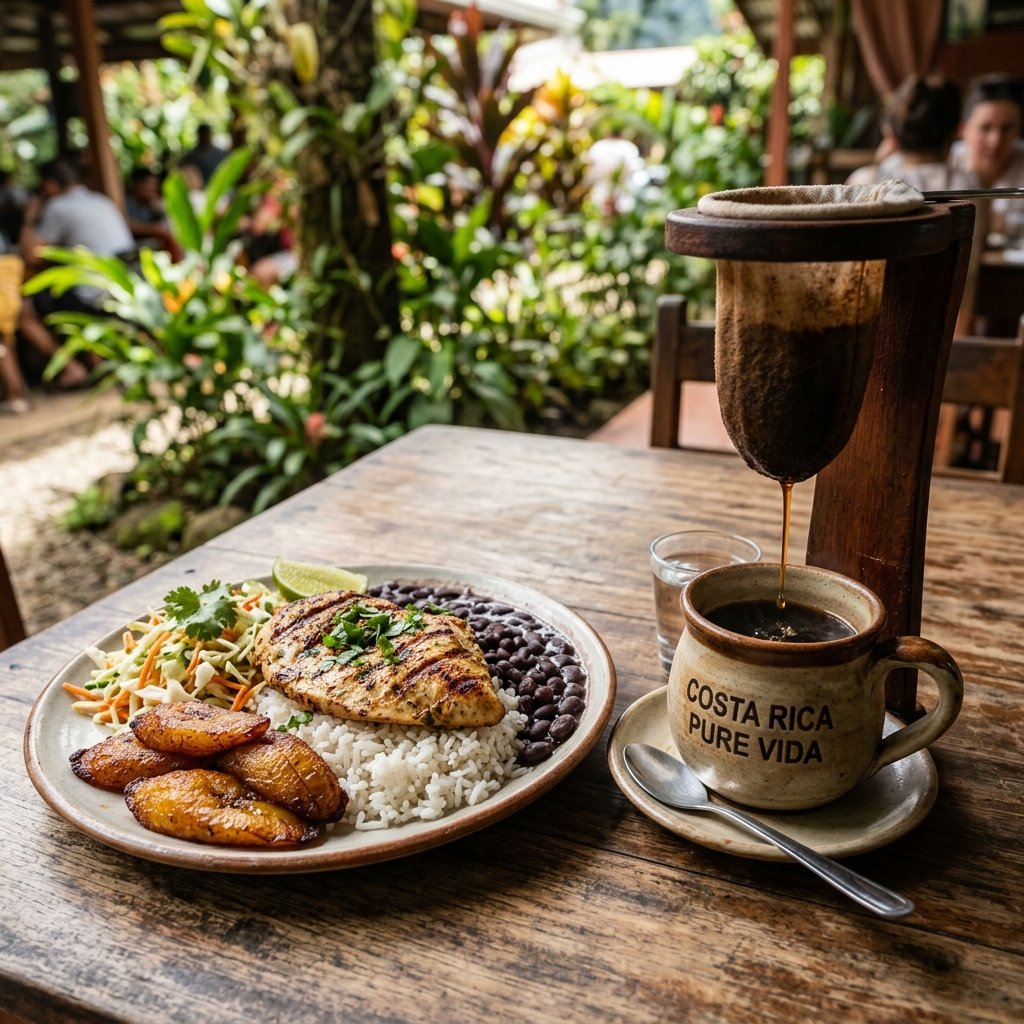
Start your day with Gallo Pinto, the national breakfast of rice and black beans sautéed with Lizano sauce. For lunch, order a Casado, a plate featuring rice, beans, sweet plantains, salad, and a protein of choice. Don’t leave without trying coffee brewed through a traditional cloth filter (chorreador). Note that restaurant bills automatically include a 10% service charge, so extra tipping is optional.
8. Seamless Connectivity: Safe Travel Practices & eSIM Setup
Preventing opportunistic thefts and scams is a vital part of traveling safely in Costa Rica. Thieves often scan rental car cabins for visible belongings.
Never leave luggage or valuables visible in a parked car unattended. Be aware of the flat tire scam, where helpful locals offer to assist you with a puncture while an accomplice steals bags from your unlocked cabin. For border rules, tourists from the US and EU enter visa-free for up to 180 days. To stay connected, download a high-speed Costa Rica eSIM. This gives you instant access to Liberty’s 5G network upon arrival without local biometric ID registration, letting you book rides and navigate safely.
Frequently Asked Questions (FAQ)
Is a 4×4 vehicle mandatory for renting a car in Costa Rica?
For flat highways connecting San José, La Fortuna, or Manuel Antonio, a sedan is fine. However, if your itinerary includes Monteverde, Drake Bay, or Nicoya, a high-clearance 4×4 is absolutely mandatory due to steep unpaved gravel roads and deep potholes.
Can I purchase national park entrance tickets at the gate in Costa Rica?
No, you cannot buy tickets at the gate for major parks like Manuel Antonio or Poás Volcano. You must register and purchase timed entry tickets online in advance at the official SINAC website (serviciosenlinea.sinac.go.cr).
Is tipping required in Costa Rican restaurants?
No, tipping is not required as restaurant bills automatically include a 10% service charge and a 13% sales tax (IVA). Extra tipping is entirely optional and only for exceptional service.
Does a travel eSIM work instantly on Liberty in Costa Rica?
Yes, international roaming eSIMs allow you to connect instantly to the Liberty or Kolbi 5G/4G networks upon landing, bypassing local biometric registration and passport validation.
 Costa Rica eSim