Why My First Hour in Tirana Had Me Throwing Out the European Travel Playbook
My first hour in Albania was a masterclass in letting go of control. I stood at a chaotic intersection off Skanderbeg Square in Tirana, tapping frantically at my phone. Google Maps insisted no public transit existed, while a stream of white minibuses—known locally as furgons—roared past, destination names scribbled on cardboard propped behind their windshields. A local saw my confusion and chuckled: “Forget the screen, my friend. Just yell where you want to go, find the furgon, and get in.” I took a breath, yelled “Berat!” and leaped. That small leap of faith unlocked one of Europe’s most raw, spectacular, and hospitable countries. But if you want to travel here, you have to throw out your typical European guidebook.
Before you cross the border, make sure to set up a high-speed Albania eSIM. Having instant mobile data to search for offline maps, translate signs, and coordinate with guesthouses makes navigating this rugged land a breeze.
Transit & Navigation: The Art of the Furgon
Albania’s transit is entirely decentralized, informal, and cash-based. If you are expecting modern train networks or online ticket portals, prepare to adjust your expectations. Here is how to navigate like a seasoned traveler:
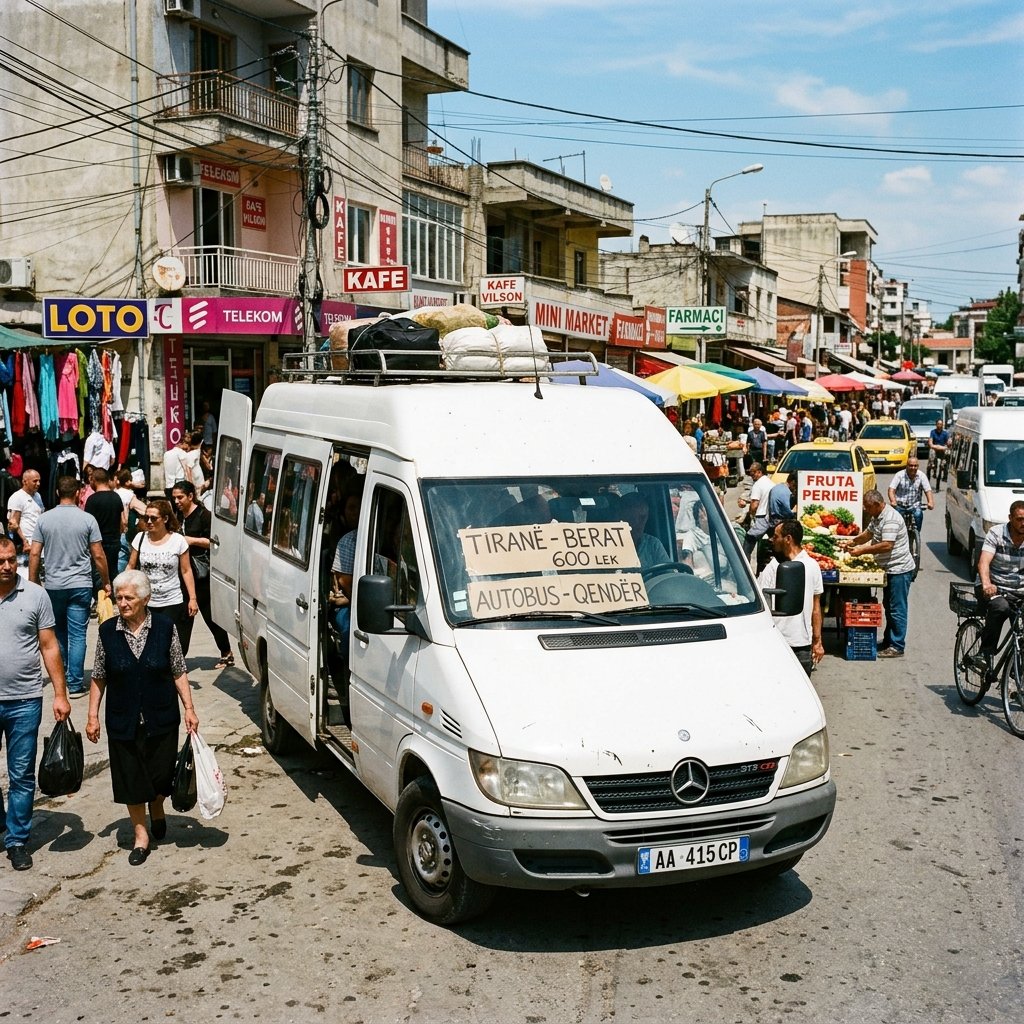
- The Furgon Rules: These minibuses are the country’s primary transport. They do not run on strict schedules; they leave when they are full. Intercity furgons operate mostly in the morning. If you want to head to a new town, plan to arrive at the terminal between 7:00 AM and noon. After 2:00 PM, options drop off drastically.
- Timetables: Google Maps does not have transit data for Albania. Use Gjirafa Travel (gjirafa.com/travel) to look up estimated departures. Always cross-reference this with your guesthouse host or the drivers at the station. Download Maps.me for offline navigation—it often features informal furgon stops marked by past travelers.
- Tirana’s Split Terminal System: Tirana does not have a single central bus station. Instead, departures are split between two major hubs:
- North & South Bus Terminal (Terminali i Autobusëve Jug dhe Veri): Located near the “Casa Italia” mall. This serves routes to Shkodër, Krujë, Durrës, Berat, Sarandë, and Gjirokastër. Grab a local city bus marked “Instituti” behind the National History Museum in Skanderbeg Square to get there.
- East Bus Terminal (Terminali Lindor): Located near the TEG shopping mall. This serves Pogradec, Elbasan, Korçë, and international buses to Kosovo, Greece, and North Macedonia.
- Buying Tickets: You cannot book domestic furgons online. You pay the driver or a conductor onboard in cash Lek. No cards are accepted.
Driving Alert: Renting a car offers great freedom, but Albanian driving is assertive. Mountain roads are narrow, winding, and often lack guardrails or streetlights. Avoid driving at night, watch out for roaming sheep, and always drive defensively.
Check the r/albania community on Reddit for local advice.
Money in Albania: Cash is King & ATM Hacks
Albania remains a heavily cash-dominant society. While card terminals are popping up in supermarkets and high-end hotels in Tirana, cash is absolute for taverns (*tavernas*), guesthouses, furgons, and local markets.
- The Currency: The currency is the Albanian Lek (ALL). As a quick calculation, 100 ALL is roughly equivalent to €1, making conversion math simple.
- Dodge the Euronet Trap: Avoid the blue-and-yellow Euronet ATMs scattered around tourist hotspots. They charge high transaction fees and enforce markups of 4% to 13% through Dynamic Currency Conversion (DCC).
- Find Lower-Fee ATMs: Foreign cards will face transaction fees at almost all Albanian bank ATMs. The cheapest options are generally Union Bank (fees are around ~500 ALL) and Credins Bank (~600 ALL). ATMs from BKT, OTP, and Raiffeisen charge higher rates (€6 to €8 equivalent).
- Decline the Conversion: When withdrawing cash, always select “Without Conversion” or settle in local currency (ALL). Alternatively, bring Euro cash and exchange it at local exchange bureaus (*kambio*) for excellent, fee-free rates.
- Tipping: While tipping is not mandatory, rounding up the bill or leaving 10% in cash at restaurants is standard practice and greatly appreciated by local staff.
Visas, Border Crossings, and the US 365-Day Privilege
Entering Albania is straightforward, but it is important to know your visa rules and customs limits:
- Visa-Free Allowances: EU, UK, Canadian, Australian, and New Zealand passport holders can enter Albania visa-free for up to 90 days within a 180-day period.
- The US Privilege: Under a unique bilateral agreement, US citizens can stay in Albania visa-free for up to one full year (365 days).
- Passport Rules: Ensure your passport is valid for at least three months beyond your intended date of departure.
- Customs Cash Limit: You must declare cash amounts equivalent to €10,000 or more when entering or exiting the country.
- Tourist Tax: Guesthouses and hotels collect a small local tourism tax (typically €0.35 to €3.50 per person per night), usually paid in cash at check-out.
- Official Portals: Always check entry requirements on the Official Albania e-Visa Portal or browse official travel updates on the Official Albania Tourism Portal.
Savoring Albania: Tavë Kosi, Byrek, and Morning Raki
Albanian cuisine is fresh, local, and delicious, blending Ottoman and Mediterranean culinary traditions:
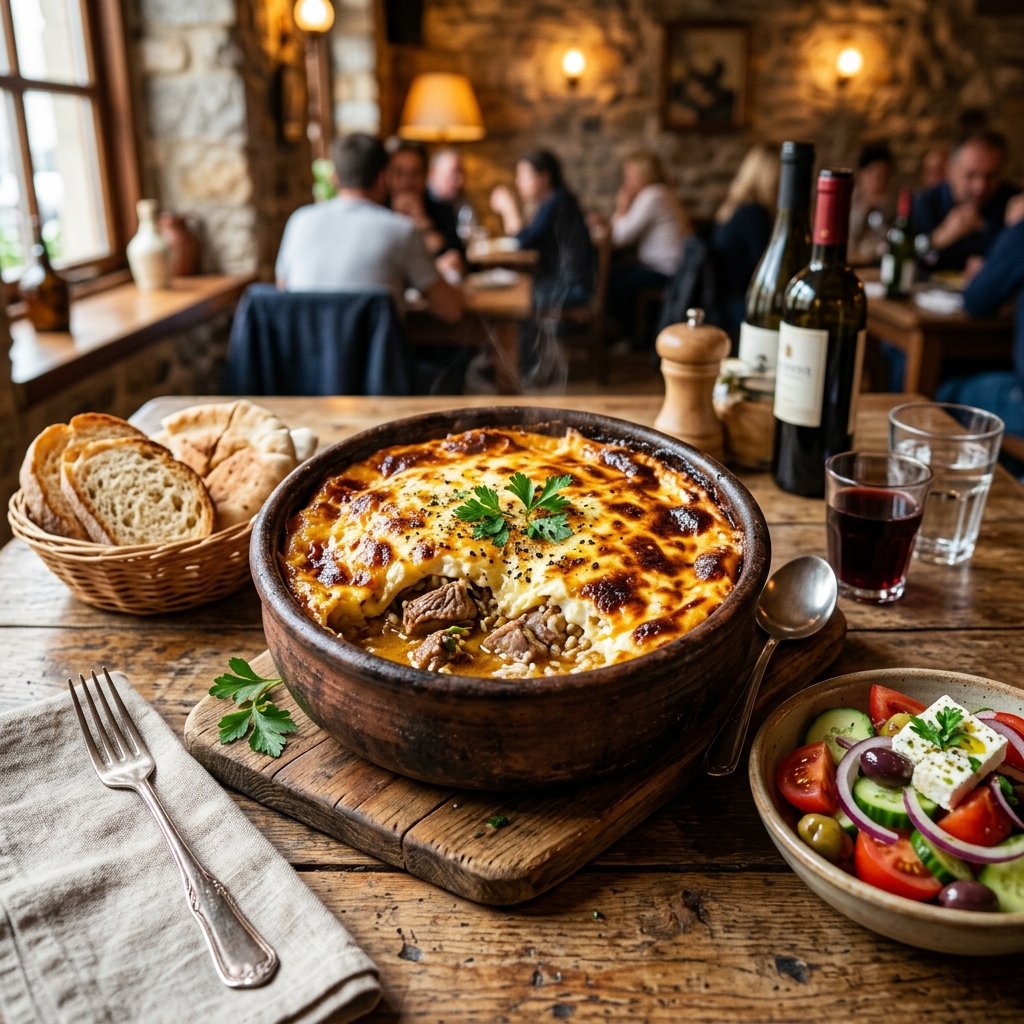
- Tavë Kosi: The national dish of lamb, rice, and a baked soufflé of yogurt, eggs, garlic, and local herbs. It is rich, comforting, and served hot in clay pots.
- Byrek: Flaky pastry layers filled with spinach, cottage cheese (*gjizë*), or minced meat. It is the go-to cheap street breakfast.
- The Morning Raki Ritual: Raki is the national grape or plum brandy. Local etiquette dictates that raki is to be sipped slowly—never downed in a single shot. Do not be surprised to see older locals sipping a glass alongside their morning espresso.
- Besa Hospitality: The ancient Albanian code of honor (*Besa*) means hosts treat guests with absolute care and protection. When invited to dinner, accept the food and drink offered, and toast with an eye-contact-filled “Gëzuar!”.
Slippery Stones, Blue Eyes, and Accursed Hikes
From Ottoman heritage towns to dramatic mountain trails, Albania’s sights are spectacular:
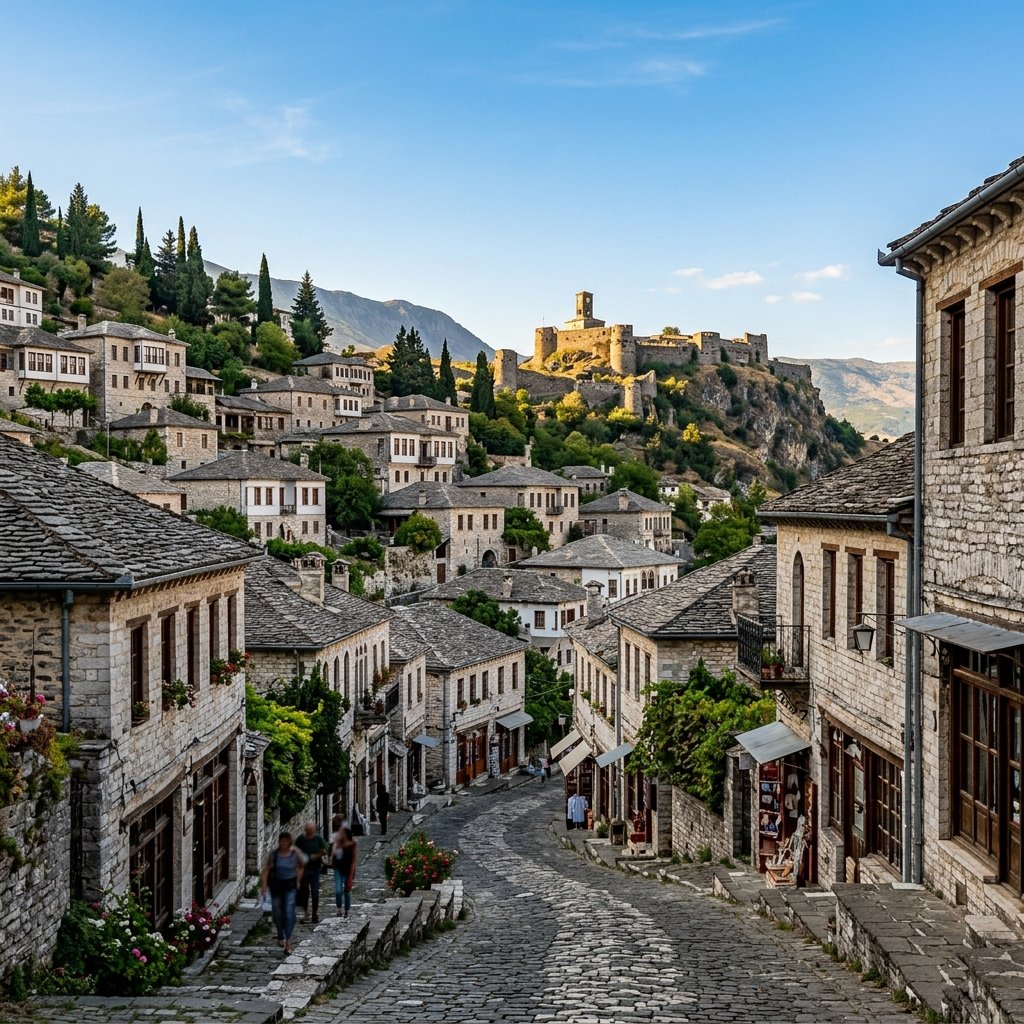
- Gjirokastër: The “Stone City” is a UNESCO World Heritage site known for its Ottoman tower houses and fortress. *Blogger tip:* Wear shoes with good grip. The steep cobblestone streets are polished so smooth that they become incredibly slippery, even when dry.
- Ksamil: Known for its white sand and turquoise water, Ksamil gets intensely overcrowded in July and August. Visit in June or September instead, and explore the ancient Roman ruins of Butrint National Park nearby.
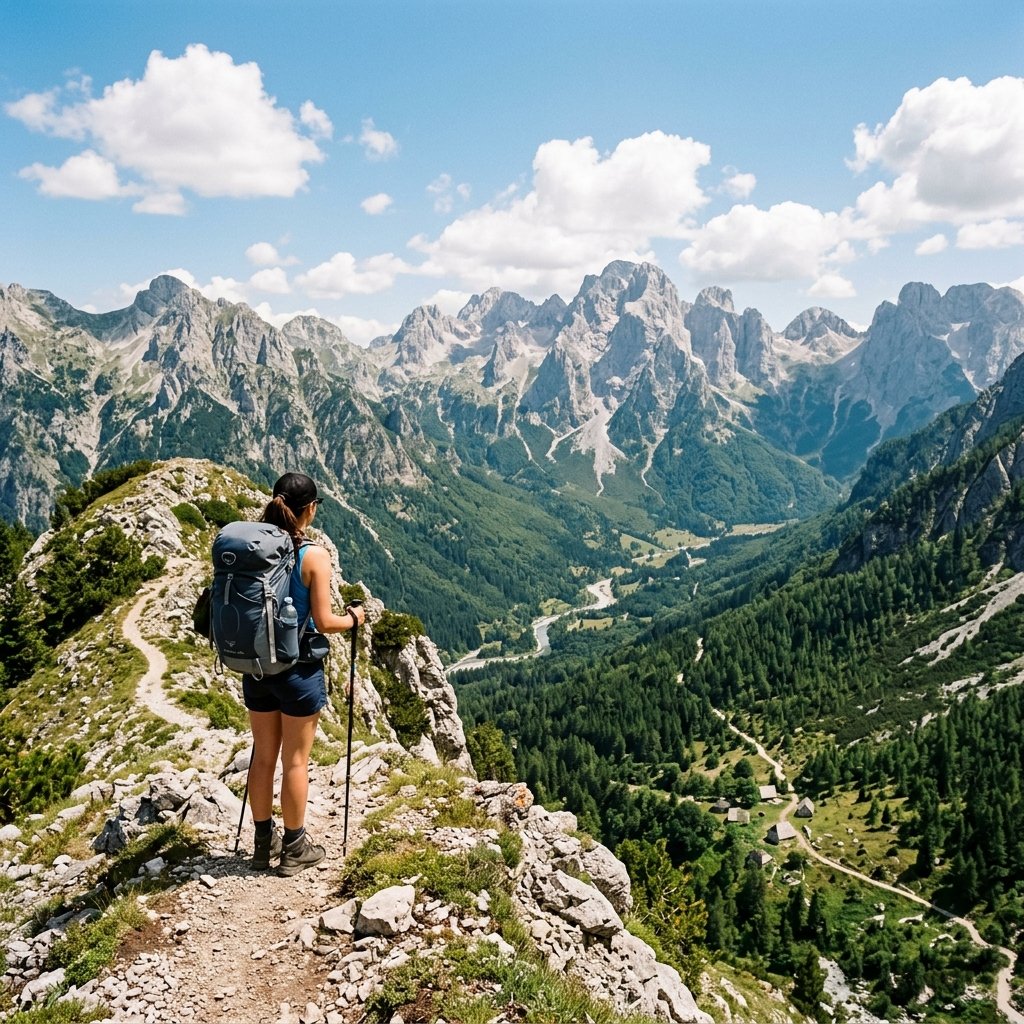
- Valbona to Theth Hike: A stunning 17km trek through the Accursed Mountains (Albanian Alps). Base yourself in Shkodër, take the Lake Koman Ferry, and start your hike early (before 8:00 AM). Make sure to carry enough cash, as there are no ATMs in the mountains.
- You can book a popular Day Trip to Berat online.
Health & Safety: Tap Water & Emergency Numbers
Albania is exceptionally safe for solo travelers, with very low rates of violent crime. Keep these practical health tips in mind:
- Tap Water: Do not drink tap water in Albania. Stick to bottled water, or travel with a filtration bottle.
- Emergency Number: The unified emergency number for police, ambulance, or fire services is 112.
Seamless Connectivity: Choosing Your Network in Albania
For mobile internet, Vodafone Albania is the leading network operator, offering 4G LTE download speeds up to 150 Mbps and covering 98% of the country’s populated areas. The second major carrier is One Albania.
To avoid high roaming charges while routing furgons, translating menus, or checking mountain maps, purchase a travel eSIM. It connects you directly to local high-speed networks the moment you arrive.
Frequently Asked Questions (FAQ)
Is cash still widely used in Albania?
Yes, Albania is still heavily cash-dominant. You will need Lek cash for furgon minibuses, small taverns, and local markets. Credit cards are only accepted in major hotels and supermarkets.
What is the best eSIM for traveling to Albania?
The TravelyData Albania eSIM is highly recommended. It connects to the Vodafone network, ensuring fast and stable 4G/5G coverage in Tirana and across rural areas.
Do I need to register my SIM card in Albania?
No, data-only eSIMs from TravelyData do not require identity or passport registration in Albania. You can activate it instantly upon arrival.
 Albania eSim