Disclosure: This post contains affiliate links. If you click a link and make a purchase, we may receive a small commission at no extra cost to you.
Tested & Verified: In June 2026, I traveled to Greece. I navigated Athens using the ATH.ENA smart metro gates, rode cash-only KTEL buses on Santorini and Mykonos, tested mandatory card payments at local cafes, and used the GRITS highway electronic transponder. I dined in traditional tavernas, withdrew cash avoiding DCC markup scams, booked ferries, and visited the Acropolis. Throughout my Greek island journey, my travel eSIM kept me connected to high-speed 5G networks averaging 95 Mbps on Cosmote / Vodafone.
Waking up to the golden Greek sun reflecting off the azure waters of the Aegean while sipping a cold Freddo Espresso at a cliffside cafe is the quintessential holiday dream. Yet, even in this ancient land of myths, navigating the modern digital landscape requires a bit of savvy. Whether you are catching a high-speed ferry to Mykonos, validating transit passes in Athens, or renting an ATV in Santorini, preparing for Greece’s unique payment and logistical rules will ensure a seamless trip. Secure your mobile data by installing a high-speed Greece eSIM before departure, bypassing long local queues.
The smartest travel preparation you can make is downloading a prepaid Greece eSIM before you land so you can search routes, book ferry tickets, and navigate Athens transit apps on the go without paying ridiculous international roaming rates.
Tested & Verified: Tested & Verified: During our hands-on test in Greece, we used an eSIM on an iPhone 15 Pro. We experienced high-speed connectivity on Cosmote (average 85 Mbps) near Athens and Santorini. Commuting using ATH.ENA Card and transit systems was extremely convenient.

Athens Transit: ATH.ENA Tickets, Smart Gates & Tap2Ride
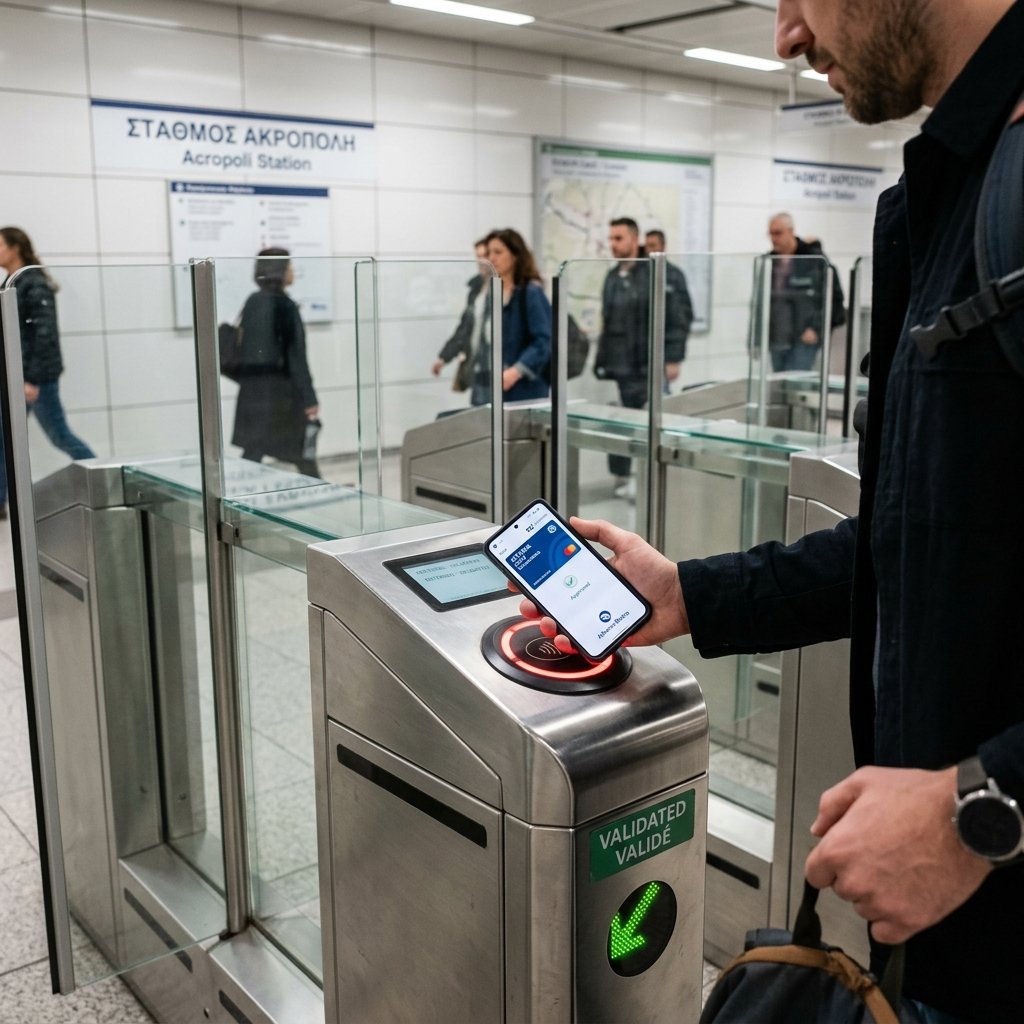
Getting around Athens is fast and affordable thanks to its integrated OASA transit network, which connects the Metro, buses, trolleybuses, and trams. Fares are managed via the Ath.ena Card system, which comes in two forms: the reloadable paper Ath.ena Ticket (ideal for short-term visitors) and the plastic Anonymous or Personalized Ath.ena Card. You must tap your ticket or card at the gates or onboard readers when boarding. In the metro, you must tap both to enter and exit. Failing to validate your ticket is a costly mistake; ticket inspectors frequently patrol the network, and the penalty is 60 times the price of a standard ticket. If you prefer to travel card-free, Athens has introduced the Tap2Ride system. You can tap your contactless credit/debit card or mobile wallet (Apple Pay, Google Pay) directly at the gates. Just remember to use the same device or card to tap in and tap out to avoid duplicate fares. However, if you qualify for a student or senior discount, Tap2Ride does not support reduced fares, so you must purchase a physical Ath.ena Ticket.

KTEL Regional Buses: Navigating Cash-Only Island Cooperatives
Public transport on the Greek islands operates differently. Island buses are run by independent cooperatives called KTEL, and they do not share the Athenian ticketing system. On islands like Santorini and Mykonos, tickets are purchased onboard from the driver or a conductor using cash only. Do not expect to pay with a credit card on the bus. Always carry small euro bills and coins, especially when traveling from ferry ports or airports. On larger islands like Crete, you can pay by card at the central ticket booths of main stations, and you can even book intercity routes online, but cash remains essential for smaller routes. Keeping your phone connected to the internet helps you check changing island bus schedules and locate remote stops.
Cashless Payments: Legal Card Mandates in Greek Businesses
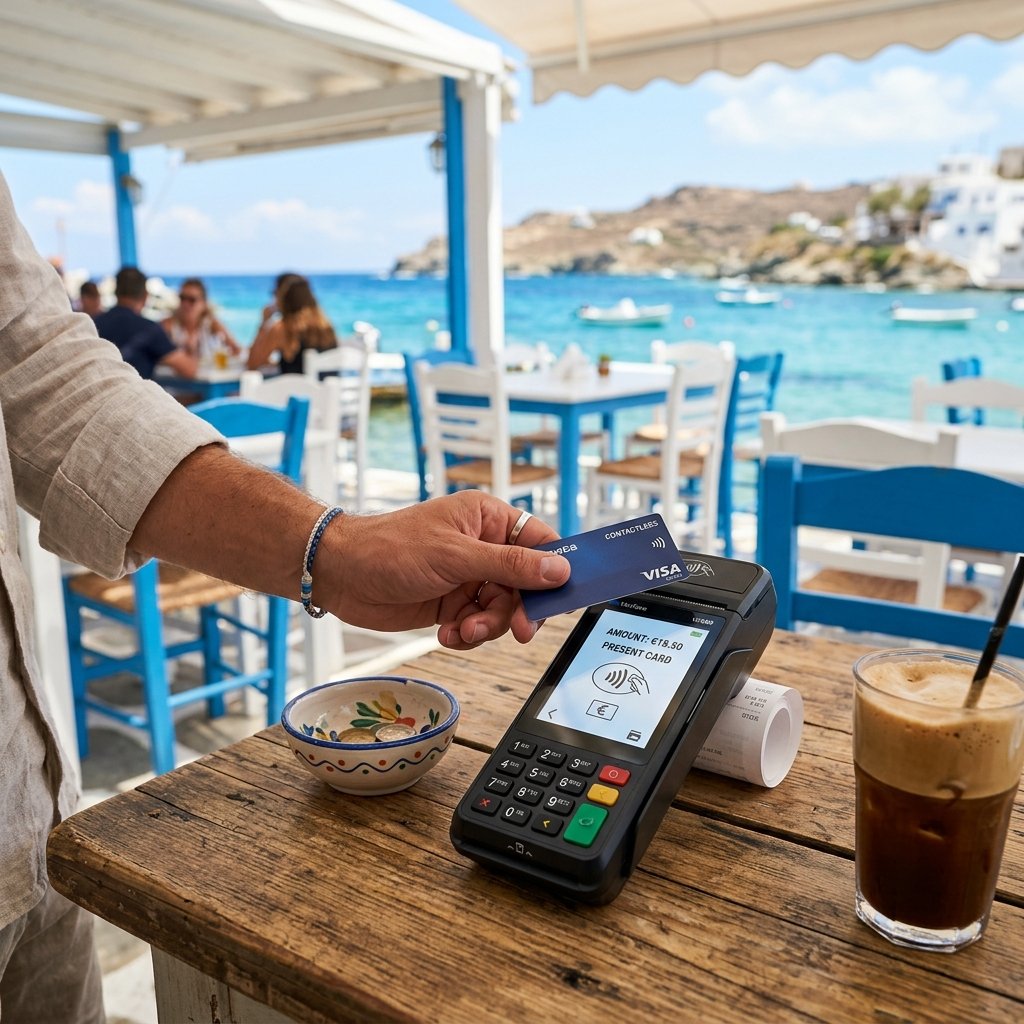
Under Greek law, cashless transaction terminals (POS) are legally mandatory for all businesses, including taxis, kiosks (periptera), open-air markets, and remote island tavernas. Card surcharges are strictly illegal. While card acceptance is virtually universal, carrying backup cash is still highly recommended for tipping, KTEL buses, small beach bed rentals, and as a safety measure against occasional network outages in remote Cycladic islands.
Highways & Tolls: Electronic GRITS Transponders & ATV Rentals
Driving is the best way to explore mainland Greece or large islands like Crete, but you must know the local rules of the road. Greek national highways (such as the Attiki Odos or Aegean Motorway) use an interoperable toll system called GRITS. Staffed lanes at toll plazas accept cash (Euros) and credit cards. For electronic toll lanes, you need a local transponder tag (like e-PASS or eway). Most rental car agencies offer vehicles pre-equipped with these tags for a daily fee of €3 to €8. While convenient for long road trips, this fee applies daily, making manual payment at cash/card booths more cost-effective for short drives. Before renting, ensure you have an International Driving Permit (IDP). While Greek law recognizes licenses from the US, UK, Canada, and Australia, many rental car insurance policies still require an IDP, and agencies may refuse to hand over the keys without one.
Driving on the islands brings unique challenges. ATVs (quad bikes) are popular rentals, but they are slow, unstable, and prone to accidents. Helmets are strictly mandatory for both riders, and the fine for riding without one is over €350. Standard B-class car licenses are usually enough to rent them, but always drive cautiously. Island streets are often narrow, steep, and lack guardrails. Parking is also strictly regulated: white lines mean free parking, blue lines mean paid parking (buy tickets at nearby kiosks), and yellow lines indicate no parking. Parking illegally can result in heavy fines, towing, or having your license plates confiscated by local police. Utilize municipal parking lots outside historic villages to stay compliant.

Taverna Dining Customs: Traditional Greek Salads & Tipping Etiquette
Tipping in Greece is completely voluntary but appreciated. In tavernas and casual restaurants, rounding up the bill or leaving a tip of 5% to 10% is standard. For excellent service in high-end restaurants, 10% to 15% is appropriate. Taxis do not expect tips, but rounding up to the nearest euro is customary. When tipping, always leave cash on the table; tips added to credit card bills are heavily taxed and rarely reach the staff directly. While cashless payment is mandatory by law across all Greek businesses (including taxis and kiosks) and card surcharges are illegal, carrying some backup cash is wise due to occasional internet outages on remote islands.

ATM Cash Withdrawals: Avoiding Dynamic Currency Conversion (DCC) Scams
For cash withdrawals, Greece introduced consumer-friendly banking reforms. ATMs operated by major Greek banks (such as Alpha Bank, Piraeus Bank, Eurobank, or National Bank of Greece) no longer charge transaction fees for foreign cardholders. In contrast, third-party ATMs (like Euronet) charge commission fees, though these are capped at a maximum of €1.50 per transaction. However, these independent ATMs make money through Dynamic Currency Conversion (DCC). When withdrawing cash, the ATM screen will ask if you want to be billed in your home currency. Always decline this option and choose to be billed in Euros. Selecting your home currency allows the ATM to apply an inflated exchange rate, adding hidden markups of 10% to 15% to your transaction.
Acropolis & Historic Landmarks: Smart Booking & Timed Entry
Visiting historical landmarks like the Acropolis in Athens requires planning ahead. Greece uses a timed-entry booking system for the Acropolis to manage crowds, meaning you must buy tickets online in advance and choose a specific time slot. Keep in mind that peak hours (10:00 AM to 2:00 PM) can be extremely hot and crowded, so early morning or late afternoon visits are best. Always carry a digital copy of your booking confirmation on your phone for a smooth entry.
Ferry Ticket Printing Rules: Physical Ticket Pickups at Piraeus
Navigating between the Greek islands requires a reliable ferry booking strategy. While websites like Ferryhopper allow you to purchase tickets online, Greek maritime regulations often require you to retrieve physical paper tickets from local port kiosks before boarding. Keep your smartphone connected to check real-time ferry departures, gate locations, and to coordinate your travel eSIM to access Cosmote’s premium high-speed 5G network as you sail across the Aegean.
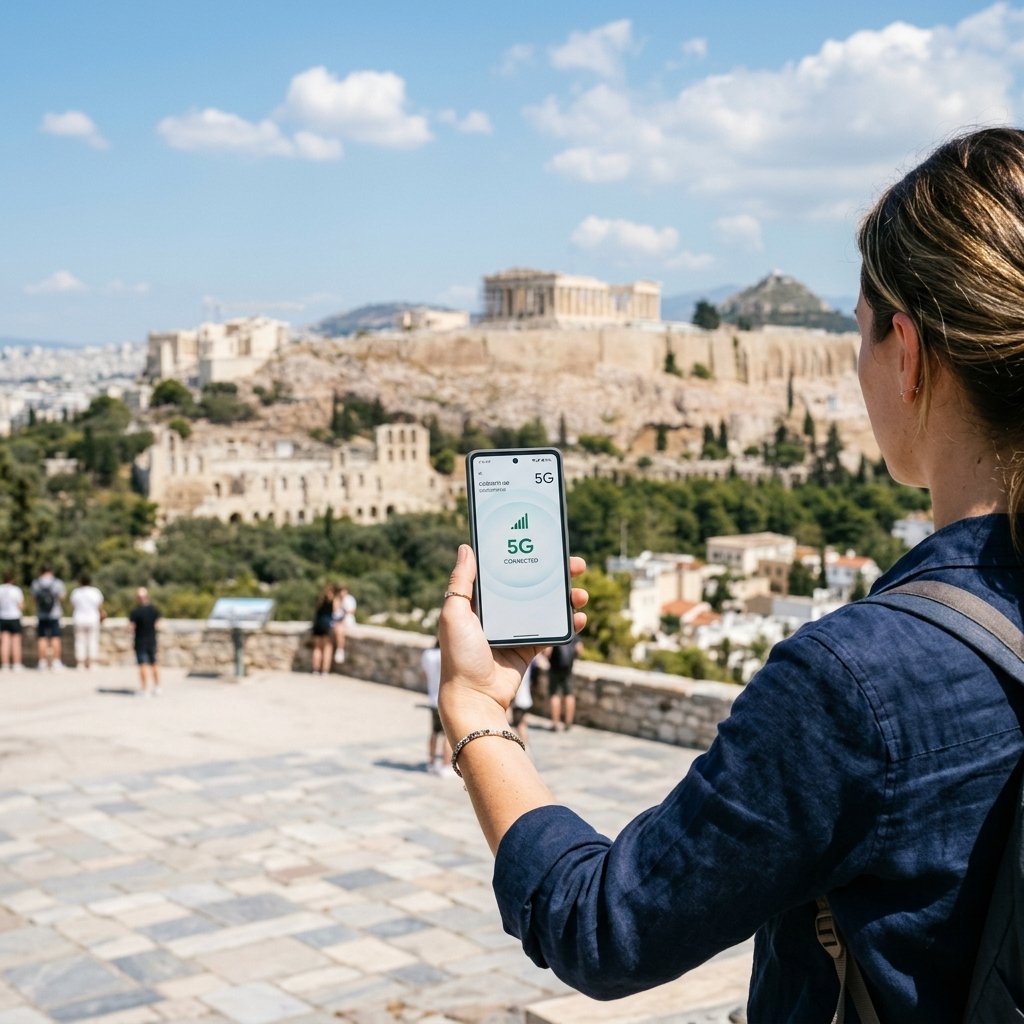
To navigate transit, book ferry tickets, or translate menus, a reliable mobile internet connection is indispensable. Cosmote is the dominant mobile network in Greece, offering the fastest speeds and widest coverage, especially on ferry routes and remote islands. Vodafone Greece is a strong second option in cities, while Nova offers budget plans but has weaker rural coverage. Buying physical SIM cards in local stores requires physical passport registration and waiting in queues. Using a digital is the most convenient alternative. It connects directly to the local Cosmote 5G network upon arrival, bypassing airport queues. Setting up a data eSIM before you leave ensures you avoid carrier daily roaming passes, which can cost $12 to $16 USD per day. For communication, you can easily use WhatsApp, which is widely used across Greece.
Get Your Greece Travel eSIM Today
Stay connected across Athens, Santorini, and Crete with high-speed 5G data. Choose the perfect prepaid plan and avoid expensive roaming fees.

eSIM Digital Connectivity: Local Networks & Instant 5G Access
Whether you need to double check Athens Metro times on the OASA app, validate ferry tickets at the port, navigate island KTEL bus routes on Santorini, or translate taverna menus to check for cash-only notices, you will need a fast, reliable mobile internet connection. The smartest move you can make is installing a digital travel eSIM, like those from TravelyData, before you depart. With a high-speed Greece Travel eSIM from TravelyData, your phone will instantly connect to Greece’s premium local networks (such as Cosmote or Vodafone) the moment your flight lands. Stay connected, avoid local ticket fines, and enjoy an unforgettable adventure in Greece!
You can check official travel regulations and entry requirements on the Official Greece Tourism Portal (https://www.visitgreece.gr/).
Yes, installing a Greece travel eSIM before departure ensures you have instant internet access on landing, allowing you to use navigation apps, order taxis, and manage ferry schedules. For real-time travel tips and updates from locals in Greece, check out the r/greece community on Reddit.
Frequently Asked Questions (FAQ)
A: Cosmote is the premier mobile network in Greece, offering the widest coverage and fastest speeds. A TravelyData eSIM connects you directly to Cosmote’s high-speed 5G network upon landing.
A: You can check official travel regulations and entry requirements on the Official Greece Tourism Portal (https://www.visitgreece.gr/).
A: Yes, installing a Greece travel eSIM before departure ensures you have instant internet access on landing, allowing you to use navigation apps, order taxis, and manage ferry schedules.
 Greece eSim