
Touchdown in Budapest: Getting Online and Reaching Your Hotel
Upon landing at Budapest Airport, grab a prepaid SIM or activate an eSIM from Airalo or Holafly for instant connectivity. For transfers, take bus 100E directly to the city center or use Bolt for a fixed-zone taxi ride. Keep some Hungarian Forint handy for small purchases.
As the plane taxis past the runway, I already feel the pulse of Budapest. My first move? Getting online. I pop in a prepaid eSIM from Airalo—no queuing at kiosks. For those who prefer physical SIMs, Magyar Telekom (check their Wikipedia page) has booths in the arrivals hall. Then it’s time to navigate to the city. I hop on bus 100E (direct to Deák Ferenc tér) for 900 HUF—pay by card at the machine. Alternatively, Bolt ride-hailing app shows a fixed price of around 7,000 HUF to the center. Taxis use a zone system; confirm the fare before starting. Pro tip: ATMs at the airport charge fees, so withdraw a modest amount—you’ll need cash for street food and rural markets later.

Riding the Trams: Exploring Budapest Cash-Free
Budapest’s BKK system is a dream for cashless travelers: buy a 72-hour travel card for 5,500 HUF via the Budapest GO app or at metro ticket machines. Use it on trams, buses, and the metro. For street food like lángos, cash is still king—keep 1,000-2,000 HUF notes handy.
With my travel card loaded on the Budapest GO app, I tap through the metro gates and hop on tram 2 along the Danube. The city’s public transport is efficient and cheap. I love the 72-hour pass—unlimited rides for about €15. For single trips, buy a block of 10 tickets at newsstands. But here’s the catch: while cards work at most shops, the lángos stand at the Great Market Hall only takes cash. I hand over 1,500 HUF for a crispy fried dough topped with sour cream and cheese. Also, remember to validate your ticket on trams—inspectors are strict. For a scenic ride, take tram 4-6 along the Grand Boulevard.
Venturing Beyond: Day Trips to the Danube Bend and Lake Balaton
For out-of-town excursions, Hungarian State Railways (MÁV) trains are reliable; buy tickets at stations or via the MÁV app. Rural areas are cash-heavy—withdraw enough for village markets and small eateries. Network coverage from Yettel or One is good in towns but spotty in remote hills.
I catch an early train from Nyugati station to Szentendre, a charming artists’ town on the Danube Bend. The journey costs 1,200 HUF one way—paid by card at the ticket machine. Once there, I wander cobblestone streets and buy handmade ceramics from a stall that only accepts cash. Lesson learned: always carry at least 10,000 HUF in small notes. For Lake Balaton, the train from Déli station takes 2 hours. Network coverage from Yettel (formerly Telenor) is solid in Siófok but fades near the Tihany peninsula. I rely on my eSIM’s data for maps. ATMs in smaller towns charge withdrawal fees of around 500 HUF, so plan ahead.

Savoring Hungary: Dining Etiquette and Local Flavors
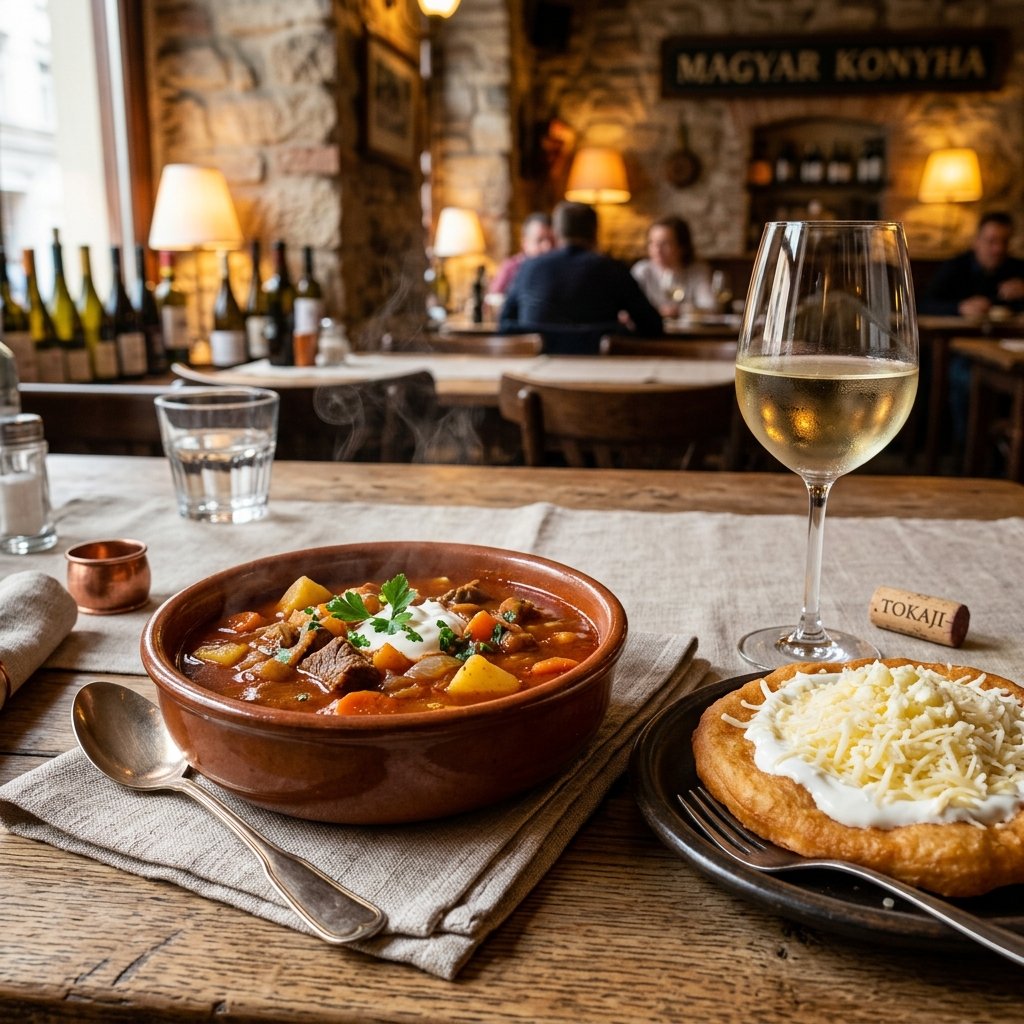
When dining, say “Jó étvágyat!” before meals. Expect to tip 10-15% in restaurants—either leave cash or tell the server the total with tip. Must-try dishes: goulash (2,500 HUF), chimney cake (1,000 HUF), and Tokaji wine (from 1,500 HUF per glass). Avoid toasting with beer—it’s considered bad luck.
I settle into a cozy restaurant in the Jewish Quarter. The waiter brings a steaming bowl of goulash—rich with paprika and beef. Before digging in, I smile and say “Jó étvágyat!” (enjoy your meal). The bill comes to 4,500 HUF; I leave 5,000 HUF and say “keep the change.” Tipping culture is straightforward: round up or add 10-15%. For a sweet treat, I grab a chimney cake from a street vendor—1,000 HUF, cash only. And no visit is complete without sampling Unicum, a bitter herbal liqueur. For more on Hungarian cuisine and customs, check the official Hungary Tourism Portal. One last tip: never clink beer glasses—it’s said to commemorate the 1848 execution of Hungarian generals.
Frequently Asked Questions
Q: What is the best way to get from Budapest Airport to the city center?
A: Bus 100E is the cheapest direct option (900 HUF, pay by card). Bolt or taxi costs around 7,000-9,000 HUF. Avoid unofficial taxis.
Q: Do I need cash in Hungary?
A: Yes, especially for street food, small shops, and rural areas. ATMs are common but may charge fees. Keep 10,000-20,000 HUF in small notes.
Q: What mobile network should I use?
A: Magyar Telekom, Yettel (formerly Telenor), and One (formerly Vodafone) are the main operators. Prepaid SIMs are available at airports and stores. eSIMs from Airalo or Holafly are convenient for tourists.
Q: Is tipping expected in Hungary?
A: Yes, 10-15% in restaurants, rounding up for taxis, and small change for hotel staff. You can leave cash or tell the server the total with tip.
Q: What are must-try Hungarian dishes?
A: Goulash (gulyás), lángos (fried dough), chimney cake (kürtőskalács), and Tokaji wine. Also try Unicum and pálinka.
Q: Are credit cards widely accepted?
A: In cities, yes. But cash is needed for markets, small eateries, and rural areas. Always carry some forints.
Q: What cultural etiquette should I know?
A: Greet with a handshake, say “Jó étvágyat!” before meals, avoid toasting with beer, and remove shoes when entering some homes.
 Hungary eSim