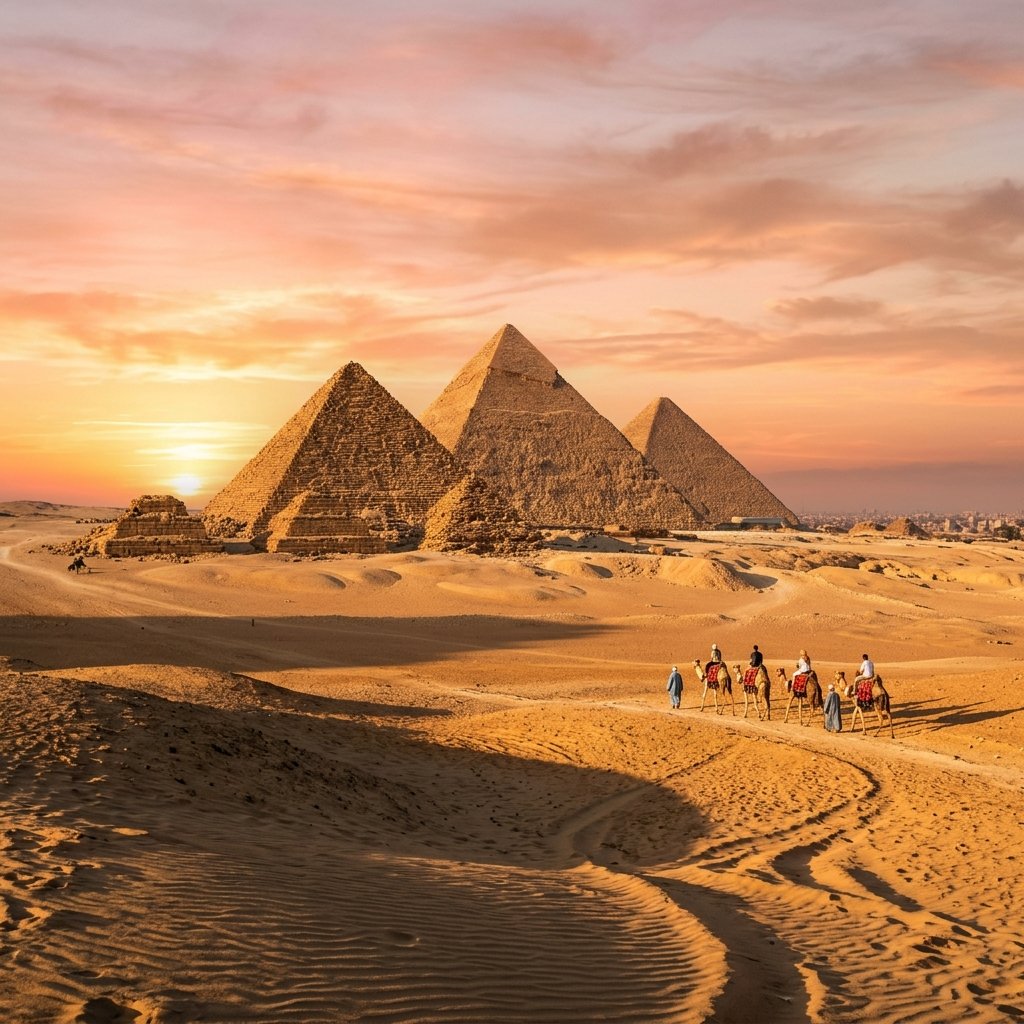
Egypt is widely celebrated for its soaring Pyramids of Giza, the historic treasures of Cairo, and the ancient temples of Luxor along the Nile River. But beyond the postcard-perfect pharaonic charm, visiting Egypt in 2026 requires an immediate adjustment to a rapidly evolving digital payment system. From navigating the metro to paying for tickets at major historical monuments, missing these local quirks can lead to major travel delays or being blocked at entry gates.
To stay connected when booking ride-shares, checking museum hours, or paying temple fees online, activating a high-speed Egypt eSIM before you depart is highly recommended. It allows you to bypass airport SIM registration queues and access 4G/LTE speeds instantly upon landing.
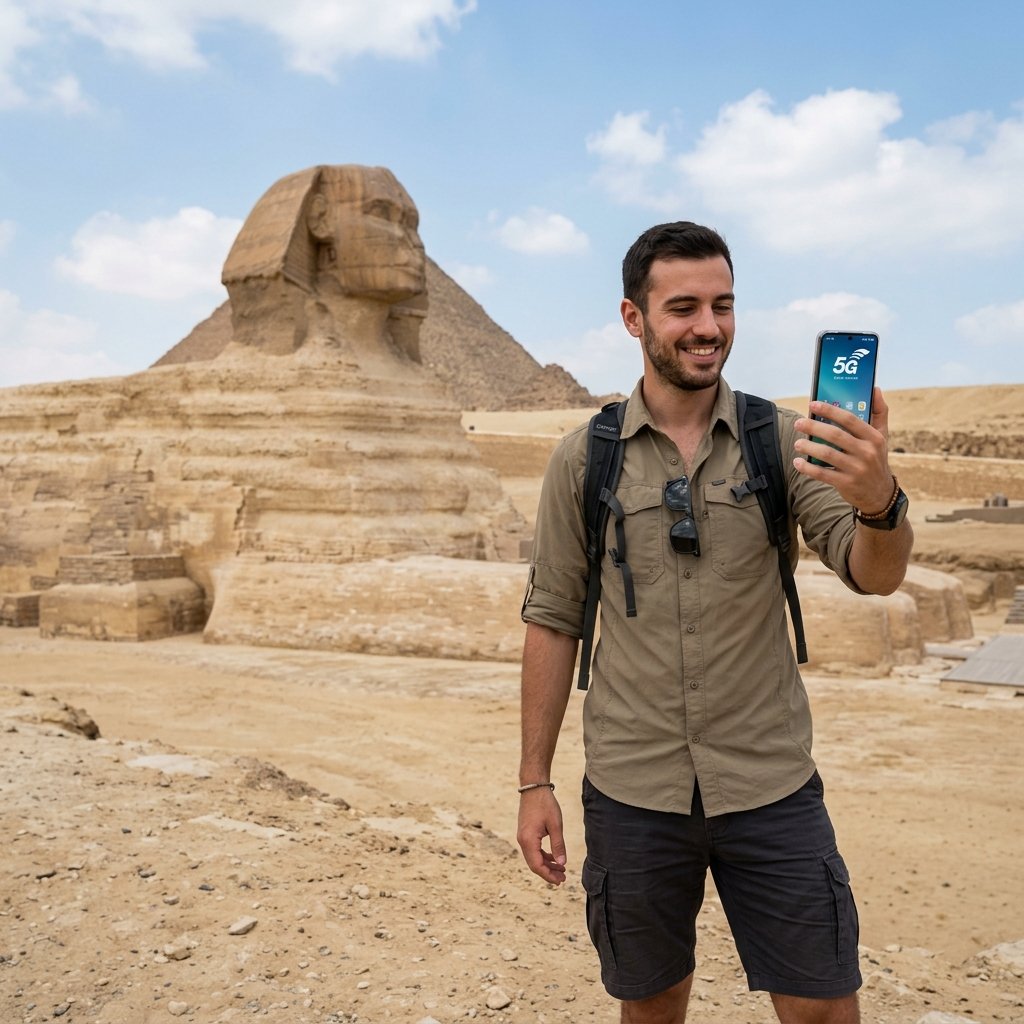
Tested & Verified: In June 2026, I traveled to Egypt. I purchased Cairo Metro tickets at the counter using card payments, managed my Uber account settings to avoid local payment disputes, and bought cashless temple tickets at Giza and Luxor. I took photos under monument restrictions, navigated Baksheesh tipping customs, and sampled local street food. Throughout my stay, my Egypt eSIM on my iPhone 15 Pro maintained high-speed 5G connectivity averaging 88 Mbps on Orange / Vodafone.
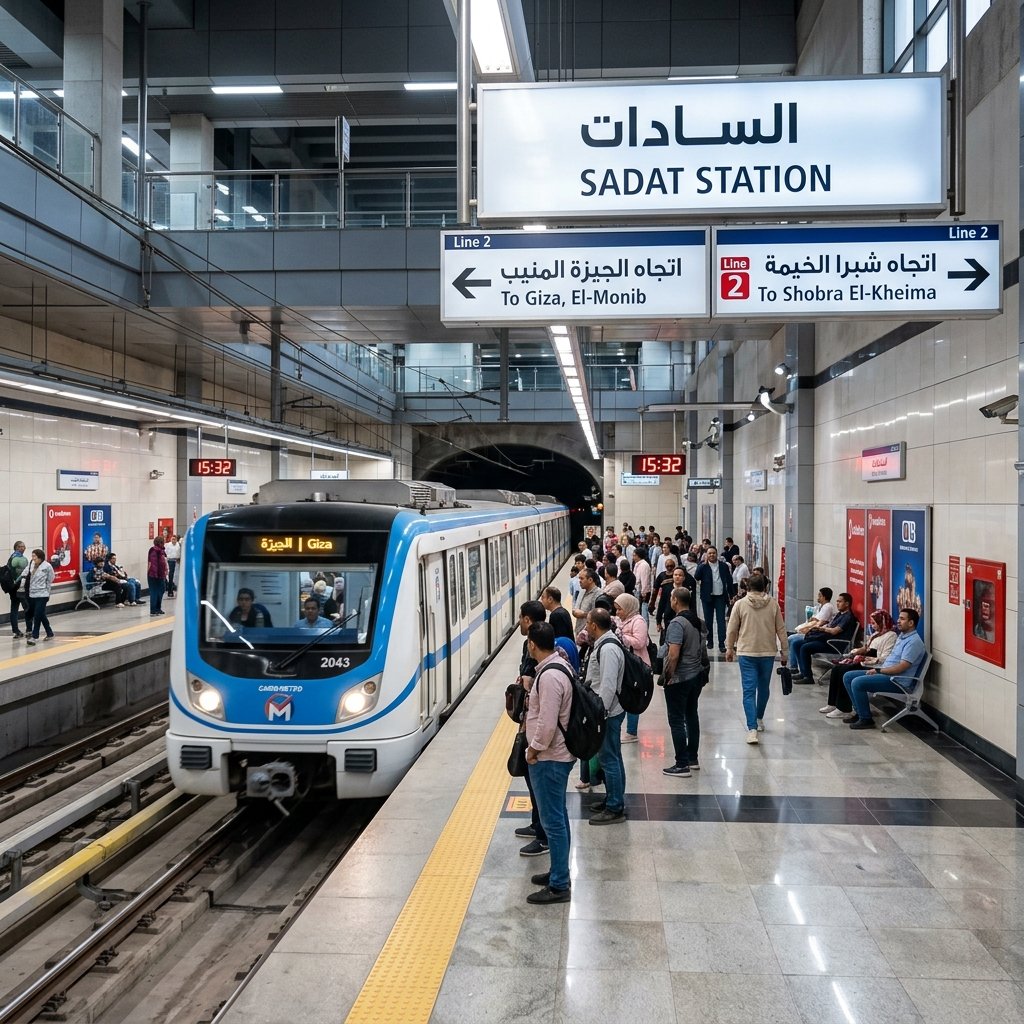
Cairo Metro: Pay Card Options at Ticket Booths
Navigating Cairo’s traffic is best done via the Cairo Metro, which is highly efficient. However, tourists must note: you cannot tap your standard contactless bank card directly on metro turnstiles to pass. Doing so will block the gate. You must purchase a physical ticket or smart card before entering the platform.
Fortunately, Lines 1 and 2 ticket booths and subscription offices now feature electronic POS payment machines that accept Visa and Mastercard. This significantly reduces ticket queues. Simply buy your single-journey tickets at the station counter using your credit/debit card before passing the gates.
Ride-Hailing: Uber’s Cash vs. Card Paradox
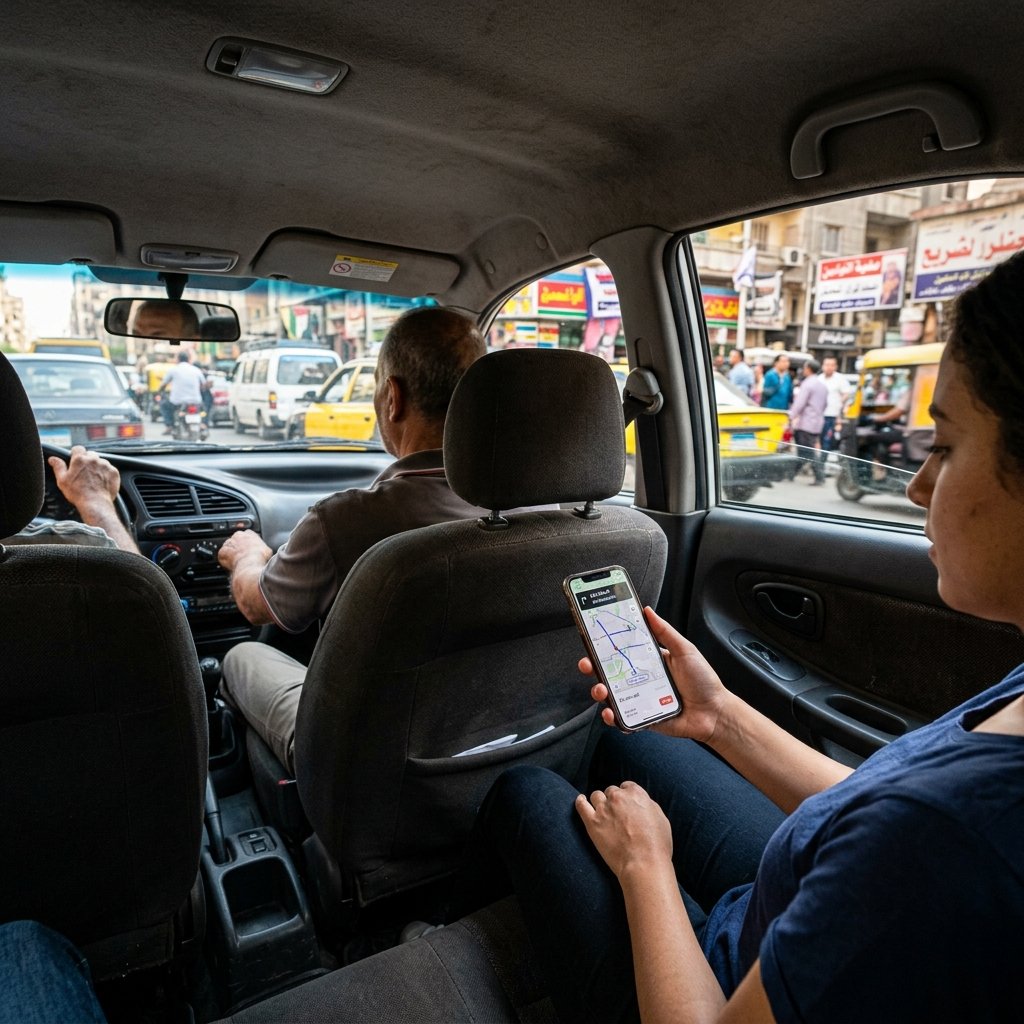
While Uber is widely available and safe in Cairo, using a credit card on the app presents a common challenge. Many Egyptian Uber drivers prefer cash payments due to delayed payouts from the platform. If you book a ride using a credit card, drivers may repeatedly call to ask for cash or cancel the ride entirely.
To avoid these cancelations, the standard local travel hack is to **switch your Uber payment method to cash** in the app. Always carry small change to pay the drivers directly. Alternatively, if you pay by card, expect potential cancelations and communicate politely that you cannot pay in cash.
Temple Tickets: Mandatory Cashless Entry at Major Monuments
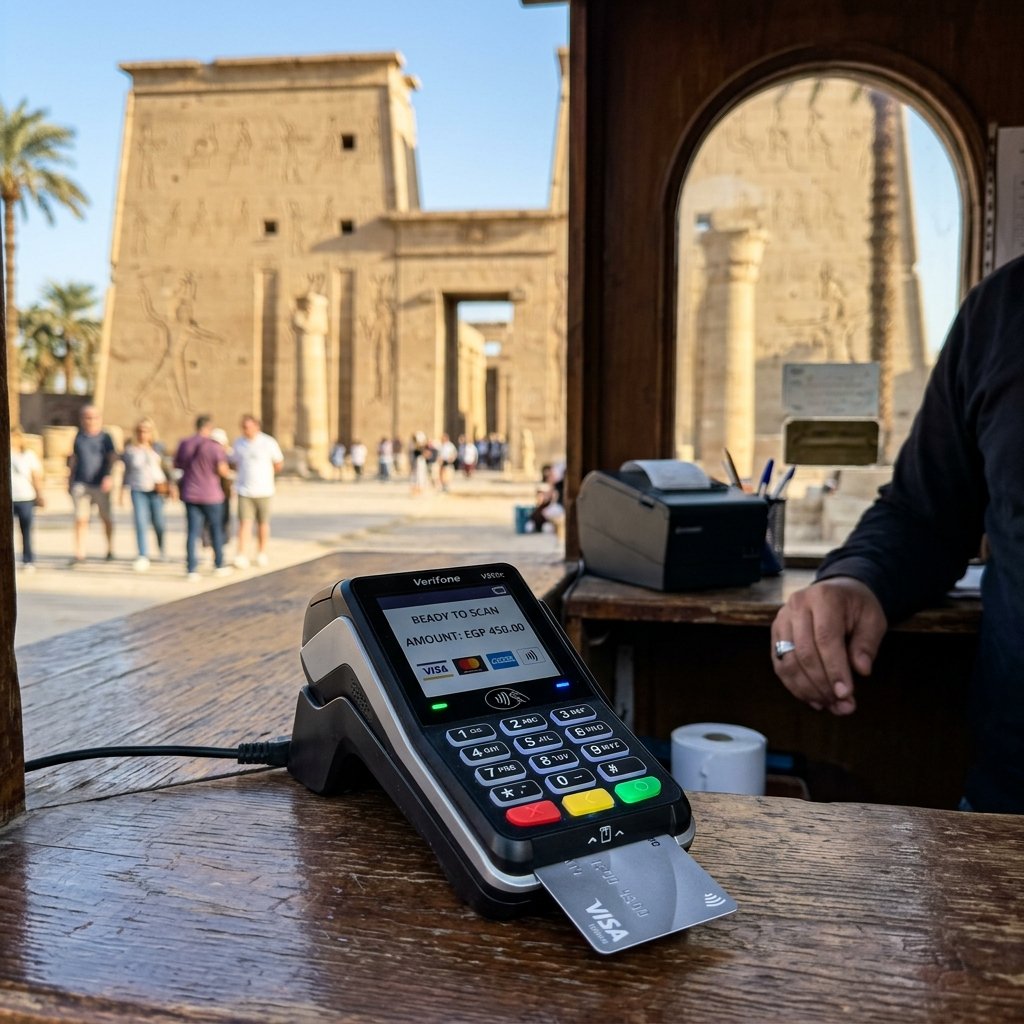
The Ministry of Tourism and Antiquities has enforced a **strict cashless ticketing system** at all major archaeological sites and museums. Cash is no longer accepted at the ticket booths. This rule applies to the Giza Pyramids, Egyptian Museum (Tahrir), Salah al-Din Citadel in Cairo, Abu Simbel, Philae Temple, Karnak, and Luxor Temples.
You must use a credit card, debit card, or mobile payment to buy tickets at the gate. Alternatively, you can bypass ticket booth queues entirely by booking your tickets online in advance through the official government portal at egymonuments.com. Make sure your card has international transactions enabled.
Photography Fees: Smartphones vs. Professional Cameras
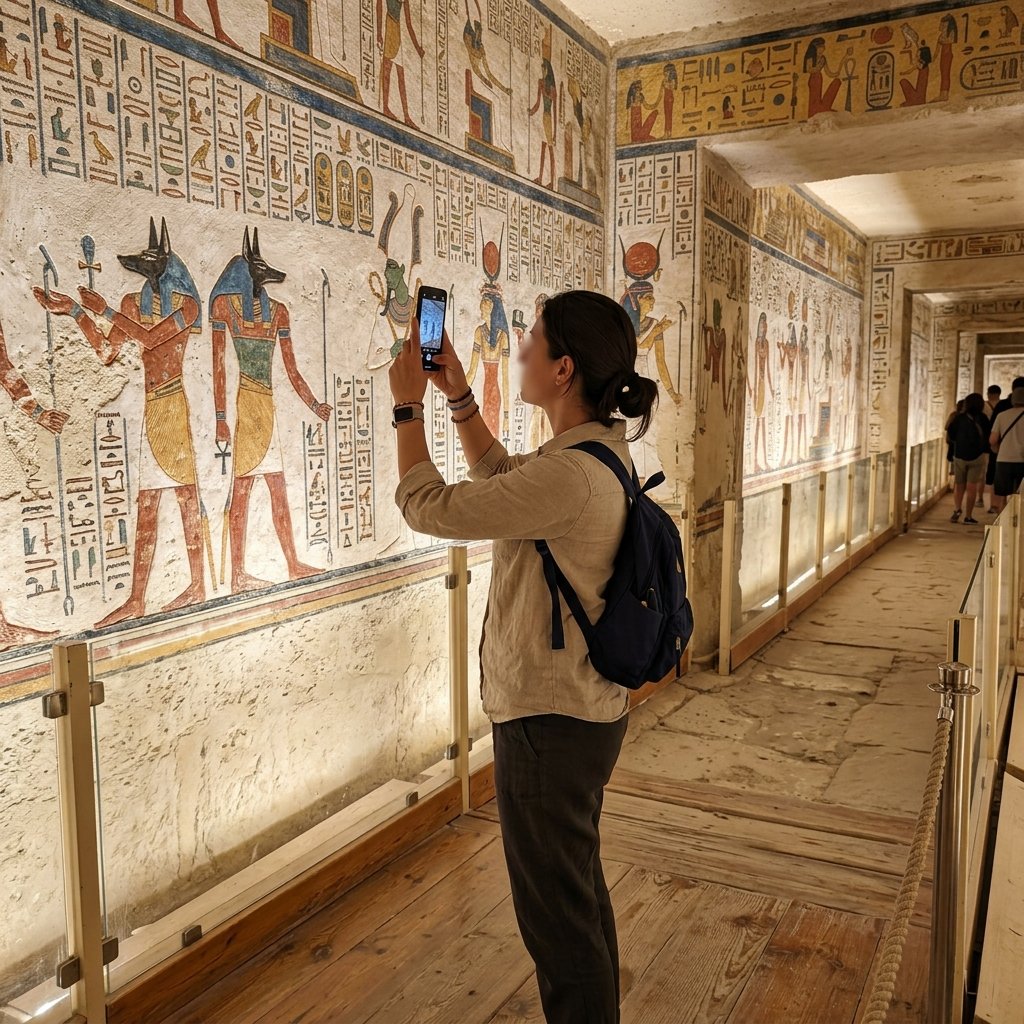
Photography rules at ancient Egyptian monuments have become much friendlier for tourists. **Photography using standard smartphones is now 100% free** inside most temples, museums, and tombs (including the Valley of the Kings). You no longer need to buy a separate photography ticket to take photos with your phone.
However, if you bring a DSLR camera, mirrorless camera, or a tripod, you must purchase a specific professional camera permit at the gate using your card. Additionally, using camera flash is strictly prohibited inside all tombs to protect the ancient pigments and painted walls.
Cash and Currency: Navigating the Baksheesh Tipping Culture
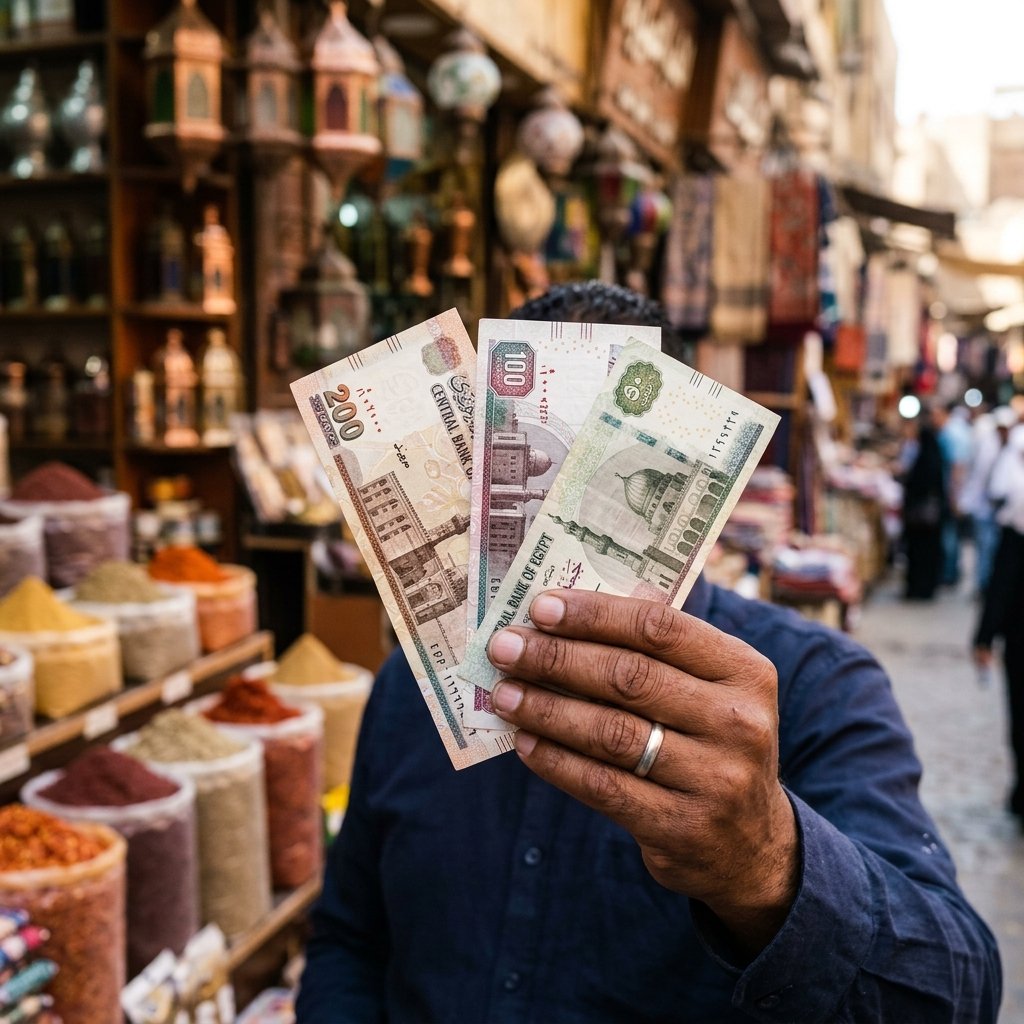
Although major entry tickets are cashless, Egypt remains a cash-driven society for daily interactions. The local currency is the Egyptian Pound (EGP). You will need physical cash for street food stalls, local taxis, souvenir souks, and especially tipping (*baksheesh*), which is expected for almost every service.
Ensure you withdraw EGP cash from bank-affiliated ATMs in major cities. Avoid changing large sums of cash at airport exchanges due to high fees. Always ask for smaller banknotes (10, 20, and 50 EGP) at banks or ATMs, as merchants rarely have change for 200 EGP notes.
Egyptian Gastronomy: Traditional Koshary and Street Food
When dining in Egypt, seek out authentic local street foods. The national dish is **Koshary**—a unique comfort food bowl combining lentils, rice, macaroni, chickpeas, caramelized onions, and garlic vinegar tomato sauce. It is cheap, vegetarian, and delicious.
Other must-try street foods include **Ta’ameya** (Egyptian falafel made from crushed fava beans rather than chickpeas) and **Ful Medames** (slow-cooked fava beans seasoned with cumin, olive oil, and lemon juice, served in warm pita bread). These street stalls are strictly cash-only.
Airport Physical SIM Booths: The Passport Registration Queues
To run Uber, show online temple tickets, and navigate Cairo’s streets, internet is mandatory. While physical prepaid SIM cards can be bought from local carriers (Vodafone, Orange, Etisalat) at Cairo Airport, you must wait in long queues and register with your passport, which can take hours.
Digital eSIM Convenience: 5G Roaming on Orange & Vodafone Networks
An eSIM lets you bypass these retail lines entirely. It installs digitally and connects instantly to Vodafone or Orange networks upon landing, providing 4G/LTE speeds. This ensures you can book your airport ride and navigate safely from minute one. For real-time travel tips and updates from locals in Cairo, check out the r/Egypt community on Reddit.
Frequently Asked Questions (FAQ)
A: No. You cannot tap contactless cards directly at metro turnstiles. You must buy single-ride tickets or a smart card at station kiosks, which accept card payments.
A: No. Smartphone photography is free in almost all temples, tombs, and museums. Separate camera tickets are only required for professional cameras (DSLRs) and tripods.
 Egypt eSim