Disclosure: This post contains affiliate links. If you click a link and make a purchase, we may receive a small commission at no extra cost to you.
To the uninitiated traveler, Jordan presents a landscape of ancient wonder and desert silence that is both breathtaking and deeply humbling. It is a land where you can walk through the narrow Siq to witness the rose-red stone of Petra, gaze at Martian landscapes in Wadi Rum, and float effortlessly in the Dead Sea. Yet, navigating this Middle Eastern gem requires understanding a web of unspoken social rules, transit quirks, and strict local laws. From heavy drone confiscation fines to the etiquette of eating communal Mansaf, getting the details right is the difference between a smooth trip and an awkward encounter.
Before you step out of the Queen Alia International Airport, the most practical step you can take is setting up a prepaid Jordan eSIM on your device. Having instant local data when you land is essential for checking transport routes, negotiating taxi fares, and navigating the steep hills of Amman.

Yellow Taxis, Servees, and Amman’s Steep Hills
Getting around Jordan is an adventure in itself. In Amman, public transit is dominated by yellow metered taxis and white servees (shared) taxis. When boarding a yellow taxi, always demand that the driver turns on the meter (the “adad”) or negotiate a fixed fare before you get in. If they refuse, simply step out and flag down another. The white servees taxis run on set routes and are shared with other passengers, offering a highly economical way to travel if you know where you are going. For intercity travel, JETT buses are the most reliable and comfortable option for moving between Amman, Petra, and Aqaba.
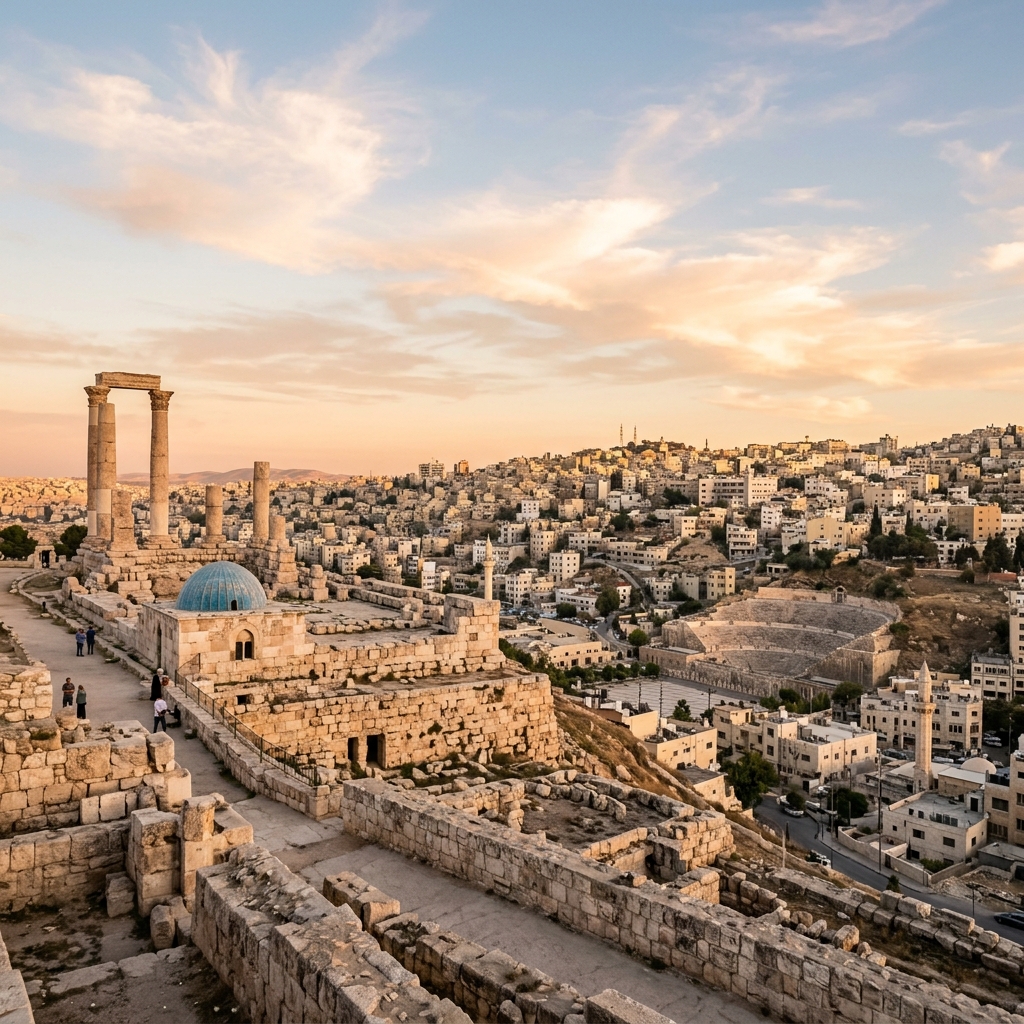
If you plan to walk in Amman, be prepared for a workout. The city is built on seven steep hills (jabals). Sidewalks are narrow, uneven, and often blocked by parked cars or trees. Pedestrian crossings are virtually non-existent, meaning you will need to cross busy streets with caution, matching the pace of the locals. Having a reliable data connection via a Jordan eSIM allows you to use live navigation apps to find the best routes through Amman’s labyrinthine stairs.

Covered Shoulders, Haggling, and the Rule of Modesty
Jordanian society is warm and welcoming, but it remains deeply conservative. Respecting local modesty norms is crucial. Both men and women should keep their knees and shoulders covered when walking in public areas. While Aqaba and tourist sites are more relaxed, dressing modestly in Amman and rural villages prevents unwanted attention and shows respect for the culture. Public displays of affection (PDA) are highly discouraged and can cause offense.
When it comes to daily interactions, bargaining is common in souks and tourist markets, but it should always be approached with politeness and a smile. Never make a lowball offer that insults the seller. Ask for their best price, counter politely, and if you cannot agree, walk away with a friendly “shukran” (thank you). Additionally, avoid drinking tap water to prevent stomach issues; stick to bottled or filtered water instead.
Pro-Tip: When bargaining in Petra or Amman, remember that it is a social interaction, not a battle. A polite joke in Arabic, like “Ghalee katheer!” (It’s too expensive!), accompanied by a smile, will get you a much better discount than aggressive haggling.

The Strict Drone Ban: Confiscations and Heavy Airport Fines
If you are a photographer hoping to capture stunning aerial footage of Petra or the Wadi Rum desert, leave your drone at home. Jordan enforces a strict ban on importing and operating drones without prior written military authorization, which is almost impossible for tourists to obtain.
If you bring a drone into Queen Alia International Airport, security scanners will detect it. The device will be confiscated immediately. You will face heavy fines starting at approximately 500 JOD (around 700 USD), plus daily storage fees for the airport to keep the drone until your departure. To avoid this costly and stressful situation, respect the local laws and stick to ground-based photography.
Dining Etiquette: The Mansaf Right-Hand Ritual
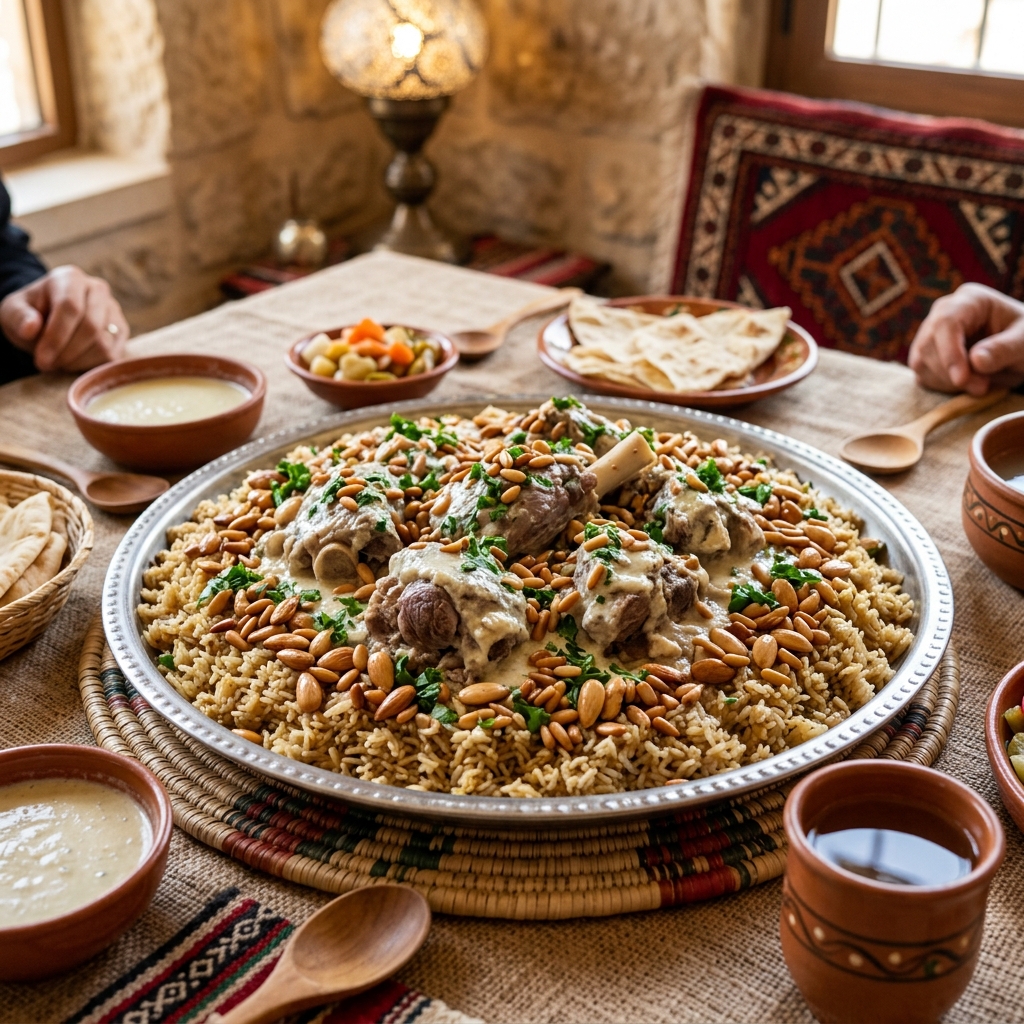
Jordanian food is a highlight of any trip, and no dish is more famous than Mansaf, the national dish of tender lamb cooked in a dry yogurt sauce (jameed) and served over turmeric rice. Mansaf is traditionally eaten communally, and there is a specific etiquette to follow if you are invited to share a platter.
Always eat Mansaf using your right hand only. Your left hand should remain behind your back or at your side. Use your fingers to press the rice and lamb together into a small, compact ball, flick it into your mouth using your thumb, and repeat. Do not let your fingers touch your lips, and never use your left hand to touch the food, as it is considered unclean. The host will continuously pour warm jameed sauce over the rice, ensuring the meal stays moist and delicious.
Dead Sea Float Safety and Wadi Rum Martian Domes
Jordan offers experiences that feel out of this world. Floating in the Dead Sea is a bucket-list activity, but its extreme salt concentration requires preparation. Do not shave for at least 24 to 48 hours before entering the water, as the salt will make even the smallest cut burn intensely. Keep your face completely dry; getting the water in your eyes or mouth is highly painful and dangerous. Always wear water shoes to protect your feet from the sharp, crystallized salt rocks on the seabed.
Further south, the red sands of Wadi Rum offer another surreal reality. Staying in a Bedouin camp or one of the futuristic Martian domes allows you to experience the desert’s silent majesty under a canopy of stars. Be sure to book your accommodation in advance to secure these unique bubble tents, which offer panoramic views of the desert cliffs.

Stay Connected Across Jordan
Whether you are navigating the steep streets of Amman, checking JETT bus schedules, or sharing your sunset photos from Wadi Rum, a reliable mobile network is essential. Staying connected via public Wi-Fi is risky, and international roaming can lead to unexpected bills.
The smartest decision is installing a high-speed travel eSIM, like the ones from TravelyData, before you land. With a premium Jordan eSIM, your phone will instantly connect to Zain or Orange networks when you arrive. Get your eSIM card online to enjoy cheap, high-speed mobile data throughout your Jordanian adventure!
Tested & Verified: During our hands-on test in Jordan, we used an eSIM on an iPhone 15 Pro. We experienced stable connectivity on Zain or Orange (average 75 Mbps) across Amman, Petra, and Wadi Rum.
Frequently Asked Questions (FAQ)
What is the best mobile network in Jordan?
For the best coverage and speeds in Jordan, we recommend using an eSIM that connects to the Zain or Orange network.
Where can I find official travel and visa information for Jordan?
You can find official visa guidelines, safety updates, and travel regulations on the official tourism website at www.visitjordan.com.
Should I get an eSIM before traveling to Jordan?
Yes, purchasing a digital travel eSIM online before your trip is highly recommended. It connects instantly to local networks upon arrival, saving you from long queues and identity registration at the airport.