Disclosure: This post contains affiliate links. If you click a link and make a purchase, we may receive a small commission at no extra cost to you.
I’ll never forget my first night in Barcelona. I had just checked into a cozy apartment near the Gothic Quarter, unpacked my bags, and walked out to find dinner. It was 7:30 PM—a completely normal time to eat in the US or UK. I walked up to a lively local bistro, pushed open the door, and was met with a dark, empty dining room. A lone waiter was wiping down tables in the back. When I asked if they were open for dinner, he chuckled, shook his head, and said, “No, we don’t open the kitchen until 9:30 PM. Go have a vermouth at the bar and come back later.”
I spent the next two hours wandering the narrow stone streets, stomach rumbling, realizing that Spain runs on a completely different clock than the rest of the world. Spain is a beautiful country filled with stunning Moorish architecture, delicious tapas, and incredibly warm people. But it is also a place where complex digital transit ticketing, strict local codes, and aggressive municipal fines can quickly turn a dream vacation into an expensive administrative headache. In 2026, traveling through Spain requires more than just knowing basic Spanish—it requires understanding why you can’t use Apple Pay on Barcelona’s subway, how to choose between three high-speed train operators, and why walking down a city street shirtless can cost you up to €750.
Before you step out of the airport, the most practical step is setting up a high-speed Spain eSIM on your device. Having instant local data when you land is essential for checking complex train platforms, using live translate apps, and navigating the narrow residential streets of Madrid or Barcelona.
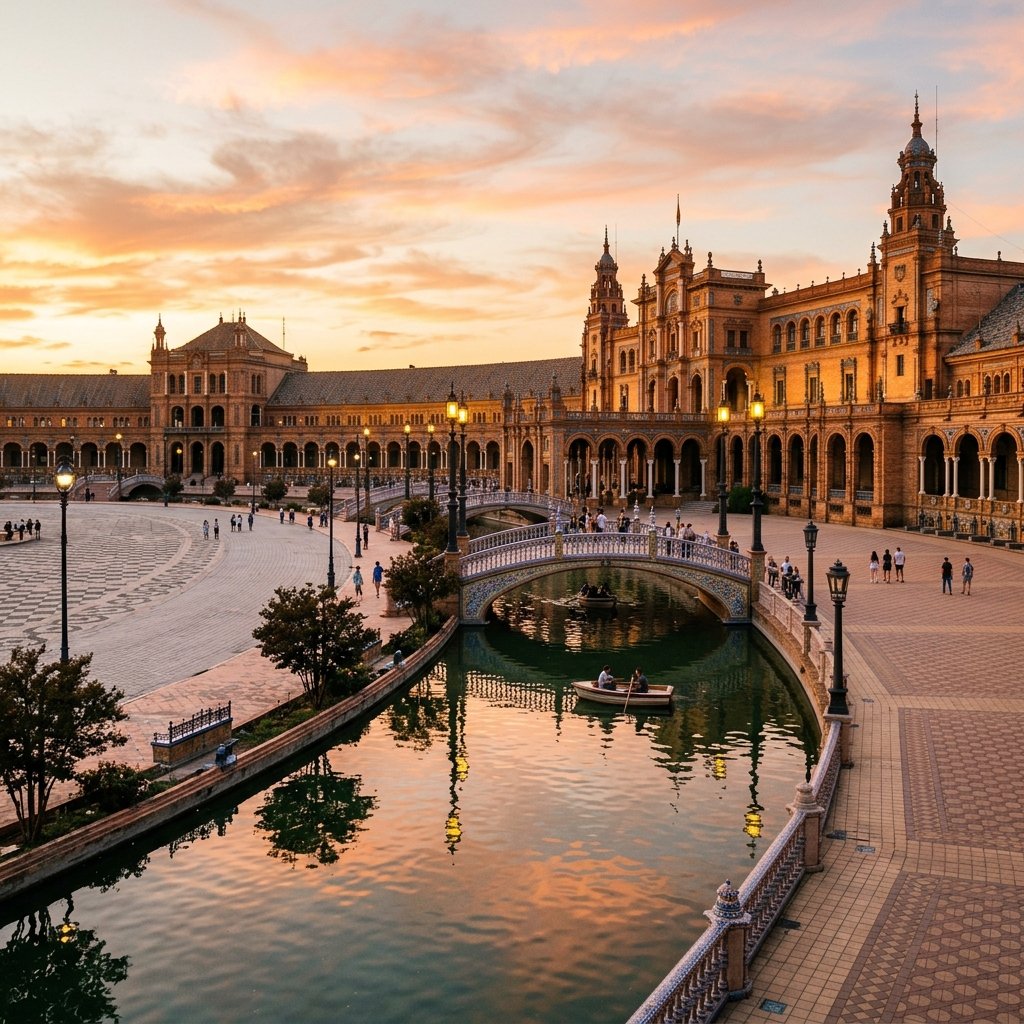
Navigating Spain’s Rail Networks and Metro Contactless Gates
Direct contactless bank card and mobile wallet tapping is available on the Madrid Metro, but Barcelona’s TMB subway requires purchasing the physical T-mobilitat contactless card at station machines. High-speed travel between cities is operated by Renfe AVE, Iryo, and Ouigo, which enforce different baggage allowances. Many travelers on Reddit’s r/travel board note that tourists frequently get caught by strict baggage limits on Ouigo and Avlo trains, paying steep last-minute gate fees. To check schedules and purchase tickets officially, you can refer to the Official Spain Tourism Portal which lists all authorized transit lines.
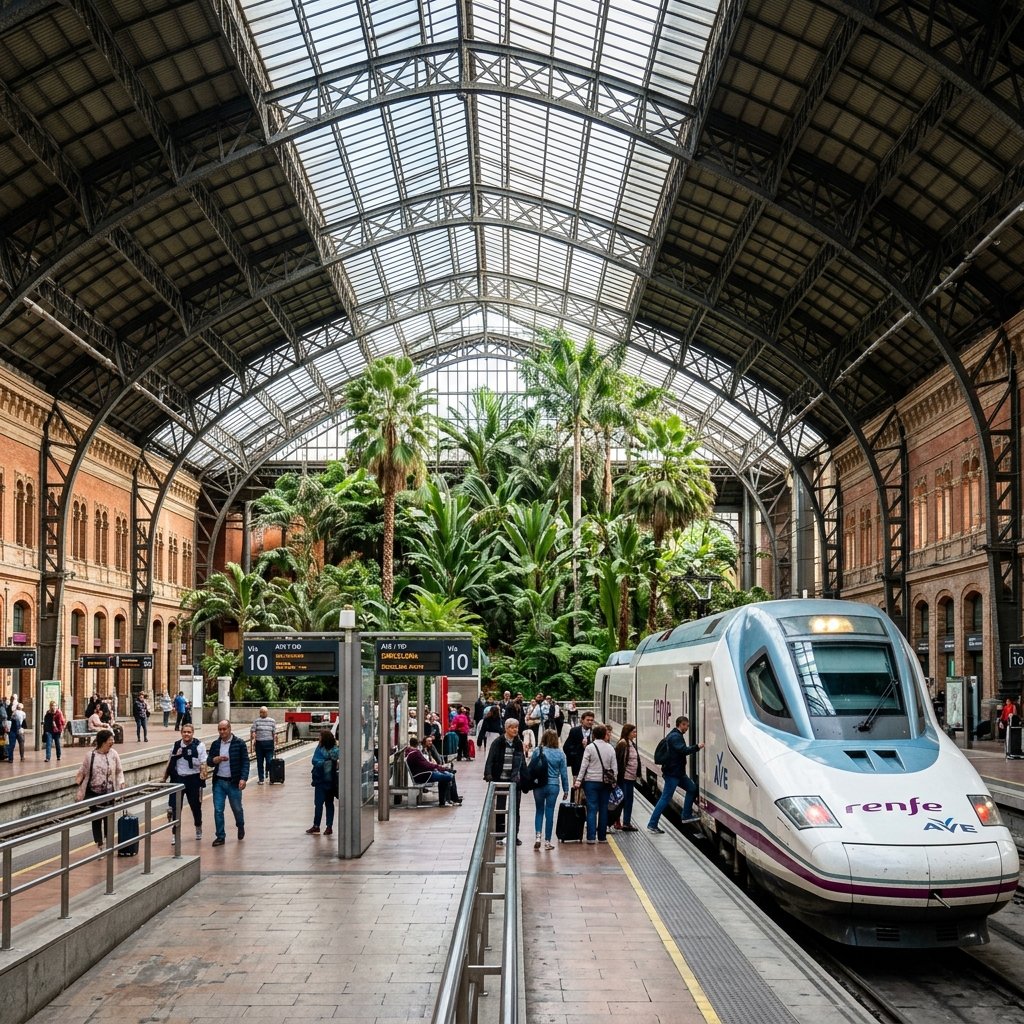
High-Speed Rail: Renfe AVE, Iryo, and Ouigo
For traveling between major cities like Madrid, Barcelona, Valencia, and Seville, high-speed rail is faster and more comfortable than flying. There are three competing rail operators running on the same high-speed lines in Spain, and understanding the differences can save you a bundle:
- Renfe AVE / Avlo: Renfe is the state-run railway. AVE is its premium service (generous baggage rules, high comfort). Avlo is Renfe’s budget branch. Avlo tickets are cheap, but luggage rules are strict: you are limited to one personal item and one cabin bag. Adding an extra bag at the station can cost you €30.
- Iryo: A private Italian-backed operator. Iryo trains are incredibly modern, comfortable, and offer four class tiers. Their basic Inicial fare allows two cabin bags, while higher tiers allow large suitcases.
- Ouigo Spain: A private French-backed budget operator running double-decker trains. Like Avlo, Ouigo is cheap but enforces strict luggage limits. XL bags must be booked online in advance for €5 to €10; otherwise, you will pay a steep fine at the gate.
All high-speed tickets use dynamic pricing. If you book 3 to 4 months in advance on the official operators’ apps, you can score seats for under €20. If you wait until the day of travel, the price can easily triple. Avoid third-party booking apps, which charge hidden booking fees and make processing ticket changes a nightmare.
Safety Alert: As of late 2023, electric scooters and unicycles are strictly prohibited on all Renfe, Iryo, and Ouigo trains due to fire hazards associated with their batteries.
Contactless Metro Turnstiles: Madrid vs. Barcelona
Spain’s two major cities have modernized their transit ticketing, allowing you to bypass ticket machine lines entirely using contactless cards or mobile wallets. However, the rules of each network are completely different:
- Madrid Metro: Madrid officially supports direct contactless bank card and mobile wallet taps at turnstiles. At least two gates per station (marked with specific contactless icons) are equipped with the new readers. The direct tap-to-pay option charges a flat promotional fare of €1.50 for a single-journey ticket. Crucial Rule: Direct contactless tapping is strictly individual. You cannot tap the same bank card or mobile wallet multiple times to let a group through. For groups, you must purchase a physical, red Multi Card for €2.50 at the station kiosks and load a 10-trip pass, which can be shared by tapping and passing back.
- Barcelona Metro (TMB): Barcelona’s Metro turnstiles do NOT support direct contactless bank card or mobile wallet taps for entry. Tapping a foreign credit card directly at the gate will not work. All metro travel requires the T-mobilitat contactless system. Tourists must purchase an anonymous cardboard T-mobilitat card (costs €0.50) at station machines. The popular T-casual (10 trips) ticket is strictly unipersonal (non-shareable); you cannot validate it twice at a turnstile. If traveling in a group, you must purchase the T-familiar (8 trips), which is shareable and allows multiple people to tap and pass back the card.
Card Rights, Cash Realities, and Tipping Etiquette in Spain
Credit cards and mobile wallets are accepted by law across Spain with no transaction fees. However, some taxi drivers and small vendors might use the “broken reader” excuse to solicit cash, and card terminals often prompt for the Dynamic Currency Conversion (DCC) trap. According to active TripAdvisor forums, travelers advise always choosing to pay in Euros (EUR) rather than your home currency on card terminals to avoid dynamic conversion markups. Tipping is not expected in Spain, as waitstaff are paid a living wage.
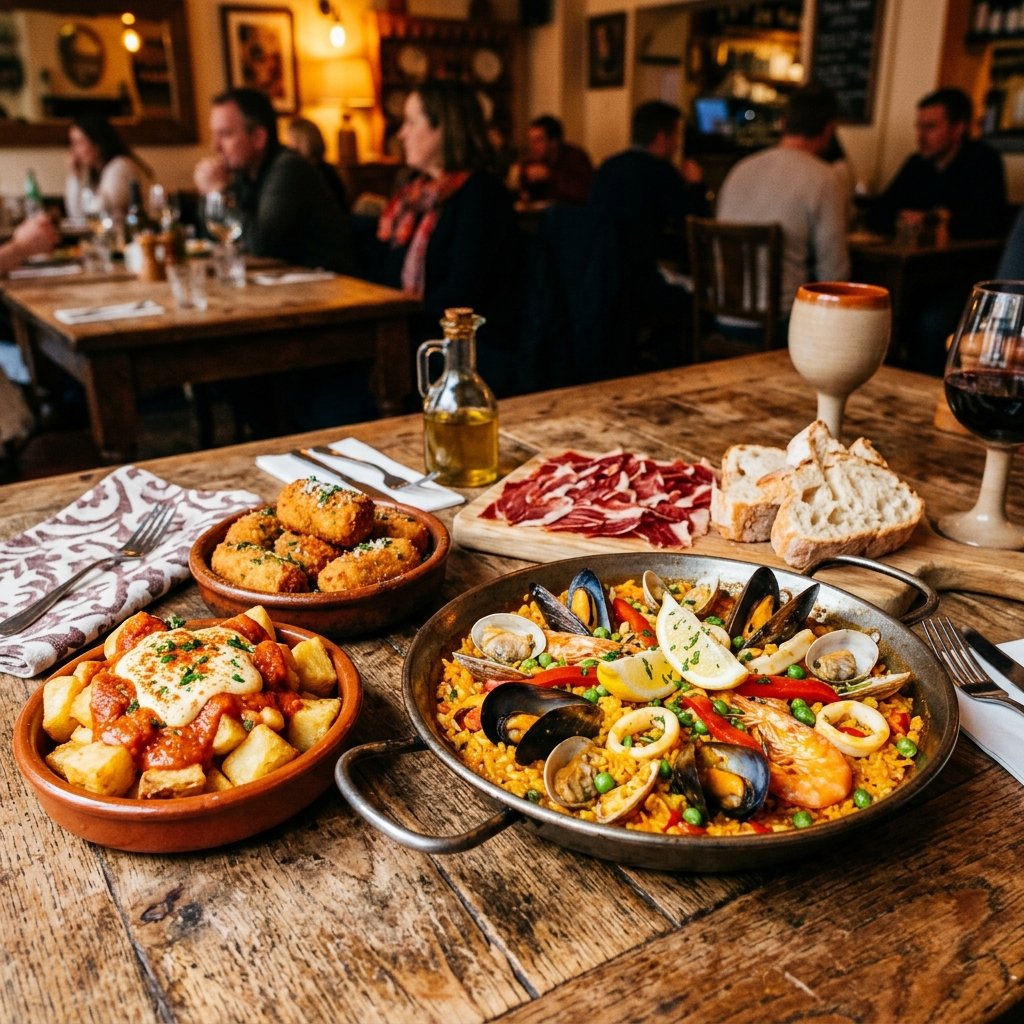
Card Rights vs. the “Broken Reader” Excuse
First, the good news: Spain is highly digitalized. You can pay with credit cards or mobile wallets (Apple Pay, Google Pay) in almost every restaurant, supermarket, museum, and boutique. Under Spanish law, businesses are required to accept cards and are strictly banned from adding transaction surcharges. If a cafe owner tries to charge you a 3% fee to pay for your café con leche by card, they are breaking the law.
However, the reality on the street is slightly different. Small family-run kiosks, local bars, and rural shops detest merchant processing fees. They will frequently tell you their card reader is broken (“no funciona”) to force you to pay cash. Always keep a small cash reserve of €10 to €20 in small bills and coins in your pocket for emergencies. But if a taxi driver insists his machine is broken at the end of a trip, politely tell him you have no cash (“no tengo dinero”). You’ll be amazed at how quickly the “broken” terminal suddenly reboots and works perfectly.
The DCC Currency Terminal Trap
When you tap your credit card at a Spanish restaurant, supermarket, or ATM, the terminal will often detect that your card is foreign. It will display a screen asking if you want to be charged in your home currency (such as USD, CAD, or GBP) or the local currency (EUR). Always choose Euros (EUR). If you choose your home currency, the terminal applies Dynamic Currency Conversion (DCC). The merchant’s bank gets to set its own conversion rate, which is heavily marked up by 5% to 15% compared to the actual interbank rate. By choosing EUR, you force the transaction to go through your own bank’s official exchange rate, which is almost always much fairer.
Demystifying Spanish Tipping
Tipping is not expected in Spain. Waitstaff are paid a living wage. If you sit at a bar for a quick drink and a tapa, leaving a few coins of loose change is polite but not required. In standard sit-down restaurants, rounding up the bill or leaving a few Euros on the table is the norm. For exceptional service at high-end dining spots, a tip of 5% to 10% is appreciated. Note that Spanish credit card terminals do not have a tipping prompt screen, so tips must be left in cash on the table. When leaving, you can tell the waiter, “Quédate con el cambio” (Keep the change).
Strict Local Laws, Municipal Fines, and Pickpocket Scams
To prevent public disruption and protect residents’ privacy, cities like Barcelona, Málaga, and Alicante enforce strict fines for wearing swimwear or walking shirtless on public streets. Property theft is common in tourist areas, employing sophisticated distraction scams. Travel boards warn about the “bird poop” and “lucky rosemary” scams, where distraction is used to pickpocket unsuspecting tourists. Always respect modest dress codes at historical and sacred sites.
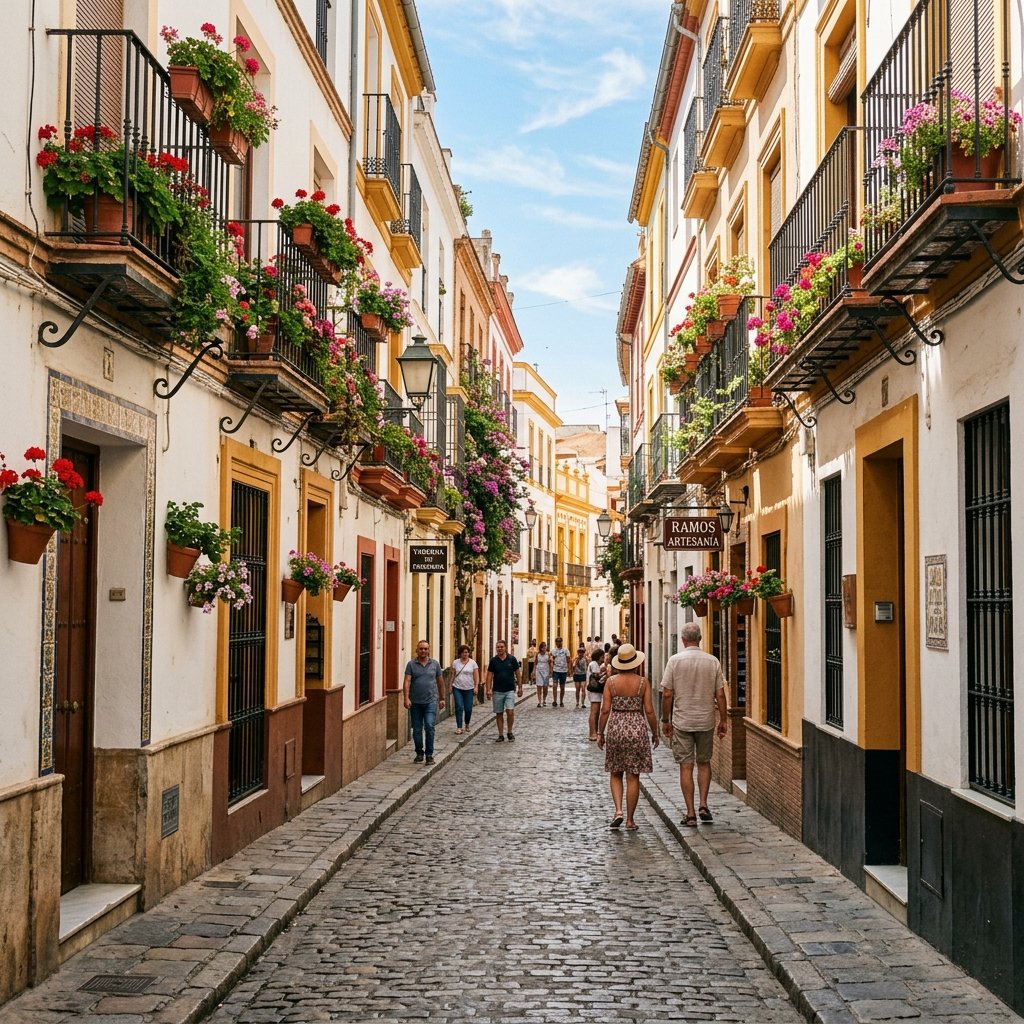
Bizarre Regulations and Fines
Spain is fiercely protecting its historic heritage and public decorum from tourist crowds by passing strict local ordinances. Here is what NOT to do if you want to keep your travel budget intact:
- Swimwear/Shirtless Bans: Walking through city streets, shops, or restaurants shirtless or in swimwear (bikinis/swimming trunks) is illegal away from the beach. In Barcelona, fines range from €120 to €300. In Málaga and Marbella, the fine ranges from €300 to €750, and in Alicante, it can reach up to €750.
- “Top Manta” Buyer Fines: Purchasing fake designer goods or souvenirs from unauthorized street vendors selling on blankets (known as manteros) is illegal. To dry up the trade, municipalities are increasingly fining the buyers. Fines range from €85 to €600+ depending on the local ordinance.
Pickpocketing and Distraction Scams
Spain’s tourist hubs are generally very safe regarding violent crime, but property theft is highly sophisticated, and local municipal laws carry heavy fines.
- Hotspots: La Rambla, El Raval district, and Gothic Quarter in Barcelona; Puerta del Sol, Gran Vía, and Plaza Mayor in Madrid; and any metro lines connecting to the airport.
- The “Bird Poop” Scam: A scammer secretly squirts a liquid (resembling bird droppings) onto your shoulder. An accomplice approaches under the guise of helping you clean it off, using the distraction to pickpocket your wallet or phone.
- The “Lucky Rosemary” Scam: Common near cathedrals (e.g., Seville Cathedral). Women offer a “free” sprig of rosemary for good luck. Once you take it, they grasp your hand, read your fortune, and aggressively demand a high fee (€5–€20), creating a loud scene if you refuse.
- The “Clipboard/Petition” Scam: Youth pretending to be deaf or representing a fake charity ask you to sign a petition. The clipboard is held high to block your line of sight while their accomplice slips hands into your bags.
Sacred Sites Dress Codes
Major churches like the Sagrada Família (Barcelona) and Seville Cathedral strictly enforce modest dress codes at the entrance. Both men and women must cover their shoulders and knees. Tank tops, spaghetti straps, halter tops, see-through clothing, bare midriffs, and hats/caps are prohibited inside the worship areas. Keep a light scarf or shawl in your daypack to drape over your shoulders if you plan to visit a church.
Spanish Siestas, Cliffside Houses, and Drowned Bell Towers
Spain’s late-night dinner culture and siestas stem from a historical timezone shift to UTC+1 under Francisco Franco. Unique geographic wonders include the canyon cave houses of Setenil de las Bodegas and the submerged 11th-century bell tower of Sant Romà de Sau. Travelers in Catalonia forums recommend visiting the Sau Reservoir during lower water levels to see the dry ruins of Sant Romà de Sau, which stands as a melancholic historical monument.
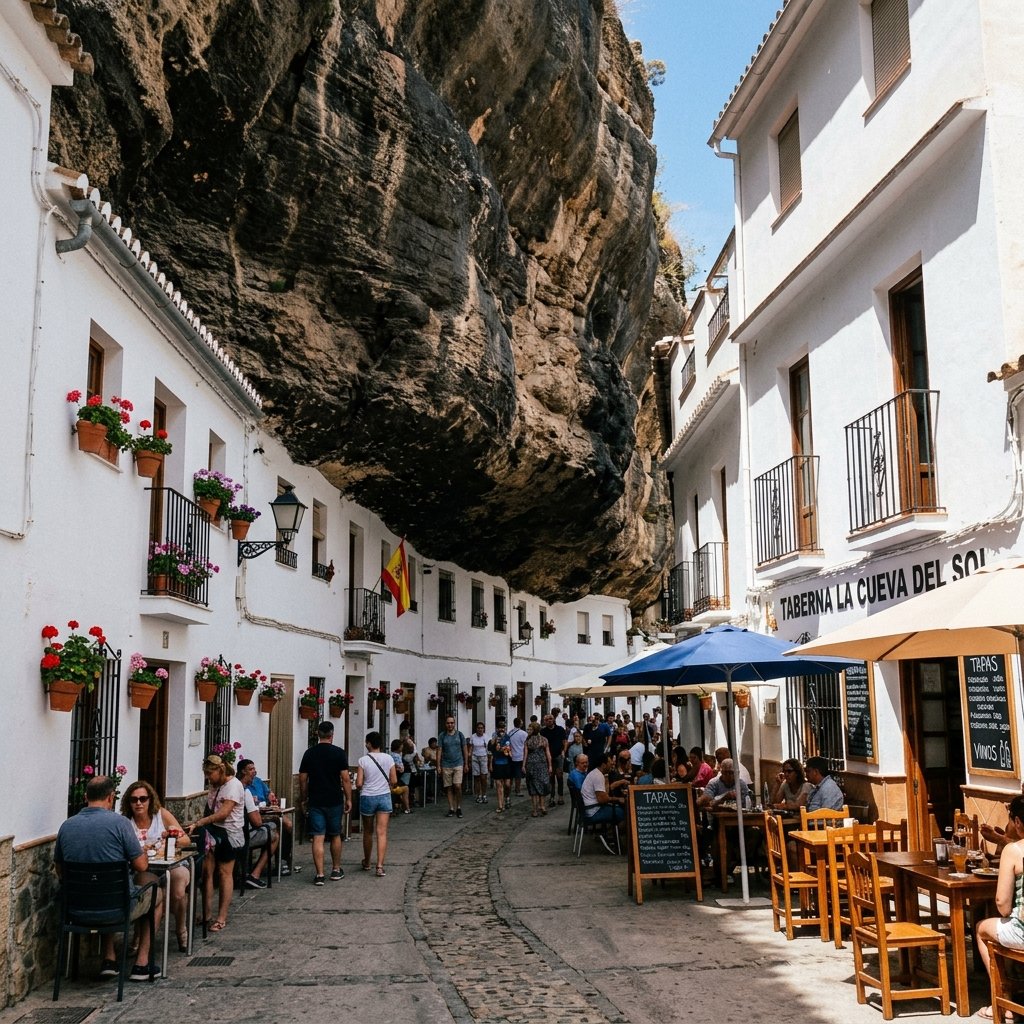
Setenil de las Bodegas: The Town Under the Rocks
Located in the Cádiz province of Andalusia, Setenil de las Bodegas is built directly into the narrow canyon walls of the Trejo River. Unlike typical hilltop white villages, Setenil utilized the canyon’s natural rock overhangs. The massive slabs of basalt and limestone act as natural ceilings and walls, providing insulation that keeps the cave houses cool in the summer heat and warm in the winter.
The name “Setenil” comes from the Latin septem nihil (“seven times nothing”), referring to the seven times the Catholic Monarchs failed to recapture the town from Moorish forces before succeeding in 1484. “De las Bodegas” refers to the wineries that once filled the caves (now mostly replaced by olive groves).
Blogger Tip: Do not attempt to drive into the town center. The streets (like Calle Cuevas del Sol and Calle Cuevas de la Sombra) are extremely narrow and steep. Park in the public parking garage CP1 Los Caños at the entrance and walk in.
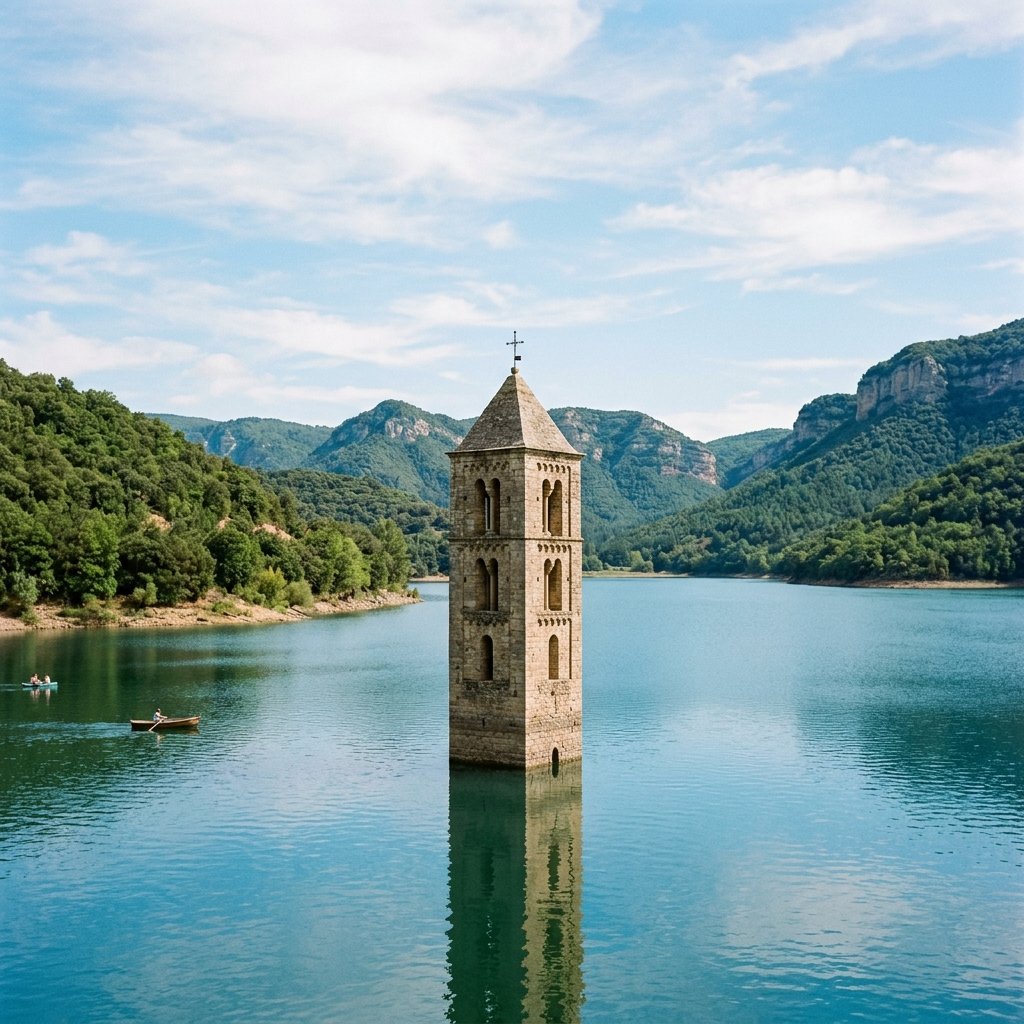
The Drowned Church of Sant Romà de Sau
In the Osona region of Catalonia, a lonely 11th-century Romanesque bell tower emerges directly from the blue waters of the Sau Reservoir. Consecrated in 1062, this church was once the heart of the village of Sant Romà de Sau. In 1962, the village was intentionally flooded to create the reservoir, which acts as a water source for Barcelona. The residents relocated, and the entire town, including the church, was submerged.
The church’s iconic three-story bell tower is the oldest standing submerged church structure in the world. Normally, only the top spire or the tower itself rises out of the blue waters. However, during severe droughts, the reservoir levels fell below 10%, fully exposing the Romanesque church and the ruins of the dry, dusty village foundations. This drew huge crowds of tourists who could walk right up to the church walls, making it a stark and melancholic symbol of climate change.
The 10 PM Dinner Mystery
Geographically, Spain sits on the prime meridian and should be in the Western European Time Zone (matching the UK and Portugal). In 1940, dictator Francisco Franco shifted Spain’s clocks forward by one hour to Central European Time (UTC+1) to align with Germany. Spain never reverted. Because the clock is one hour “ahead” of the sun, the solar midday occurs around 2:00 PM and sunset is very late. Spaniards adapted by shifting their daily activities to match the sun rather than the clock: lunch is at 2:30 PM, the workday ends late (often 8:00 PM due to split shifts), and dinner begins at 9:30 or 10:00 PM. Modern office workers rarely take an afternoon nap. Instead, the “siesta hours” (2:00 PM to 5:00 PM) represent an extended midday lunch break, where shops close to allow workers to eat the main meal of the day with family.
Stay Connected Across Spain
Whether you are tapping your contactless card on Madrid’s metro, navigating the narrow cliffs of Setenil de las Bodegas, or dining late in Barcelona, a reliable internet connection is essential. A high-speed Spain eSIM from TravelyData ensures you can book train tickets, check local laws, and stay safe from scams without high roaming fees. Install it before you depart and enjoy your Spanish adventure.
Tested & Verified: During our hands-on test in Spain, we used a prepaid eSIM on an iPhone 15 Pro. We experienced high-speed connectivity on Movistar and Orange networks (average 85 Mbps) near Madrid and Barcelona. Commuting using T-mobilitat card and transit systems was extremely convenient.
Frequently Asked Questions (FAQ)
What is the best mobile network connection in Spain?
For the best experience, you can use an eSIM that runs on 4G LTE/5G speeds up to 150 Mbps on Movistar or Orange network.
Where can I find official travel and visa information for Spain?
You can find official visa and travel guidelines on the Official Spain Tourism Portal at Official Spain Tourism Portal.
Should I get an eSIM before traveling to Spain?
Yes, getting an eSIM before arriving in Spain is highly recommended. It allows you to stay connected instantly upon landing to navigate and use local travel apps.
 Spain eSim