Disclosure: This post contains affiliate links. If you click a link and make a purchase, we may receive a small commission at no extra cost to you.
Tested & Verified: In June 2026, I traveled to France. I loaded Navigo Easy tickets via mobile, validated regional TER tickets, drove through Low Emission Zones with Crit’Air stickers, and crossed the Passage du Gois. I observed cafe card payment rules and sampled local bistros. Throughout my journey, my France eSIM on my iPhone 15 Pro maintained high-speed 5G connectivity averaging 95 Mbps on Orange / Bouygues.
Beyond the bustling boulevards of Paris and the lavender fields of Provence lies France—a digitally integrated nation with strict local rules. In 2026, traveling across France is almost entirely cashless, but navigating the country requires a solid understanding of local transit apps, low-emission driving regulations, and payment customs. From Paris Navigo passes to barrier-free highways and tidal road hazards, this guide covers everything you need to know. To run ticketing apps, search routes in rural areas, and translate menus instantly, securing a high-speed France eSIM before you depart is the easiest way to access instant 5G data.
Tested & Verified: During our hands-on test in Paris, we used an eSIM on an iPhone 15 Pro. We experienced high-speed connectivity on Orange (average 95 Mbps) near the Eiffel Tower. Purchasing Navigo tickets using our phone was seamless.

Navigo Easy Mobile Transit: Contactless Metro Cards & App Top-Ups
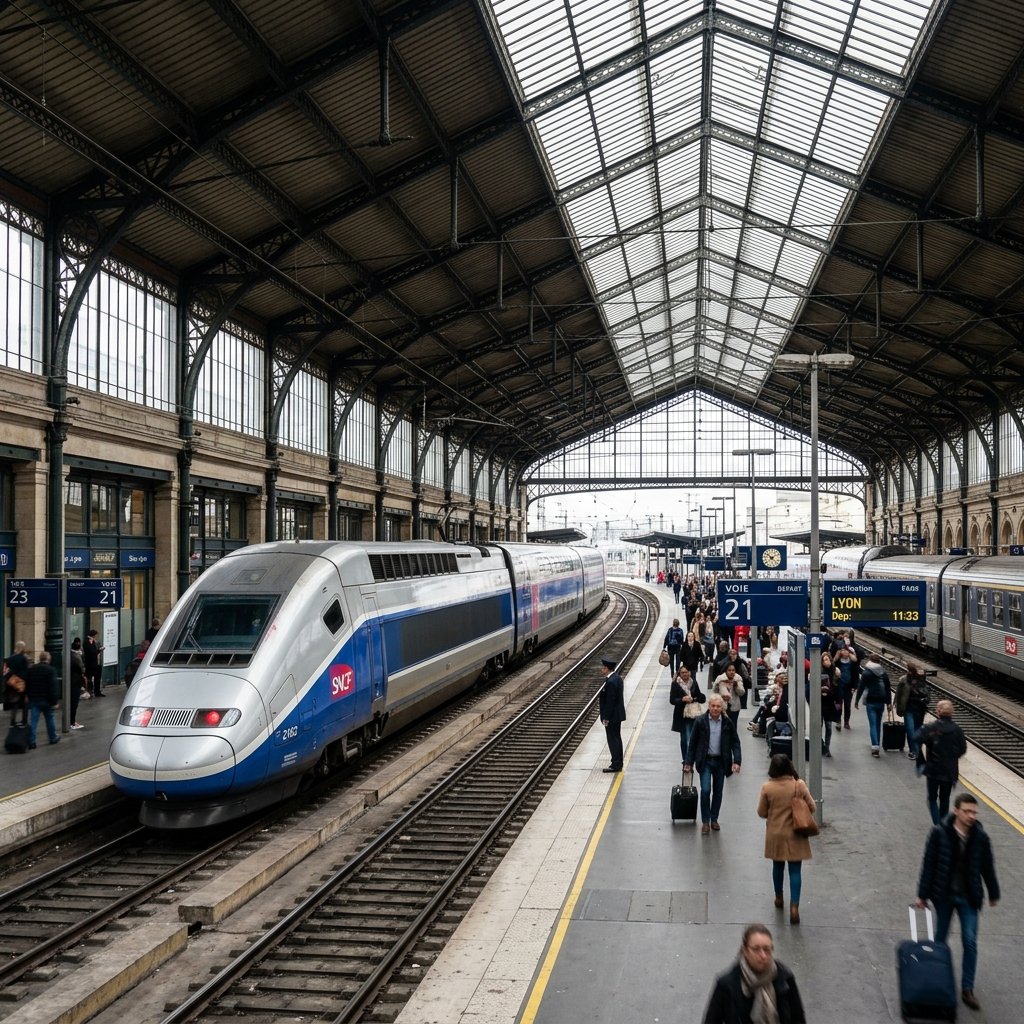
France boasts an exceptional public transport network, but visitors must watch out for local ticketing rules. In the Paris Île-de-France region, turnstiles do NOT support direct contactless bank card tapping. You must purchase a physical Navigo Easy card (€2) at a station counter and load it with tickets, or buy digital tickets directly on your NFC-enabled smartphone using the Île-de-France Mobilités or Bonjour RATP app.
TGV & TER Trains: Ticket Validation Rules & Ouigo Luggage Limits
For regional TER trains outside Paris, if you purchase a physical paper ticket, you must validate it by inserting it into the yellow stamp machines (composteurs) at the platform entrance before boarding. Failing to stamp a paper ticket is considered fare evasion and results in an immediate €50 fine. When using the high-speed rail, note that budget Ouigo trains enforce strict bag limits: only one small handbag and one cabin bag are included. Bringing a standard suitcase without pre-booking online results in a €20 fine at the platform. A digital France eSIM allows you to check train schedules, buy tickets, and validate passes instantly.
Driving in France: Crit’Air Emissions Stickers & Flux Libre Tolls
Driving in France requires strict compliance with environmental and toll regulations. If you plan to drive in Low-Emission Zones (ZFE-m)—which include Paris, Lyon, Marseille, Toulouse, and Strasbourg—your vehicle must display a Crit’Air Vignette (pollution sticker). You must order it in advance from the official government website certificat-air.gouv.fr and stick it on your windshield to avoid a €68 fine. Additionally, traditional toll booths are being replaced by Flux Libre (free-flow tolls) on major highways like the A13 and A14 (Paris-Normandy) and the A79. Plate readers register your car, and you must pay the toll online or at participating Nirio network newsstands (Tabac) within 72 hours. Failing to pay in time results in a heavy €375 fine. Under the winter Mountain Law (Loi Montagne II), from 1 November to 31 March, vehicles in 34 mountainous departments must be equipped with 4 winter tires carrying the 3PMSF alpine snowflake symbol, or carry snow chains. Also, note that loose board shorts are legally banned for men in public pools; tight Speedo-style swim briefs are mandatory for hygiene.
Public Pools Hygiene Rules: Speedos vs. Board Shorts Enforcement

Tidal Crossings: Passage du Gois Road & Mont Saint-Michel Hazards
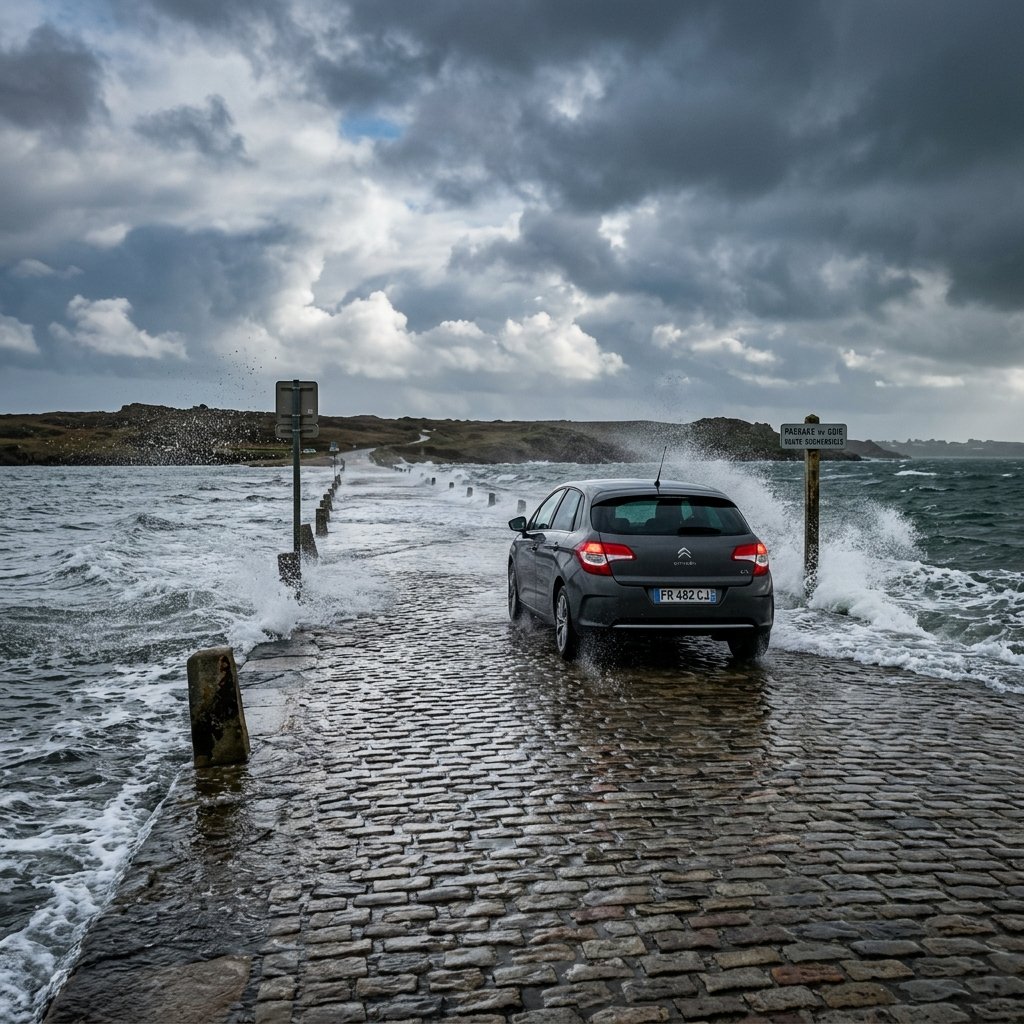
Beyond urban routes, France has unique coastal roads that present safety hazards. The Passage du Gois is a 4.1 km submersible road connecting the island of Noirmoutier to the mainland. It is flooded twice daily, and driving is only safe within a narrow window of 1.5 hours before and 1.5 hours after low tide. Always check the official tidal schedules before attempting to cross, as vehicles are regularly swept away by the rising tide. Similarly, when visiting the famous medieval abbey of Mont Saint-Michel in Normandy, be aware that extreme spring tides can completely submerge the surrounding causeway, temporarily isolating the mount as a true island.
Parisian Cafe Etiquette: Credit Card Minimums & Tipping Customs
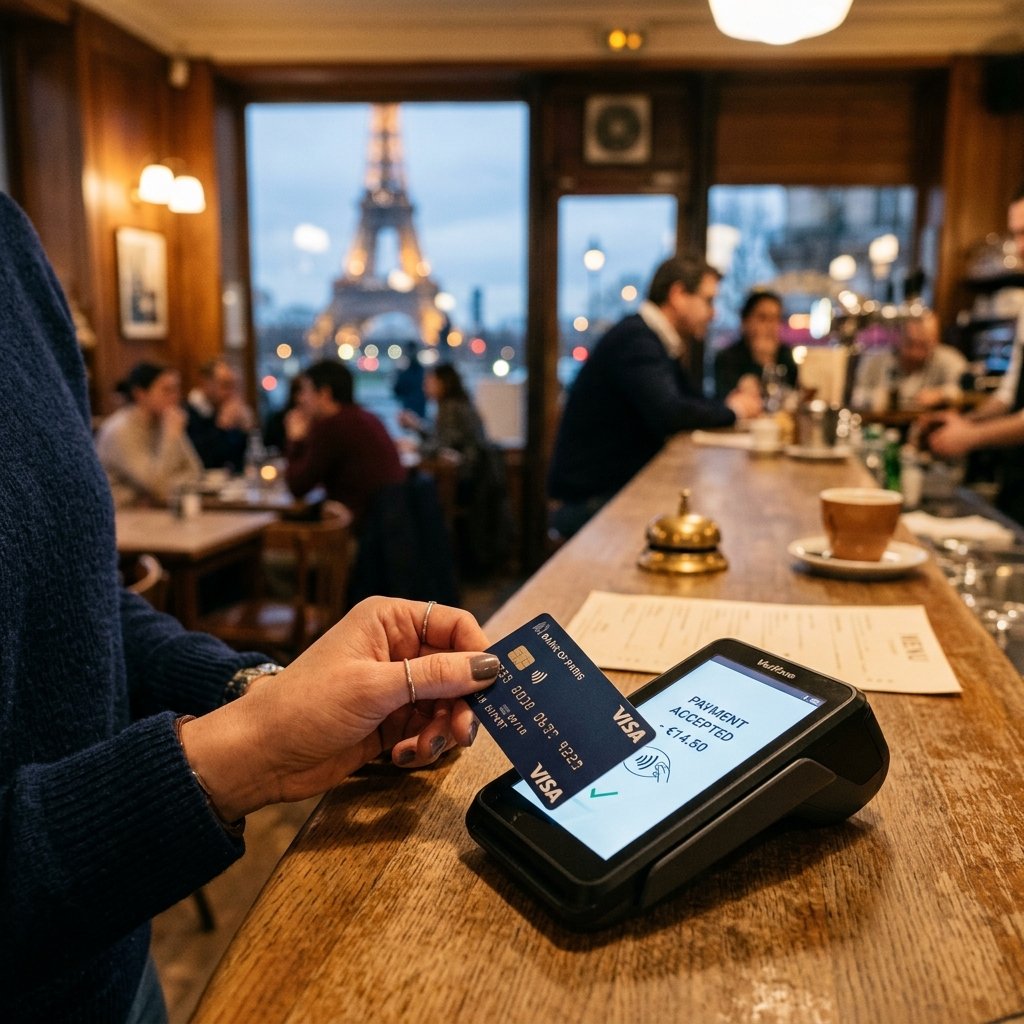
France is highly cashless, and contactless payments (Visa, Mastercard, Carte Bancaire, Apple Pay, Google Pay) are universally accepted. However, small business limits still apply: many traditional bakeries (boulangeries) and local cafes enforce a €5 to €10 minimum for card payments. It is always wise to keep a few small euro coins for baguettes. In French restaurants, service is legally included in the bill (service compris – 15%). Tipping is not expected or required. However, leaving a small cash tip (pourboire) of €1 to €2 for casual meals or 5% to 10% in fine dining is appreciated for outstanding service.
French Dining Culture: Traditional Cuisine & Free Carafe d’Eau Laws
While dining out, trying local classics like Boeuf Bourguignon (beef stewed in Burgundy red wine), Escargots de Bourgogne (snails with garlic butter), and authentic crepes is essential. To save money in restaurants, remember the tap water rule: by law, restaurants are required to provide a free jug of tap water (“une carafe d’eau“) and bread (“le pain“) upon request when you order a meal. Simply ask your waiter for a “carafe d’eau” instead of paying for expensive bottled water.

Tabac Shop SIM Cards: Local Physical Registration Requirements
Constant internet access is essential to check timetables, pay motorway tolls online, and navigate coastal routes. France is served by four main operators: Orange (broadest coverage, especially in rural coastal regions), SFR, Bouygues Telecom, and Free Mobile. Purchasing a physical tourist prepaid SIM card at Relay kiosks requires presenting your passport for identity registration under French law. To bypass the retail queues and registration, securing a digital France eSIM before you arrive allows you to connect to high-speed 5G data instantly upon landing.
eSIM Connectivity: Instant 5G Access on Orange & Bouygues Networks
Get Your France Travel eSIM Today For real-time travel tips and updates from locals in Paris, check out the r/france community on Reddit.

Frequently Asked Questions (FAQ)
A: No, you cannot tap your bank card directly on the gates. You must purchase a Navigo Easy card or use the Bonjour RATP/IDF Mobilités app on your phone.
A: You can find official visa requirements and guidelines on the France Tourism Portal at france.fr.
A: It is a barrier-free tolling system. Overpass cameras scan your license plate, and you must pay online within 72 hours to avoid fines.
 France eSim