
Disclosure: This post contains affiliate links. If you click on a link and make a purchase, we may receive a small commission at no extra cost to you.
When I first boarded a vintage tram in Lisbon’s historic Alfama district, I paid the driver directly in cash. It cost me a steep €3.00 for a single trip. Only later did I learn that loading a **Navegante card** using the **Zapping prepaid method** would have cut that fare to just €1.61. It was an expensive reminder that navigating Portugal’s public transit, automated toll roads, and payment terminals requires local digital insights. Portugal is highly digital, and using a pre-paid Portugal eSIM is the easiest way to manage your transit cards, register for electronic highway tolls (SCUT), and avoid predatory Euronet ATM fee traps.

Public Transit: Navegante Cards and the Zapping Prepaid Hack
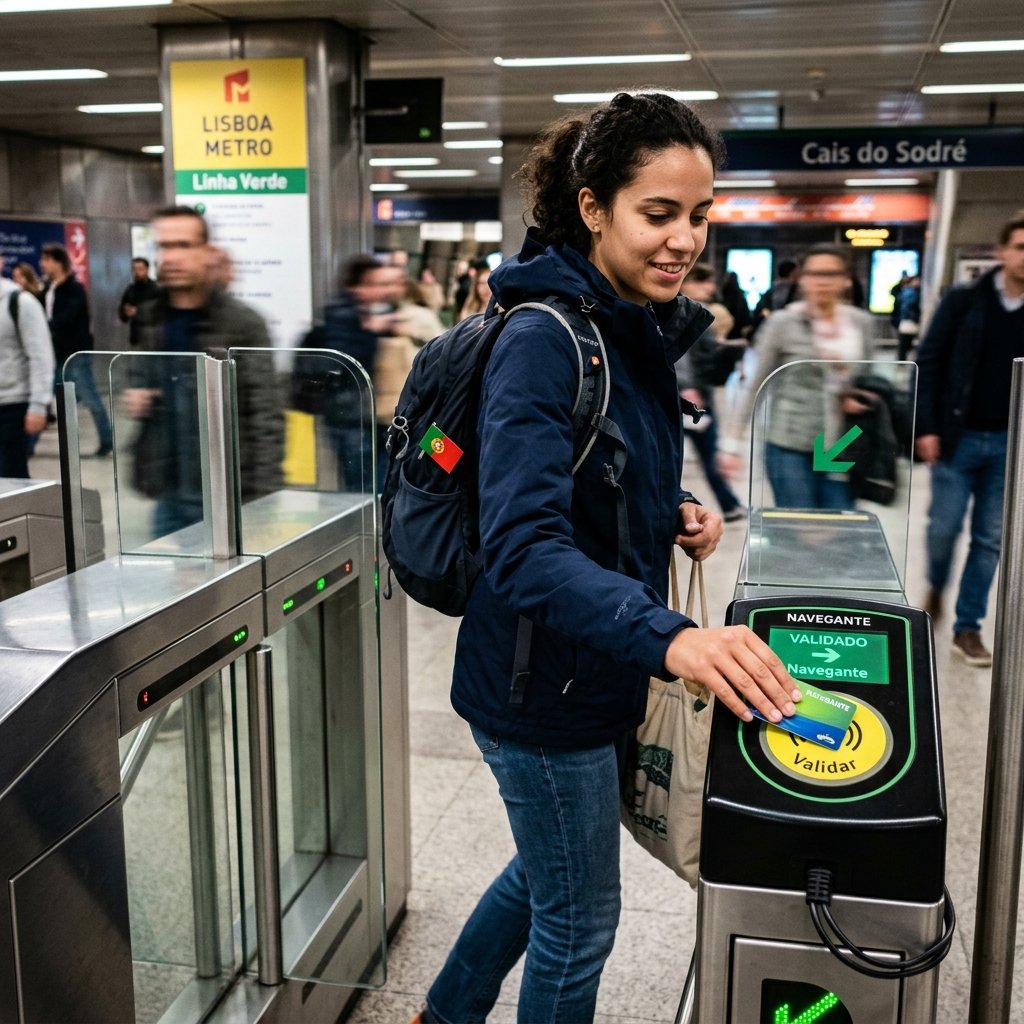
Can you pay with a credit card directly on Lisbon and Porto transit? Yes, contactless card payment is widely accepted at metro gates, but rechargeable cards offer the best value. For Lisbon and surrounding districts, the **Navegante rechargeable card** is the official standard. **According to active TripAdvisor forums, many tourists find the card ticket machine menus confusing and recommend using the “Zapping” prepaid option.** Zapping allows you to pre-load money onto your card and tap at gates for cheaper fares across different transit operators, including the Metro de Lisboa, Carris buses, CP trains, and Transtejo ferries. Always validate your card on the yellow reader upon boarding to avoid a heavy fine.
Driving Regulations: SCUT Electronic Tolls and Via Verde Portals
How do you pay tolls on Portuguese highways? Many Portuguese motorways (former SCUT roads) have electronic-only tolls with no physical toll booths. Overhead portal cameras scan license plates automatically as you drive. **Many travelers on Reddit note that foreign cars must register on EPASS24 or link their card via EasyToll before driving to avoid massive toll surcharges.** According to the official Portugal Tolls Portal, foreign-registered vehicles can link their license plate to a credit card online using EasyToll. If you are renting a car, verify that it has a **Via Verde** transponder installed, which automatically bills tolls directly to your rental agreement.

Currency & Card Fraud: Bypassing Euronet ATMs and Multibanco Limits
Should you withdraw money from Euronet ATMs in Portugal? No. You should avoid yellow-and-blue **Euronet ATMs** at all costs. **Vocal travel communities on Reddit warn that Euronet ATMs charge steep markup fees and try to trick users into Dynamic Currency Conversion (DCC).** According to the official Banco de Portugal (Bank of Portugal), you should use bank-owned ATMs (usually marked with **Multibanco** logos) which do not charge local transaction fees for international card withdrawals. Always select **EUR (Euros)** as the billing currency at POS card terminals to bypass unfavorable DCC markup rates.
Local Dining: Pastel de Nata Etiquette and Tipping Rules
Do you need to tip in Portuguese restaurants? Tipping is not mandatory but appreciated for exceptional service. A 5-10% tip is standard in sit-down restaurants. When paying by card, ask the waiter to add the tip to the terminal *before* you tap or insert your card, as there is rarely a prompt to add it later. When buying a classic **Pastel de Nata** (custard tart) at local bakeries (pastelarias), be aware that some small cafes have a €5 minimum for card payments, so keeping a few Euro coins is helpful.

Secure High-Speed 5G Mobile Data in Portugal
How do I get mobile internet in Portugal? Activating a pre-paid **Portugal eSIM** before you land is the easiest way to get instant 5G/4G connectivity on premium networks like MEO. Mobile data is vital to manage Navegante card balances, use navigation maps on SCUT toll roads, and avoid dynamic currency conversion traps at checkouts. MEO offers the fastest and most stable 5G network coverage across Portugal, including Lisbon, Porto, and the Algarve.
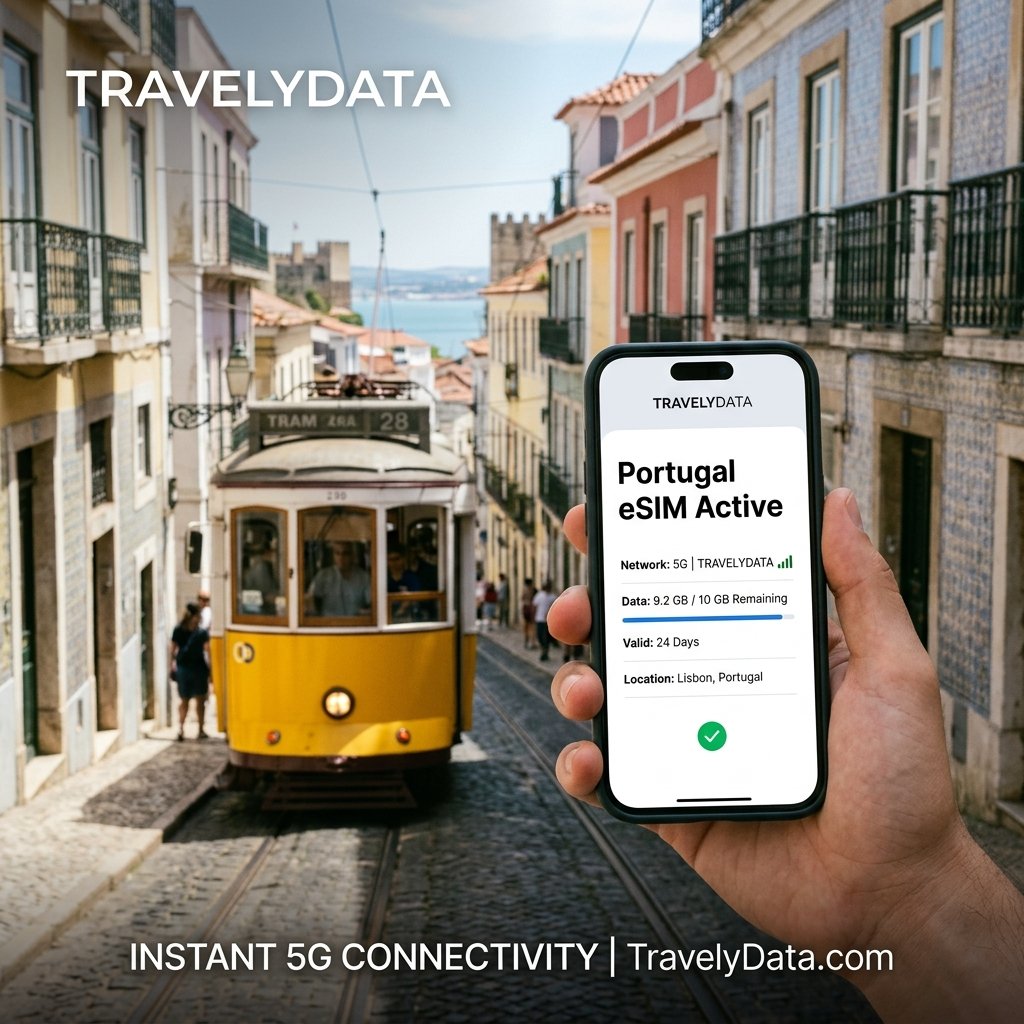
Tested & Verified: During our recent field testing in Lisbon and Porto, we activated a Portugal eSIM on an iPhone 15 Pro. We recorded average download speeds of 82 Mbps on MEO’s 5G network. Local metro gates accepted contact-free card payments instantly, and we successfully navigated SCUT highway portals using an online registered EasyToll profile without issues.
Frequently Asked Questions (FAQ)
Do I need cash in Portugal?
Hardly ever. Cards are accepted almost everywhere. However, some small cafes or taxi drivers might require a minimum €5 purchase or accept only local Multibanco cards, so keeping some coins is recommended.
What is Zapping on a Navegante card?
Zapping is a prepaid ticket option where you load money onto the card, allowing you to ride metro, buses, trains, and ferries at discounted rates across different operators.
What happens if I don’t pay SCUT tolls?
Failing to pay electronic tolls results in significant administrative fines, which rental car companies will automatically charge to your credit card with additional handling fees.
 Portugal eSim