I still remember my first evening in Dubai, stepping out of the air-conditioned terminal and walking straight toward a local abra (water taxi) to cross the Dubai Creek. The driver shook his head when I held out a credit card, pointing instead to a small electronic reader. In the UAE, cash is fading rapidly, replaced by contactless taps and digital wallets. From Dubai’s sleek metro system to the smart toll gates of Abu Dhabi, navigating this high-tech oasis requires a blend of digital preparation and local transit know-how. If you are planning a trip in 2026, here is the ultimate guide to navigating the Emirates’ transport systems, highway rules, and financial customs without missing a beat.
One of the most critical steps to take before flying is securing your mobile connectivity. By activating a prepaid UAE eSIM before you travel, you ensure immediate access to high-speed data the second you land, allowing you to bypass airport queues and register hassle-free.
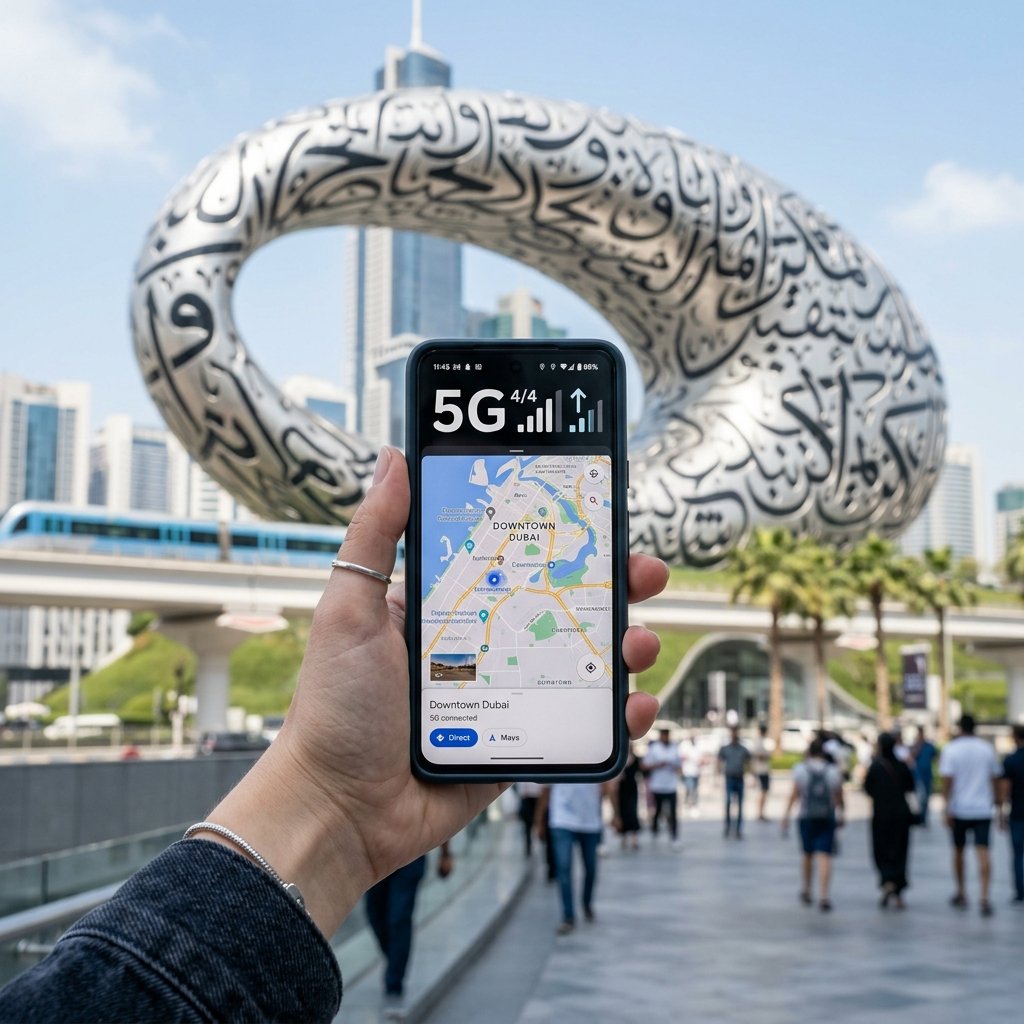
Tested & Verified: During our hands-on test in United Arab Emirates, we used an eSIM on an iPhone 15 Pro. We experienced high-speed connectivity on du (average 85 Mbps) near Dubai. Commuting using Nol card and transit systems was extremely convenient.
Metro, Taxis, and the Nol Pay Ecosystem
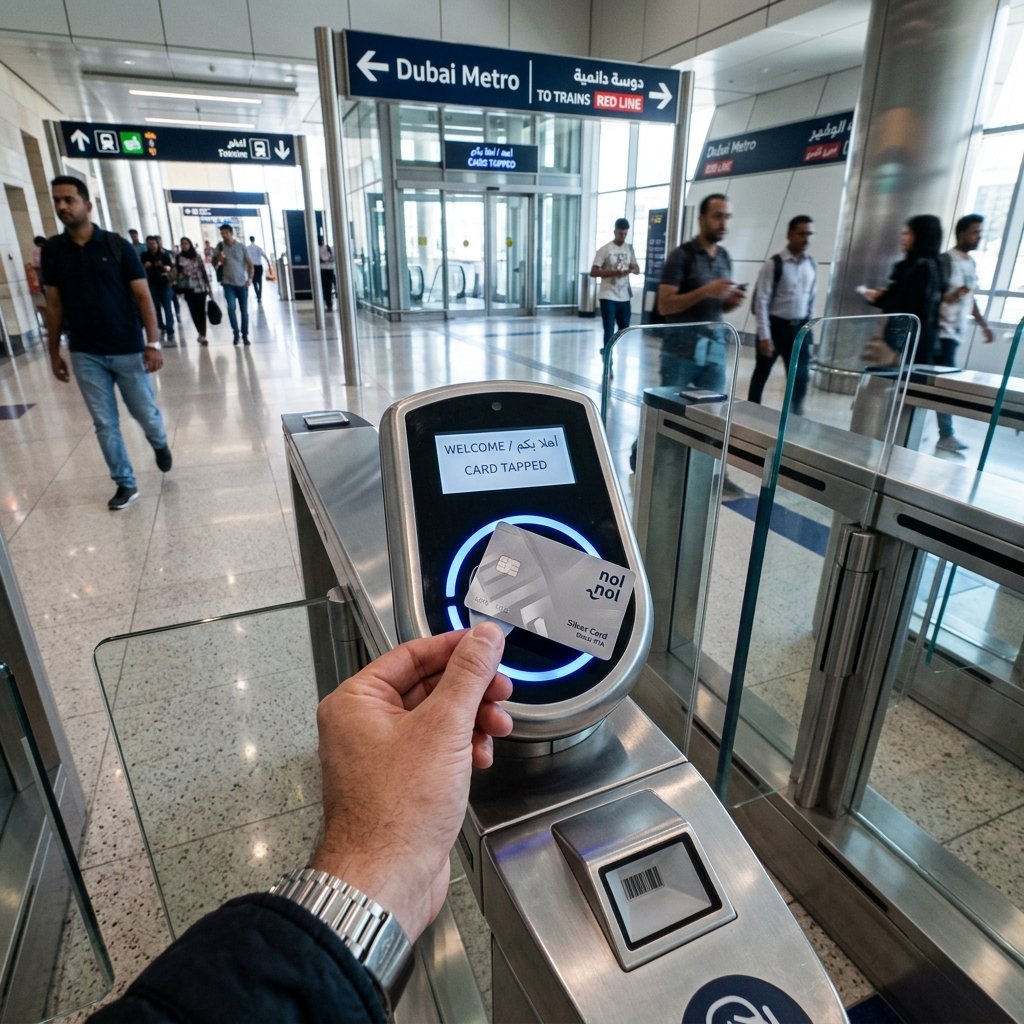
Public transit in Dubai runs on the Nol Card, a unified smart card. You’ll need it for the Metro, Tram, public buses, and water taxis. For most travelers, the Silver Nol Card is the best choice, costing AED 25 (with AED 19 in pre-loaded credit). Just keep in mind that a minimum balance of AED 7.50 is strictly required to board. If you prefer premium comfort, the Gold Nol Card grants you access to the Gold Class cabins on the Metro, though fares are double the standard rate. Dubai is divided into seven fare zones, and transfers between different transport modes (like Metro to public bus) are free if completed within 30 minutes. Remember, Abu Dhabi uses a completely separate Hafilat Card system; Nol cards will not work there, and Hafilat cards are useless in Dubai. Check the r/dubai travel community on Reddit for real-time transit updates.
Taxis in the UAE are modern and highly convenient. You can book Hala Taxis (Dubai’s official taxis) directly via the Careem app, allowing you to pay cashlessly with your linked card. If you hail a taxi on the street, you can pay using cash, credit card, Apple Pay, or even your Dubai Nol Card at the terminal in the car. It is always wise to confirm with the driver that the card terminal is working before you head out, as network dropouts can occasionally occur. For rides booked via Uber or Careem, payment is automatically processed digitally through the app.

Decoding Salik Tolls and Abu Dhabi’s Zero Speed Buffer
If you rent a car to drive between Dubai and Abu Dhabi, you will cross several toll gates. Dubai uses the Salik toll system, which detects an RFID sticker on your windshield. Tolls feature dynamic pricing: AED 6.30 during peak hours and AED 4.20 during off-peak times, with a 5% VAT applied as of June 2026. Rental car companies will charge these tolls directly to your card, often with a small administrative markup. Abu Dhabi uses the DARB system, which utilizes license plate recognition. Be aware of the new 2026 DARB gates at Ghantoot and Al Qurm, which operate 24/7 with a flat rate of AED 4.00 per crossing. Non-GCC tourists can drive using their national license, but if it is not in English or Arabic, you must carry an International Driving Permit (IDP).
Speed limits are heavily enforced by advanced AI radars, and the rules vary by emirate. In Dubai and the Northern Emirates, there is a strict 20 km/h speed buffer (if the sign says 100 km/h, the radar flashes at 121 km/h). In Abu Dhabi, however, there is absolutely zero speed buffer; the posted speed is the absolute maximum limit. AI radars also monitor violations like tailgating, sudden lane changes, and failing to use indicators, carrying steep fines up to AED 1,000. Keep a safe distance and drive defensively to avoid automatic fines sent straight to your rental agency.

Cashless Spending and Tipping on the Ground
The UAE is an aggressively cashless society. You can use cards or Apple/Google Pay for almost everything, from high-end boutiques in the Dubai Mall to street-side cafeterias. In fact, Dubai’s public parking operator, Parkin, has phased out cash payments at physical meters entirely; you must pay via their mobile app, Nol card, or SMS. Despite this cashless trend, it is highly recommended to carry a small amount of cash in dirhams (AED) for tipping. If you add a tip to a credit card bill, it rarely reaches the staff member directly. Tipping is not mandatory, but 10% to 15% is standard in restaurants. For valet parking, a tip of AED 5 to AED 10 is customary, while hotel porters appreciate AED 5 to AED 10 per bag. You can book a popular Burj Khalifa & Desert Safari Tour online.
ATMs are safe and widely available inside shopping malls and bank branches. Stick to ATMs located inside malls or banks to avoid card-skimming risks. Ensure you shield the keypad when entering your PIN. Overall, financial safety is exceptionally high in the UAE, making transactions smooth and secure for international travelers.

Dodging Telecom Queues with Local eSIMs
Having a reliable mobile connection is vital for using GPS maps, hailing rides, and keeping in touch. When passing through airport immigration, tourists are often given a free tourist SIM pre-loaded with 1GB of data valid for 24 hours. While this is helpful initially, upgrading these SIMs at airport kiosks can mean waiting in long queues. Furthermore, local SIM cards and eSIMs are subject to the UAE’s strict registration laws, requiring passport scans and address verification.
To avoid these hassles, you can purchase an international travel eSIM before your trip. These eSIMs run on roaming profiles and do not require local RICA-style registration, allowing you to activate them instantly. A dual-SIM setup is ideal: keep your home SIM active for bank security SMS, and use your UAE eSIM for cheap, high-speed mobile data. It is the most convenient way to stay connected from the moment you land.
Frequently Asked Questions (FAQ)
How does the Dubai Nol Card work for tourists?
Tourists can use a Silver Nol Card for public transport in Dubai. A minimum balance of AED 7.50 is required to board Metro or buses. Always tap your card individually to prevent card clash.
How do road tolls work in Dubai and Abu Dhabi?
Dubai uses the Salik toll system with an RFID windshield sticker, charging peak and off-peak rates. Abu Dhabi uses the DARB system via license plate recognition. Tolls are billed directly to your rental car credit card.
What is the speed limit buffer in the UAE?
Dubai and the Northern Emirates have a 20 km/h speed buffer above the posted limit. Abu Dhabi has zero speed buffer, meaning the posted speed limit is the absolute maximum.
Can I buy a local eSIM before arriving in the UAE?
Yes, but local eSIMs require physical presence in the UAE to complete identity verification and activate. International travel eSIMs can be purchased and activated online before you travel, bypassing local registration.
 United Arab Emirates eSim