Disclosure: This post contains affiliate links. If you click a link and make a purchase, we may receive a small commission at no extra cost to you.
Tested & Verified
During our hands-on travel tests in Switzerland, we navigated the SBB train network, drove through mountain passes, and paid at cash-free farm kiosks. We used a travel eSIM running on Swisscom’s premium 5G network to verify real-world speed and coverage.
Switzerland is a country where precision meets natural perfection. From the snow-capped peaks of the Matterhorn to the crystal-clear waters of Lake Geneva, it offers breathtaking panoramas at every turn. However, exploring this alpine wonderland is not just about boarding scenic trains and eating cheese fondue; it requires navigating a web of strict local rules, highly digitized transit networks, and premium costs. To travel like a local and avoid eye-watering fines, you need to understand how the Swiss operate. Preparing yourself with a reliable Switzerland eSIM before you cross the border is the first step to ensuring a seamless, worry-free journey across the mountains.
Crossing the Swiss Border: Visa Rules and Customs Limits
Entering Switzerland is different from entering other European countries because of its unique administrative status. Even though Switzerland is fully integrated into the Schengen Area, it is not a member of the European Union. This means that Schengen passport rules are strictly enforced at all entry points. Your passport must be valid for at least three months beyond your planned date of departure from the Schengen zone, and it must have been issued within the last ten years. If you attempt to travel with a passport that is close to its expiration date, airlines will refuse boarding at your departure airport. Keep in mind that unexpected border checks can occur even when driving into Switzerland from neighboring countries like France, Germany, or Italy, so you should always keep your travel documents ready in the vehicle.
Travel rules are set to become even stricter over the next few years. Starting in late 2026, visitors from visa-exempt countries will need to register with the European Travel Information and Authorisation System (ETIAS) before their trip. This electronic authorization will become fully mandatory by mid-2027. At the same time, the European Union is rolling out the new Entry/Exit System (EES). This system replaces passport stamping with biometric border checks. When you arrive at major Swiss gateways like Zurich Airport or Geneva Airport, border officers will scan your fingerprints and take a digital facial photo. Completing these registrations beforehand is key to avoiding long delays when passing through immigration control.
Customs regulations are another area where unsuspecting travelers often face high fines. The Swiss agricultural lobby is highly influential, which has resulted in strict import limits on foreign foodstuffs, particularly meat and dairy products. You are permitted to bring a maximum of one kilogram of fresh meat per person into the country. If border patrol officers inspect your bags and find even a small amount over this limit, you will face immediate fines starting at 100 CHF for every extra kilogram. Additionally, high-value goods and electronics purchased abroad must be declared if their total value exceeds 300 CHF. Keeping your purchase receipts organized in your luggage is the best way to verify values and speed up the customs inspection process.
Riding the Swiss Railways Without Getting Fined
The Swiss federal railway system (SBB/CFF/FFS) is world-famous for its punctuality and efficiency, but its ticketing regulations are completely unforgiving. If you choose to purchase your train tickets digitally using the SBB Mobile app, the transaction must be fully completed and active before the train starts to move. SBB ticket inspectors use mobile devices that display the exact second a digital ticket was purchased. If your ticket confirmation timestamp shows that it was bought even five seconds after the train departed the station, you will be issued a 90 CHF fine for traveling without a valid ticket. SBB staff do not make exceptions for network delays, slow internet connections, or boarding in a rush, so buying your ticket on the platform before stepping onto the train is an absolute rule. These strict rules are a common topic of frustration on forums like Reddit, where travelers frequently share stories of being fined within seconds of boarding.
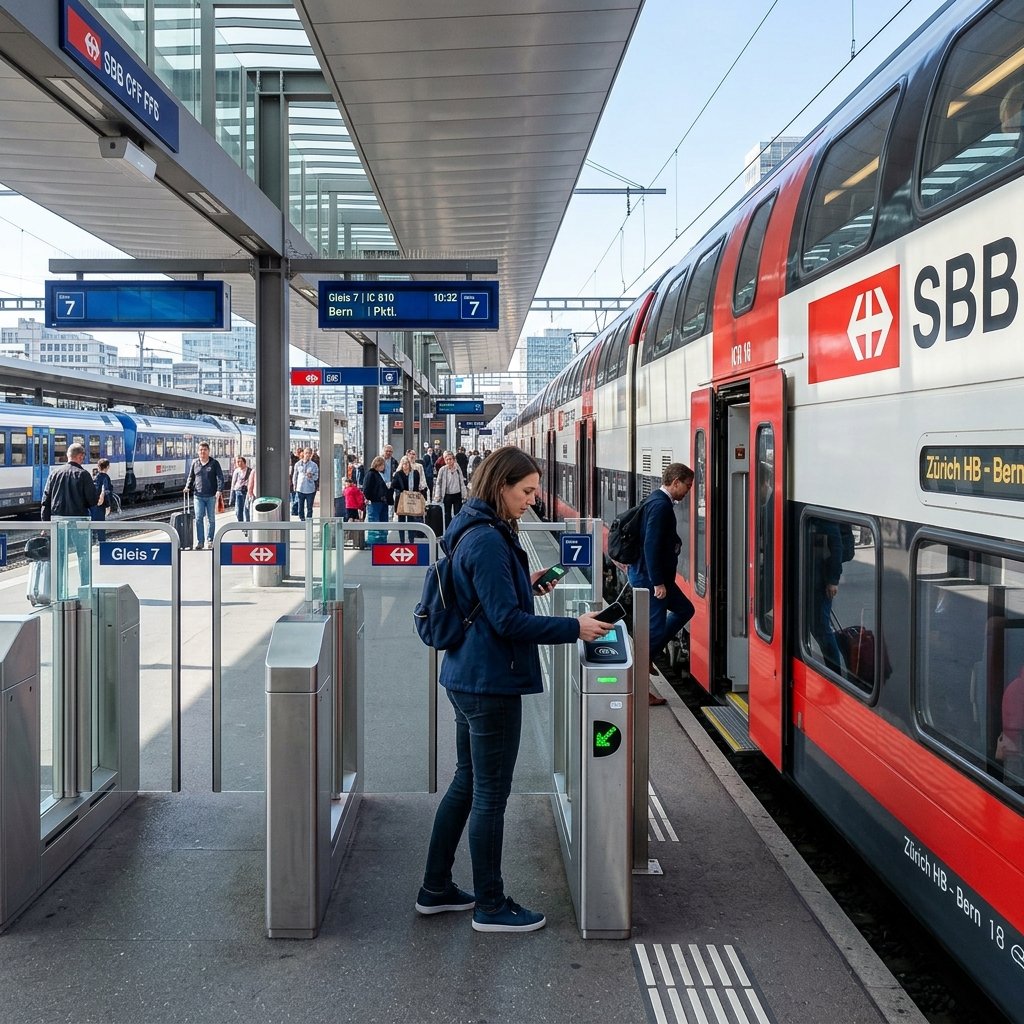
To avoid the stress of manual ticketing, you can use the SBB app’s built-in EasyRide feature. This tracking tool allows you to check in with a simple swipe before boarding and check out when you reach your final destination. EasyRide uses your phone’s GPS to track your travel route and automatically calculates the most cost-effective ticket combination for your journey. If you prefer to book traditional tickets, look for Supersaver tickets on the SBB app several days in advance. These tickets are tied to specific, off-peak trains and offer discounts of up to 70% compared to standard fares. However, they are non-refundable and cannot be used on any other train, so you must be certain of your travel schedule.
Understanding train etiquette is also essential for a comfortable journey. Many Swiss trains feature quiet zones (Ruhezone) marked with distinctive signs on the windows. In these carriages, making phone calls, speaking loudly, or listening to music without headphones is strictly forbidden. Even in regular carriages, keeping conversations at a moderate volume is expected. Placing your shoes directly on the seats opposite you is considered a major cultural offense. If you want to stretch your legs, you should place a clean newspaper or a bag under your shoes to protect the fabric, or you will face disapproving looks and direct warnings from train staff and fellow passengers.
Money in Switzerland: Contactless Cards, Cash, and Payment Apps
Switzerland has a highly digitized economy, but it relies on a local payment system that excludes international visitors. The domestic mobile payment app, TWINT, is used by almost everyone in the country for everything from paying at supermarkets to buying farm produce. Unfortunately, registering for TWINT requires a Swiss mobile phone number and a Swiss bank account or local registration address, making it impossible for short-term tourists to use. Instead of wasting time attempting to register, you should rely on contactless credit and debit cards, which are widely accepted for tap-to-pay transactions at almost all merchants throughout Switzerland.

Despite the prevalence of card payments, carrying cash remains necessary for anyone planning to explore the mountains. When hiking in the Swiss Alps, visiting remote alpine huts, riding small cable cars, or buying local cheese from self-service farm stands, international cards are rarely accepted. These remote businesses rely entirely on TWINT or cash. Since you cannot use TWINT, carrying 100 to 200 Swiss Francs (CHF) in cash is your only way to buy food or drinks along the trail. These self-service farm shops, often called Honesty Shops, operate on trust; you select your items, check the price list, and drop your cash into a small metal lockbox. You should avoid carrying Euros; although some tourist shops accept them, they will give change in Swiss Francs at a very poor exchange rate.
When paying by card at local shops or restaurants, the payment terminal will often ask whether you prefer to be charged in your home currency or in Swiss Francs. Always select Swiss Francs (CHF). If you choose your home currency, the terminal applies Dynamic Currency Conversion (DCC), which allows the merchant’s bank to set a highly unfavorable exchange rate and add a markup of 5% to 8% to your total bill. Selecting the local currency forces your own credit card company to handle the conversion, which provides a much better exchange rate and saves you money on every transaction.
Silent Sundays and Waste Rules: Respecting Local Regulations
Swiss communities value order and quiet, which is reflected in strict local regulations that you must respect. Sundays are designated rest days (Ruhetag) by law, and noisy activities are legally prohibited. You must avoid performing noisy household chores on Sundays, such as running loud washing machines in shared apartment buildings, vacuuming, drilling, or mowing lawns. Even throwing glass bottles or aluminum cans into public recycling bins is banned on Sundays because the noise of clinking glass disturbs the neighborhood. If you violate these noise rules, neighbors will not hesitate to contact the local police to report the disturbance.
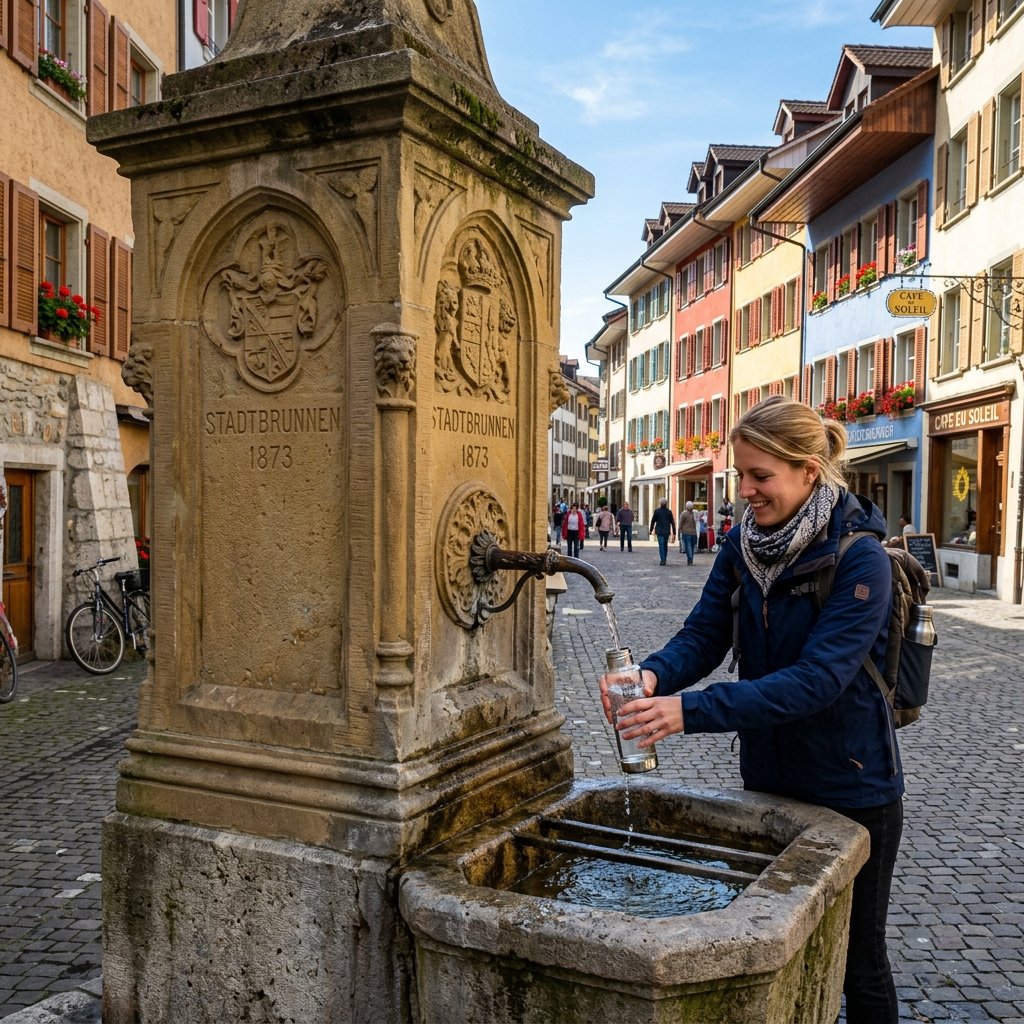
Waste management in Switzerland is highly regulated and requires careful sorting. Trash must be separated into paper, cardboard, glass (sorted by color), PET bottles, aluminum, and organic matter. General household waste must be disposed of in official, taxed garbage bags, such as the Züri-Sack in Zurich or Taxcard bins in other regions. Using non-taxed bags or throwing household garbage in public bins is illegal. Waste control inspectors are authorized to open illegal garbage bags to search for mail or bills that identify the owner, resulting in heavy fines. Additionally, when exploring Swiss cities, you will notice historic public water fountains (Brunnen) everywhere. This water is clean, cold, and safe to drink, so carrying a reusable water bottle is a great way to stay hydrated and avoid buying plastic bottles.
If you rent a car to drive through Switzerland’s scenic mountain passes, be aware that speed limits are strictly enforced. Fixed and mobile radar cameras are placed throughout the country. Speeding fines are calculated based on your personal income and can easily run into thousands of francs. It is also illegal to use any navigation app (such as Google Maps or Waze) that displays active speed camera alerts. If Swiss police find a camera warning app open on your phone during a routine traffic stop, they can confiscate your device and issue a heavy fine, so you must turn off these notifications before driving.
Stay Connected Across the Swiss Alps
Many travelers assume their European mobile plan will cover them in Switzerland, but this is often not the case. Because Switzerland is not part of the European Union or the EEA, most European operators exclude it from their standard roaming packages. Using a SIM card from a neighboring country like France or Germany without a specific Swiss add-on can result in high data roaming rates. A digital eSIM keeps your phone connected at high altitudes, allowing you to check travel updates, purchase train tickets, and contact emergency services without facing high roaming bills.
Selecting a mobile service that uses the best network infrastructure is crucial for travelers. Switzerland has three main networks: Swisscom, Sunrise, and Salt. Swisscom is the market leader and offers the most reliable 5G coverage in high-altitude mountain passes and remote valleys. While the other networks perform well in major cities, they can lose signal in deep alpine terrain. Using a high-quality eSIM that connects to the Swisscom network is the most reliable way to stay online. Having a pre-activated eSIM ensures you are connected immediately upon landing, so you can download train tickets or call a taxi without delay.
Maintaining a stable internet connection is vital for safety in the mountains. Alpine weather can change rapidly, and having access to live weather forecasts, SBB train alerts, and emergency hiking maps helps prevent dangerous situations. A digital eSIM keeps your phone connected at high altitudes, allowing you to check travel updates, purchase train tickets, and contact emergency services without facing high roaming bills.
Get Your Switzerland Travel eSIM Today
Stay connected across the Swiss Alps with high-speed, reliable 5G data. Choose the perfect plan for your journey and avoid expensive roaming fees.
Where can I find official travel and visa information for Switzerland?
You can find official visa and travel guidelines on the Official Switzerland Tourism Portal at Official Switzerland Tourism Portal.
Should I get an eSIM before traveling to Switzerland?
Yes, getting an eSIM before arriving in Switzerland is highly recommended. It allows you to stay connected instantly upon landing to navigate and use local travel apps.
 Switzerland eSim