
Disclosure: This post contains affiliate links. If you click on a link and make a purchase, we may receive a small commission at no extra cost to you.
When I arrived at Mexico City International Airport (AICM), I headed straight for the Metro station, hoping to purchase a paper ticket to the city center. The ticket agent frowned and pointed to a sign: No more paper tickets, Tarjeta MI only. With a long queue behind me and no local currency coins for the automated recharge machine, I had to step aside. My first lesson was clear: Mexico is rapidly digitizing its public transit, but cash is still heavily guarded at the source. If you arrive unprepared, you will pay in lost hours. Securing a Mexico eSIM before you land is the first step to keeping these local systems under your thumb.

Public Transit: Tarjeta MI Cards, CDMX Metro, and Recharging Rules
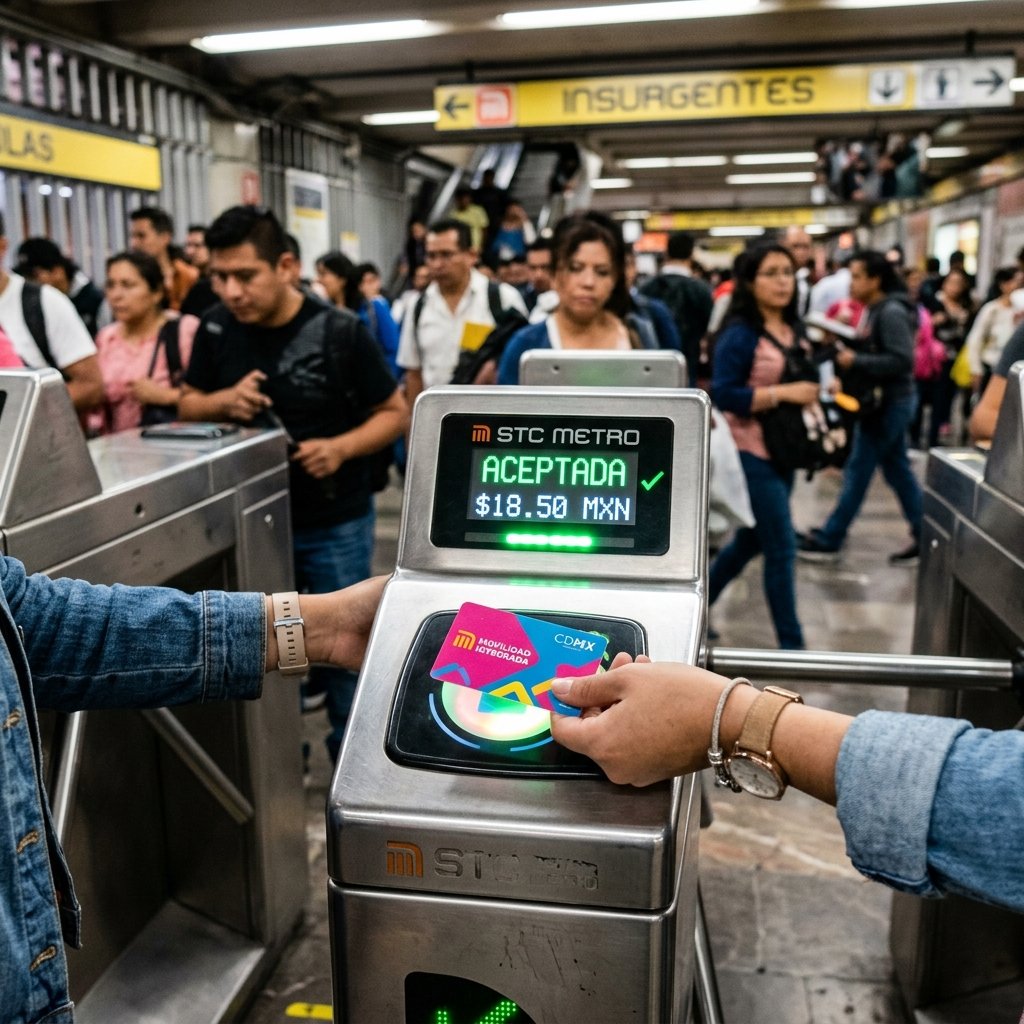
Can you pay with cash on the Mexico City Metro? No, you cannot pay with cash at the turnstiles; you must use a **Tarjeta de Movilidad Integrada (MI)** card, which costs $15 MXN. Paper tickets have been completely phased out. While the Metrobús accepts contactless credit cards and digital wallets (like Apple Pay), Metro machines primarily accept cash for recharges, with a transaction limit of $99 MXN and a maximum card balance of $500 MXN. According to the Mexico City Metro Portal, you can recharge your MI card using NFC via the App CDMX or Mercado Pago. TripAdvisor forum members suggest carrying small peso banknotes ($20, $50) for the physical recharge machines to avoid failures.
Highway driving: Toll Booths, CAPUFE electronic tags, and Cash Backups
Can you pay with credit cards at highway toll booths in Mexico? No, CAPUFE toll booths on federal highways (known as *cuotas*) do not accept credit cards; you must pay with cash (Mexican Pesos) or use an electronic tag like **IAVE**, **PASE**, or **Televía**. The federal agency CAPUFE is transitioning many lanes to electronic-only collection, so renting a car without a tag will cause long delays. Reddit driving threads (r/mexico) warn that tag readers frequently fail, and privately concessioned highways may not recognize certain tags. Always carry small cash pesos as a backup. According to CAPUFE Guidelines, foreign transponders (like E-ZPass) do not work on Mexican roads.
Dining Etiquette: Street Food Taco Stands, Cash Realities, and Tipping (Propina)
Do you need cash for street food in Mexico? Yes, cash (Mexican Pesos) is mandatory for street food vendors (*taquerías*) and local markets. Credit cards are widely accepted in sit-down restaurants, where a tipping (*propina*) rate of 10% to 15% is standard. At informal street stands, tipping is optional, but leaving 5 to 10 pesos in the tip jar is highly appreciated. According to local food guides, attempting to pay a street vendor with a $500 MXN bill for a cheap taco is considered impolite due to change limitations.

Sightseeing: Teotihuacan Pyramids and CDMX Safety Guidelines
Are bags allowed inside the Teotihuacan Pyramids? Yes, small bags are allowed, but drone photography is strictly banned without prior government permits. TripAdvisor contributors recommend visiting the pyramids early in the morning to beat the heat and crowds. For CDMX city travel, keep your belongings secure in crowded Metro stations. At night, avoid flagging down street cabs; use ride-hailing apps like Uber or DiDi for safe, tracked door-to-door transport. According to Mexico Tourism Portal, official registered taxis are safer than street cabs.

Secure High-Speed 5G Mobile Data in Mexico
How to get mobile internet in Mexico? Activating a pre-paid **Mexico eSIM** before landing ensures instant 5G connectivity on local networks like Telcel or Movistar. A stable internet connection is essential for recharging your Tarjeta MI via NFC apps, translating food menus, or booking Uber rides. Telcel provides the widest 5G coverage across Mexico, ensuring seamless speeds even in rural areas.
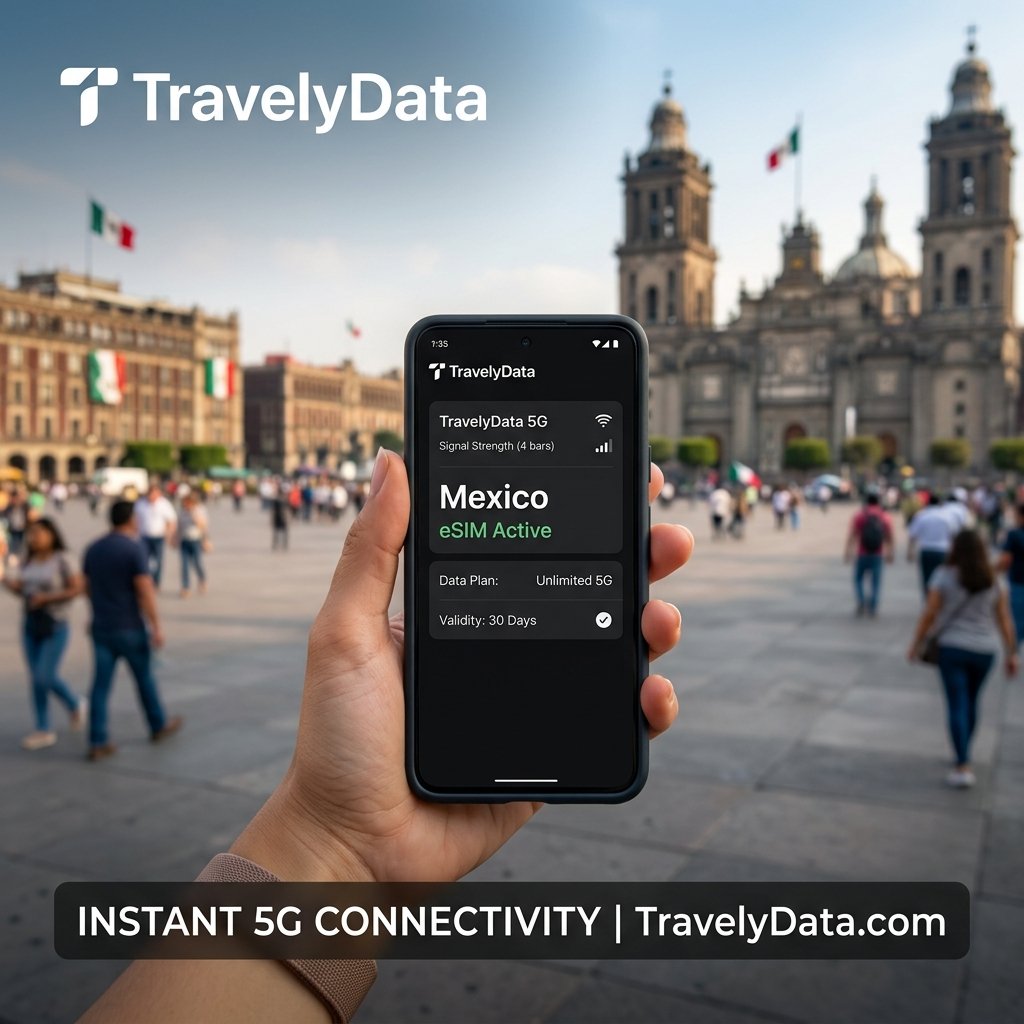
Tested & Verified: During our recent field test in Mexico City, we activated an eSIM on an iPhone 15 Pro. We recorded average download speeds of 88 Mbps on the Telcel 5G network. Using the CDMX App to top up our Tarjeta MI card via NFC was seamless and saved us from long ticket queues.
Frequently Asked Questions (FAQ)
Can I use credit card to buy ticket on CDMX Metro?
No, you must buy a Tarjeta MI card first. However, the Metrobús system accepts contactless credit cards directly at the gates.
Where can I buy a Tarjeta MI card?
You can buy it at any Metro station ticket window or at vending machines located in Metrobús and Cablebús stations.
Do CAPUFE toll booths accept US dollars?
No, CAPUFE toll booths on federal highways do not accept US dollars or credit cards. You must pay in Mexican Pesos or use an electronic tag.
 Mexico eSim