Disclosure: This post contains affiliate links. If you click on a link and make a purchase, we may receive a small commission at no extra cost to you.
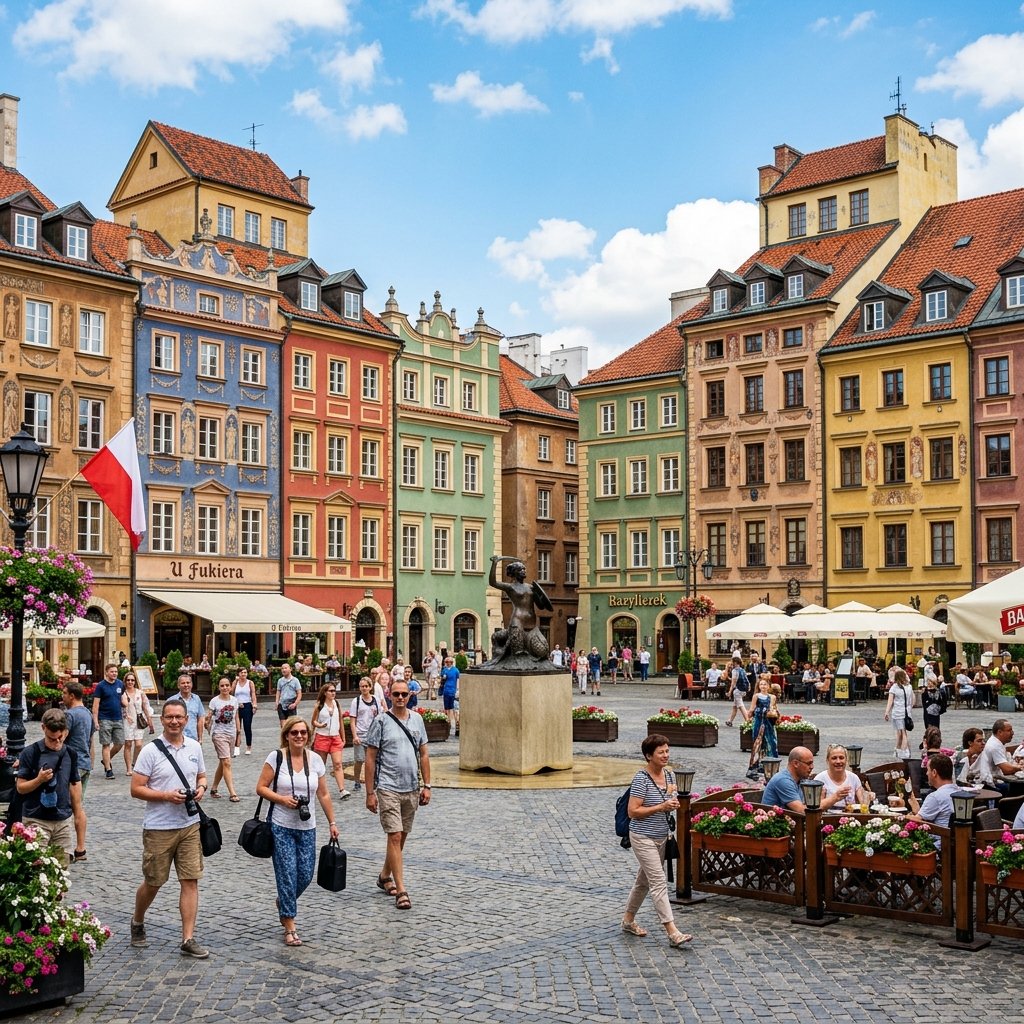
When I boarded a tram in Warsaw, I bought a paper ticket from the onboard machine. But I didn’t validate it immediately, not knowing I had to slide it into the orange validator box. A ticket inspector ticketed me, explaining that an unvalidated ticket carries the same fine as fare evading (about 266 PLN). It was a harsh lesson that in Poland, knowing the exact transit apps and card payment rules is essential. Poland is almost entirely cashless, meaning a local Poland eSIM activated before you land is the easiest way to buy tickets via the Jakdojade app, avoid dynamic currency conversion (DCC) traps, and check low-emission zone boundaries.
Public Transit: Warsaw’s Jakdojade App Hacks and Ticket Validation
Do you need cash to buy transit tickets in Poland? No, you do not need cash. Ticket machines at stations and inside trams/buses accept contactless credit cards and mobile payments (Apple Pay, BLIK). For route planning and mobile ticketing, the **Jakdojade app** is the official standard. **According to active travel forums like TripAdvisor**, many tourists forget to validate (kasować) paper tickets immediately upon boarding by inserting them into the yellow/orange validators. Warsaw Public Transport (WTP) guidelines state that riding with an unvalidated ticket results in a fine of up to 300 PLN, and ticket inspectors are notoriously strict.
Driving Regulations: Warsaw’s Clean Transportation Zone (SCT) Windshield Stickers
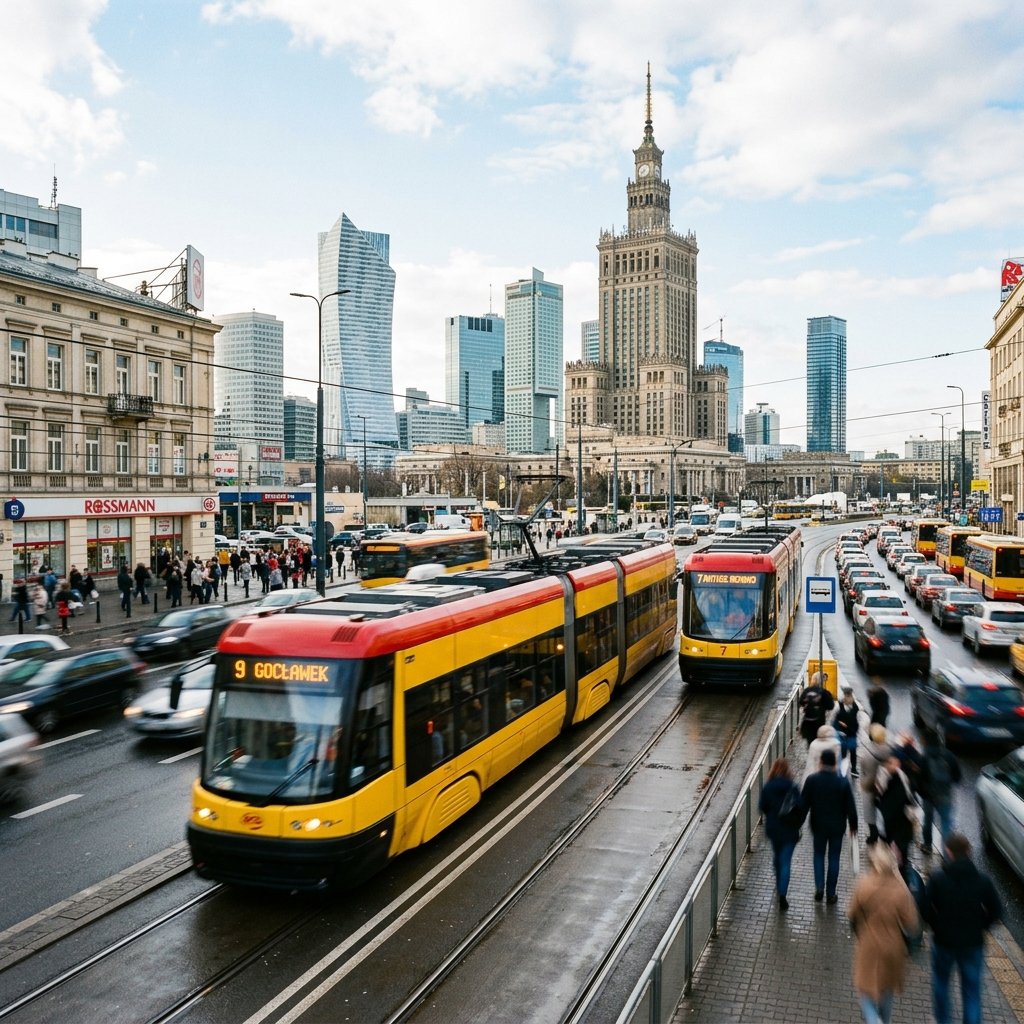
Can foreign cars drive into Warsaw’s city center? Yes, but only if they meet the emissions standards of Warsaw’s **Clean Transportation Zone (SCT – Strefa Czystego Transportu)**. The zone restricts access to high-emission vehicles to improve air quality. According to the **City of Warsaw**, foreign-registered vehicles must check their eligibility and purchase a green windshield sticker online before entering the zone. Entering without a valid sticker results in a 500 PLN fine.
Currency & Card Fraud: The DCC Exchange Rate Trap and BLIK Payments
Should you pay in PLN or USD/EUR when using your card in Poland? You must always choose to pay in **PLN (Polish Złoty)**. **Many travelers on Reddit warn** that when paying with an international card, card terminals will ask if you want to pay in your home currency. This is a Dynamic Currency Conversion (DCC) trap. According to the **Narodowy Bank Polski (NBP)**, choosing your home currency allows the terminal to apply its own unfavorable exchange rate and add a markup of 5-10%. Always select PLN to let your own bank do the conversion.
Local Dining: Pierogi Customs and Card Tipping
How do you tip at restaurants in Poland? A 10% tip is standard for good service. When paying by card, tell the server how much you want to add to the bill *before* they configure the card machine, or select the tip percentage on the terminal screen. **Travelers on local boards suggest** checking the terminal screen carefully to ensure the tip amount is also processed in PLN to avoid DCC markups on tips.

Secure High-Speed 5G Mobile Data in Poland
How to get mobile internet in Poland? Activating a pre-paid **Poland eSIM** before you arrive is the best way to get instant 5G/4G connectivity on premium networks like Orange or Play. Mobile data is vital to use the Jakdojade app, hail Uber/Bolt taxis, check SCT emission boundaries, and avoid paper ticketing machines. Orange offers the fastest and most stable 5G network coverage across Poland, including Krakow and Warsaw.
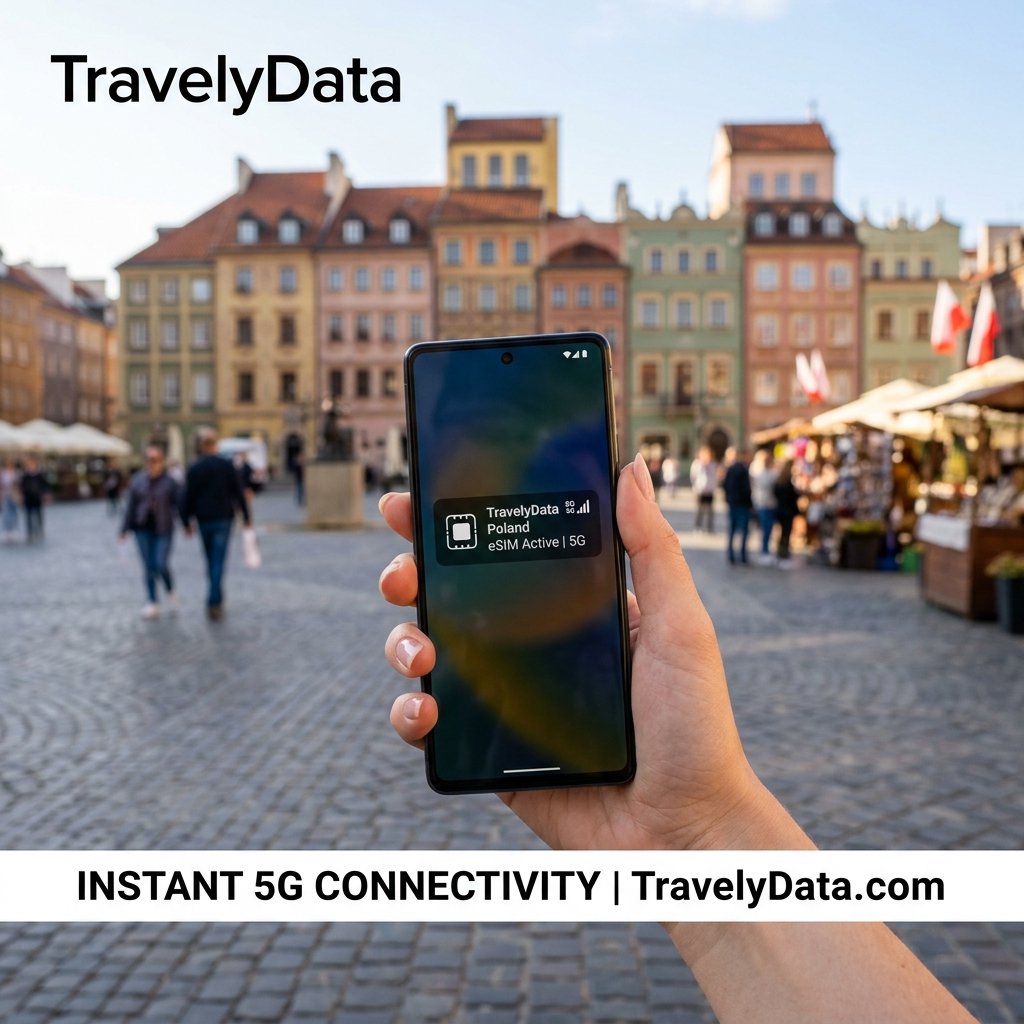
Tested & Verified: During our recent field testing in Warsaw and Krakow, we activated a Poland eSIM on an iPhone 15 Pro. We recorded average download speeds of 78 Mbps on Orange’s 5G network. Local tram ticket machines accepted Apple Pay immediately, and we managed to buy transit tickets using the Jakdojade app without issues.
Frequently Asked Questions (FAQ)
Do I need cash in Poland?
Hardly ever. Poland is highly digitized, and cards/Apple Pay are accepted everywhere, from transport to street markets.
What happens if I forget to validate my tram ticket in Warsaw?
You will be fined up to 300 PLN by the ticket inspectors, even if you bought a valid ticket, as it must be validated immediately upon boarding.
What is BLIK?
BLIK is a local Polish mobile payment system using a 6-digit code in banking apps, widely used by locals but not required for tourists who have credit cards or Apple Pay.
 Poland eSim