The moment I stepped out of Sofia Airport, I realized Bulgaria was playing in a completely different league than the rest of the Balkans. I pulled out my phone, reflexively opened Uber to order a ride, and got a blank screen. Yet, as I descended into the metro station, I didn’t need to queue for a ticket; I simply tapped my phone directly onto the turnstile gate and walked through. Bulgaria is a fascinating blend of ancient history, rugged natural beauty, and ultra-modern digital convenience. But with its recent integration into the Schengen Zone and its historic transition to the Euro currency, navigating this country requires an updated playbook. Throw away your old travel guides—here is the real deal on how to survive and thrive in Bulgaria today.
To avoid getting stuck without internet when trying to order a taxi, map your route through the cobblestones of Plovdiv, or navigate the mountain trails of Rila, buy a high-speed Bulgaria eSIM before you land. Having instant, reliable data the second you arrive makes exploring this gorgeous country seamless.
1. Public Transit: Sofia’s Tap-to-Pay Metro and BDZ Trains
- Sofia’s Tap-to-Pay Public Transit: Sofia has one of the most convenient transit systems in Europe. You can tap your contactless credit card, debit card, or phone (Apple Pay/Google Pay) directly onto the blue validators inside all buses, trams, trolleybuses, and at metro gates. A single ride is 1.60 BGN/EUR equivalent, but the system automatically caps your daily fare at 4.00 BGN (about €2.00) no matter how many times you ride.
- Rule 1: You cannot tap in multiple people with the same card or device; each passenger needs their own.
- Rule 2: Keep your card handy. Transit inspectors carry mobile readers and will ask you to tap your card on their device to verify validation.
- Bus vs. Train Stations: Sofia’s Central Bus Station and Central Railway Station sit right next to each other on Maria Louisa Boulevard. They are connected to the city center via Metro Line M2 (Central Railway Station stop).
- Exploring by Train (BDZ): The national railway, BDZ, is incredibly cheap and highly scenic. You can book tickets online via their official portal (bdz.bg). The train from Sofia to Plovdiv takes about 2.5 to 3 hours. If you are heading to the Black Sea coast (Varna or Burgas), the journey takes 6 to 8 hours. Book a night train sleeper cabin a few weeks in advance for a classic Balkan experience.
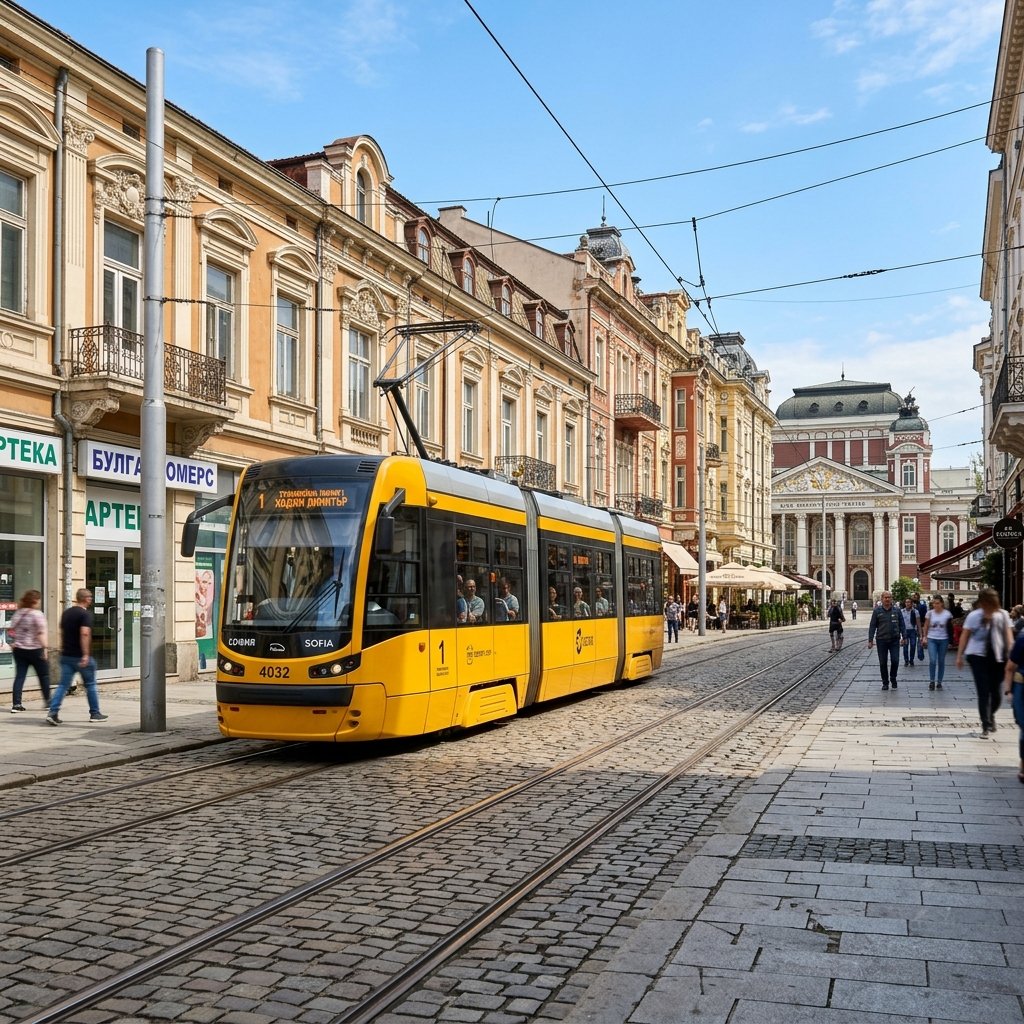
2. Taxi Apps & Airport Scams: Navigating Sofia without Uber
Navigating public transit in Sofia is cheap and convenient using tap-to-pay, but you must download local taxi apps like TaxiMe since Uber and Bolt are completely banned in Bulgaria. Getting around Bulgaria is cheap and efficient, but only if you know the local digital hacks. Don’t waste your time looking for Uber or Bolt for standard passenger cars—they don’t exist here. Here is what you need to know:
- The Taxi App Alternatives: Since Uber and Bolt are banned, download TaxiMe or Yellow Taxi before you arrive. Both apps work exactly like Uber: they match you with licensed taxis, show metered fare estimates, and allow you to pay securely with your credit card in-app. For eco-conscious travelers, SPARK is a great car-sharing app that lets you rent electric vehicles by the minute.
Taxi Scam Warning at Sofia Airport: The official taxi partner at Sofia Airport is OK Supertrans. However, rogue drivers run copycat operations with identical yellow cars and lookalike logos (like “OK SuperChance”). They stand in the arrivals hall and charge unsuspecting tourists up to 10x the standard rate. Never accept a ride from anyone in the terminal. Go directly to the official OK Supertrans counter inside to get a printed slip, or order your ride via the TaxiMe app.
3. Money & Currency: The 2026 Euro Switch & ATM Hacks
Bulgaria officially adopted the Euro (€) on January 1, 2026, and while shops must show dual pricing until August 2026, carrying some cash for markets and smaller towns remains essential. This is the most critical update for anyone visiting Bulgaria: Bulgaria officially adopted the Euro (€) on January 1, 2026, replacing the Bulgarian Lev (BGN). However, the transition is still visible on the ground:
- Mandatory Dual Pricing: To prevent price gouging, all shops, restaurants, and hotels are legally required to display prices in both BGN and EUR until August 8, 2026.
- Card vs. Cash: Credit cards and mobile payments are standard in Sofia, Plovdiv, and coastal resorts. However, you will absolutely need cash for public restrooms, tipping, local markets, and smaller mountain towns or monasteries.
- Avoid Euronet and ATM24: Standalone, independent ATMs are scattered across tourist areas. They charge massive withdrawal fees and use predatory exchange rates. Only withdraw cash from major local bank ATMs, such as DSK Bank, Postbank, UniCredit Bulbank, or Fibank.
- Decline the DCC Trap: When using an ATM, if the screen asks whether you want to be billed in your “Home Currency” (with conversion) or the “Local Currency” (without conversion), always select “Without Conversion” / “Local Currency”. Selecting conversion allows the ATM to apply a markup of 10% or more.
- Tipping: A 10% tip in cash is standard in sit-down restaurants if the service was good.
4. Schengen Entry: Borderless Travel & Customs
Since joining the Schengen Area for air, sea, and land travel, crossing into Bulgaria from neighboring Greece and Romania is completely borderless. Bulgaria’s border rules have changed dramatically, making travel much smoother for international visitors:
- Full Schengen Integration: Bulgaria entered the Schengen Area for air and sea travel in 2024, and lifted all land border checks (including the borders with Greece and Romania) on January 1, 2025.
- Borderless Arrivals: If you fly into Sofia Airport (SOF) from another Schengen country, you will bypass passport control entirely and walk straight to baggage claim. Arrivals from non-Schengen countries (like the UK or US) still undergo standard passport checks.
- The 90-Day Rule: Time spent in Bulgaria now counts toward the Schengen limit of 90 days within any 180-day period for visa-exempt travelers.
- Customs Cash Limits: You must declare any cash amount equivalent to **€10,000 or more** when entering or leaving the country.
5. Tasting Bulgaria: Pekara Breakfasts & Rakia Etiquette
Traditional Bulgarian food is fresh, rich, and delicious, but when clinking glasses of the national brandy Rakia, you must always look the other person in the eye. Bulgarian food is fresh, savory, and incredibly satisfying. Meals are long, social events—don’t expect a quick turnaround in traditional taverns (*mehanas*):
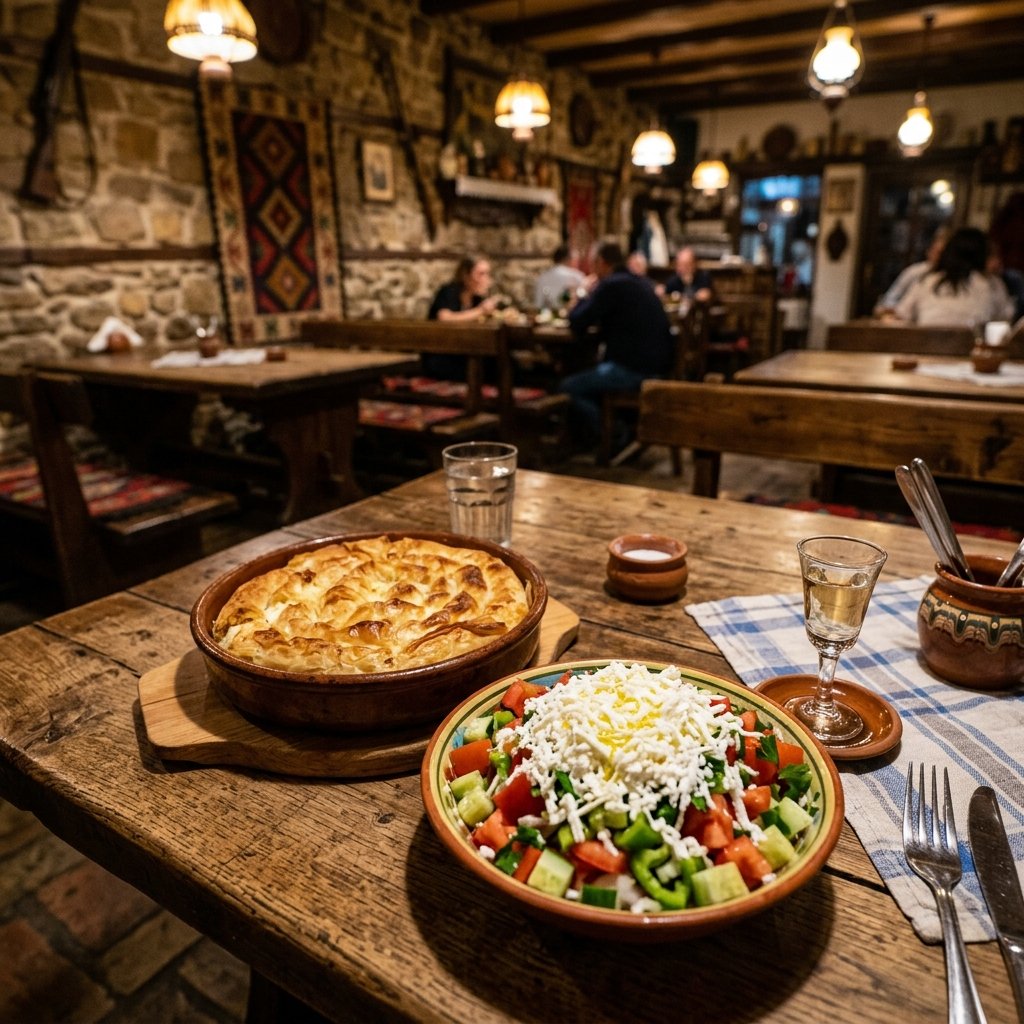
- Banitsa: The ultimate Bulgarian comfort food. A flaky pastry made of layered phyllo dough filled with whisked eggs, yogurt, and salty *sirene* (white brined cheese). Grab one fresh from a local bakery (*pekara*) and wash it down with a cold bottle of *Ayran* (salted yogurt drink).
- Shopska Salad: A simple, delicious national dish of chopped tomatoes, cucumbers, onions, and baked peppers covered under a thick layer of grated *sirene* cheese. The ingredients represent the white, green, and red of the Bulgarian flag.
- Tarator: A refreshing cold soup made with yogurt, cucumber, garlic, dill, walnuts, and water. Perfect for hot summer days.
- Shkembe Chorba: A spicy, garlicky tripe soup seasoned with vinegar and hot red pepper flakes. It is a legendary hangover cure.
- Rakia Rules: Rakia is the national fruit brandy. It is sipped slowly as an appetizer alongside Shopska salad, never downed as a shot. Most importantly, when clinking glasses, **make direct eye contact** with the other person. Toasted without eye contact is considered bad luck!
Check the r/bulgaria community on Reddit for local advice.
6. Hidden Gems & Essential Adventures
From Plovdiv Old Town to the stunning Rila Monastery, Bulgaria is packed with historical wonders that are best explored via trains or organized tours. Bulgaria is packed with historic towns and dramatic mountain landscapes. Here are the spots you cannot miss:
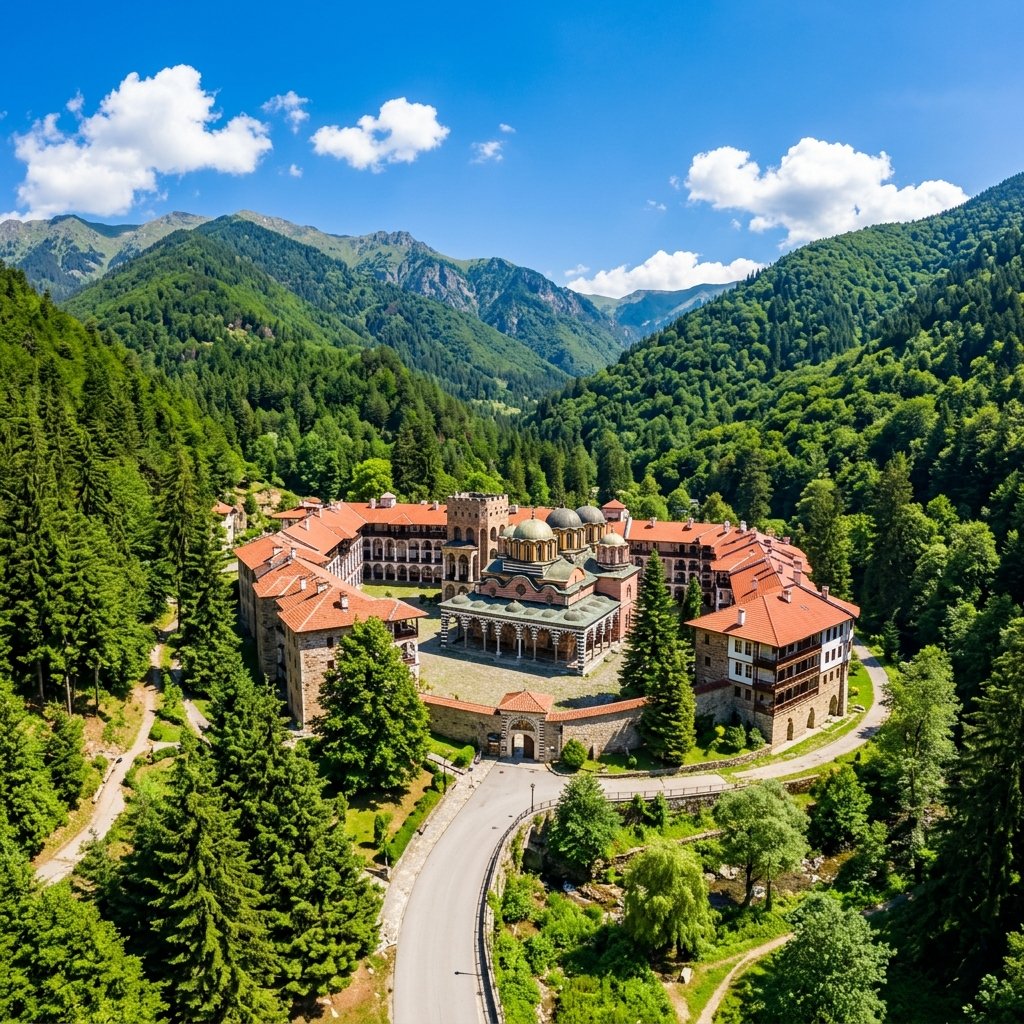
- Rila Monastery: A breathtaking UNESCO heritage site nestled in the Rila Mountains. *Blogger tip:* Public transport here is tricky—there is only one daily public bus from Sofia’s Ovcha Kupel station. The most reliable option is booking a budget day-trip shuttle (like Traventuria) from central Sofia, or renting a car. Cash is highly recommended for snacks and souvenirs around the monastery.
- Plovdiv Old Town: One of the oldest continuously inhabited cities in the world. Wander its steep cobblestone streets, marvel at the colorful National Revival-style houses, and catch a performance at the incredibly preserved Roman Theater. It’s an easy day trip from Sofia via train.
- Seven Rila Lakes: A group of spectacular glacial lakes. Public transit here is highly complex (requiring multiple bus transfers to Sapareva Banya and a chairlift). Joining an organized day tour from Sofia is the easiest way to experience this hike.
- Nessebar: A UNESCO-listed historic town on a rocky peninsula jutting into the Black Sea. Best reached by train or bus to Burgas, followed by a short local shuttle.
- Belogradchik Rocks: Massive, surreal sandstone formations wrapping around an ancient Roman fortress. Take a 4-hour train from Sofia to Oreshets, then a quick local taxi to the fortress.
7. Personal Security & Connectivity: Water Safety and eSIM Solutions
Bulgaria is generally a safe destination with tap water safe in major cities, and you can dial 112 for any emergencies. Bulgaria is generally very safe, but keep these basic tips in mind:
- Tap Water: Tap water is generally safe to drink in Sofia and major cities, but in rural areas, stick to bottled water or use a filtering bottle.
- Emergency Number: The general emergency number for police, ambulance, and fire services is 112.
To easily navigate transit maps, order taxis via TaxiMe, and share your photos from Rila Monastery to the beaches of Nessebar, make sure to install a high-speed Bulgaria eSIM before you start your journey. It keeps you connected across the country without any expensive roaming surprises!
FAQ
What is the best eSIM for a trip to Bulgaria?
The TravelyData Bulgaria eSIM is highly recommended. It connects automatically to the best local networks like Vivacom, Yettel, or A1, providing high-speed 5G data from the moment you land.
Where can I find official travel and visa information for Bulgaria?
Official travel rules and entry guidelines are available on the Official Tourism Portal of Bulgaria.
Does Sofia public transport accept credit card payments?
Yes, you can tap contactless credit/debit cards or mobile devices (Apple Pay/Google Pay) directly on the blue validators in Sofia’s metro, trams, and buses.
 Bulgaria eSim