The Art of the Medinas, Flat Wallets, and Moroccan Whiskey: My Real-World Guide to Morocco
I was standing in the customs line at Marrakech Menara Airport when I heard a heated argument a few lanes over. A traveler was pleading with a customs officer who was holding a DJI drone box. “But it’s just a toy! I’m only using it for holiday photos!” the traveler said. The officer remained completely unmoved, writing out a confiscation receipt. Welcome to Morocco, where rules are absolute. Importing a drone without a commercial license is strictly illegal, and customs will spot it on the luggage X-ray every single time. It was a stark reminder that traveling here is a sensory paradise, but you must know the rules before you pack.
To avoid getting stranded at the airport without internet when trying to hail a ride-sharing taxi, book train tickets, or translate local Moroccan Arabic (Darija), buy a high-speed Morocco eSIM before you arrive. Having a working data connection from the moment you land makes navigating the kingdom’s busy cities stress-free.
Getting Around: Al Boraq High-Speed Trains, Buses, and Taxi Haggling
Morocco has excellent public transit, but navigating it requires a bit of strategy:
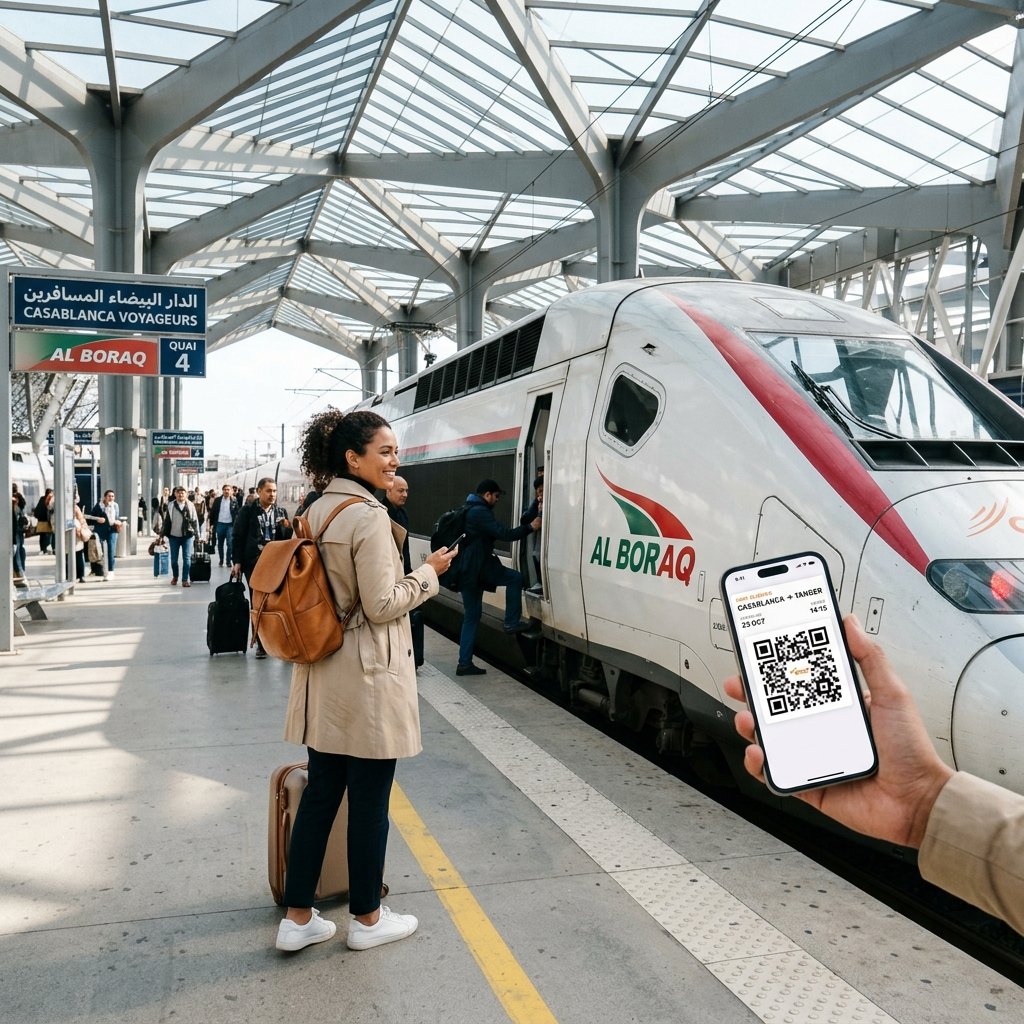
- The Al Boraq Train: Connecting Tangier to Casablanca, this is Africa’s first high-speed train, cutting travel time from 5 hours to just **2 hours and 10 minutes** at 320 km/h. Book First Class for a 1-2 seating layout, individual power outlets, and access to the Al Boraq Lounge. Tickets open **90 days in advance** on the official ONCF Voyages website, and pricing is dynamic—book early to get the best rates.
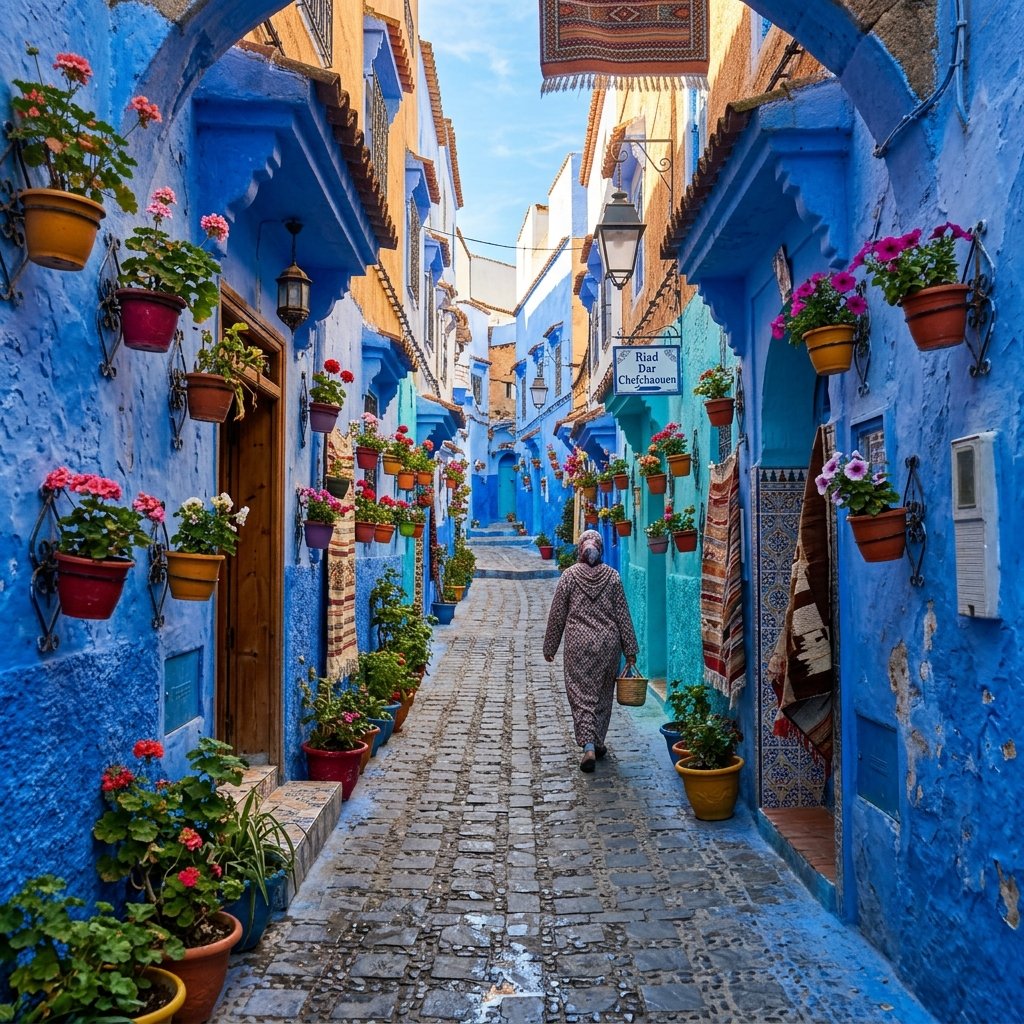
- Intercity Buses: For destinations without train tracks (like the blue city of Chefchaouen or coastal Essaouira), use **CTM** or **Supratours**. CTM operates from its own clean, modern terminals rather than busy municipal stations. Supratours terminals are conveniently located directly adjacent to major ONCF train stations. *Note:* You must pay a tiny fee (around 5 MAD) to weigh and tag your large luggage at the ticket desk before boarding.
- Deciphering the Taxis:
- Petit Taxis: Small cars for local city trips (maximum 3 passengers). Each city has its own color (Red in Casablanca, Blue in Rabat, Beige/Yellow in Marrakech). Legally, drivers must use their meters (*compteur*). If they refuse, get out and hail another.
- Grand Taxis: Larger white or silver sedans/vans for intercity travel. They operate on fixed routes and won’t depart until all 6 passenger seats are sold. For a comfortable, premium experience, you can “privatize” the grand taxi by paying for all 6 seats to get a direct private ride.
- Ride-Hailing Apps: Avoid taxi negotiations altogether by using inDrive (which uses a bidding model), Careem (fixed rates), or Roby (dispatches official metered taxis). Set these apps up with SMS verification before you leave your home country.
Atlas Mountain Driving Warning: If you drive from Marrakech to the Sahara via the Tizi n’Tichka Pass (N9), be prepared for steep drops and over 800 mountain curves. **Never drive at night.** Road lighting is non-existent, and pedestrians, stray dogs, and crossing camels are common hazards.
The Cash Reality: Restricted Dirhams & ATM Traps
The Moroccan Dirham (MAD) is a **restricted closed currency**, meaning it is illegal to import or export more than 2,000 MAD (approx. $200 USD). You must acquire and spend all your cash inside the country.
Cards are accepted in luxury riads and boutique stores, but Morocco is fundamentally a cash economy. You will need cash for souks, taxis, street food, and tipping.
- ATM Strategy: Most local ATMs charge a flat fee of 35 MAD per withdrawal. To optimize fees, withdraw the maximum limit (usually 2,000 MAD; ATMs run by BMCI often allow up to 4,000 MAD). When withdrawing, if the machine asks to convert the transaction, **always select local MAD (Without Conversion)**. Declining the DCC ensures your home bank handles the exchange rate without a 5% to 8% markup.
- The Gueliz Exchange Hack: Avoid the terrible exchange rates at airport booths. Exchange just enough for your initial taxi, and then visit exchange bureaus in major city center neighborhoods (like Gueliz in Marrakech or Maarif in Casablanca) for mid-market rates.
- The Art of Baksheesh (Tipping): Carry small coins (5 and 10 MAD) in a separate pocket. Tip 10% in sit-down restaurants, round up to the nearest 5 or 10 MAD for taxis, and pay 10 to 20 MAD to hotel porters. If you photograph a street performer or artisan, expect to tip 10 to 20 MAD.
Sacred Spaces: Mosque Access & Dress Codes
Morocco is a deeply religious Islamic nation. Non-Muslims are strictly **forbidden from entering active mosques**.
- The Casablanca Exception: The magnificent **Hassan II Mosque** in Casablanca is the only active mosque open to non-Muslim visitors. Access is strictly via official guided tours outside of prayer hours. You must dress modestly (shoulders, knees, and upper arms covered) and remove your shoes at the entrance.
- Alternative Architecture: To admire stunning Islamic mosaic tilework (*zellige*) and wood carvings without entering a mosque, visit historic madrasas (Islamic schools) like the **Ben Youssef Madrasa** in Marrakech or the **Al-Attarine Madrasa** in Fes.
- Souk Dress Code: While not legally enforced, dressing modestly in the medinas (shoulders and knees covered for both men and women) shows respect and helps deflect unwanted attention.
Medina Navigation & Street Scams
The ancient medinas of Fes and Marrakech were designed as labyrinth defenses against invaders, and they will easily disorient you. To explore them safely, avoid these common traps:
- The “Closed Street” Scam: Local young men will approach you claiming “the street is closed,” “the square is blocked for prayer,” or “the tannery is only open today.” **This is almost always a lie.** They want to lead you down a dead-end alley, demand a hefty tip to guide you out, or force you into a carpet shop. Trust your offline maps (like Maps.me) and ignore them.
- Tannery Balcony Traps: In Fes, locals will offer to take you to a “free balcony” to view the famous Chouara Tanneries. They will guide you to a leather shop, take you to the roof, and then aggressively pressure you to buy leather goods or pay a fee to leave. Always book an officially licensed tour guide through your riad.
- The Henna and Monkey Traps: In Marrakech’s Jemaa el-Fnaa square, women will grab your hand to apply “free sample” henna, or men will drape monkeys/snakes on your shoulders. Once done, they will demand 200 to 500 MAD. Keep your hands close to your body and walk past them.
Feasting on Tagines, Pastilla, and Moroccan Whiskey
Moroccan dining is a beautiful communal ritual. When sitting down to eat, remember these customs:
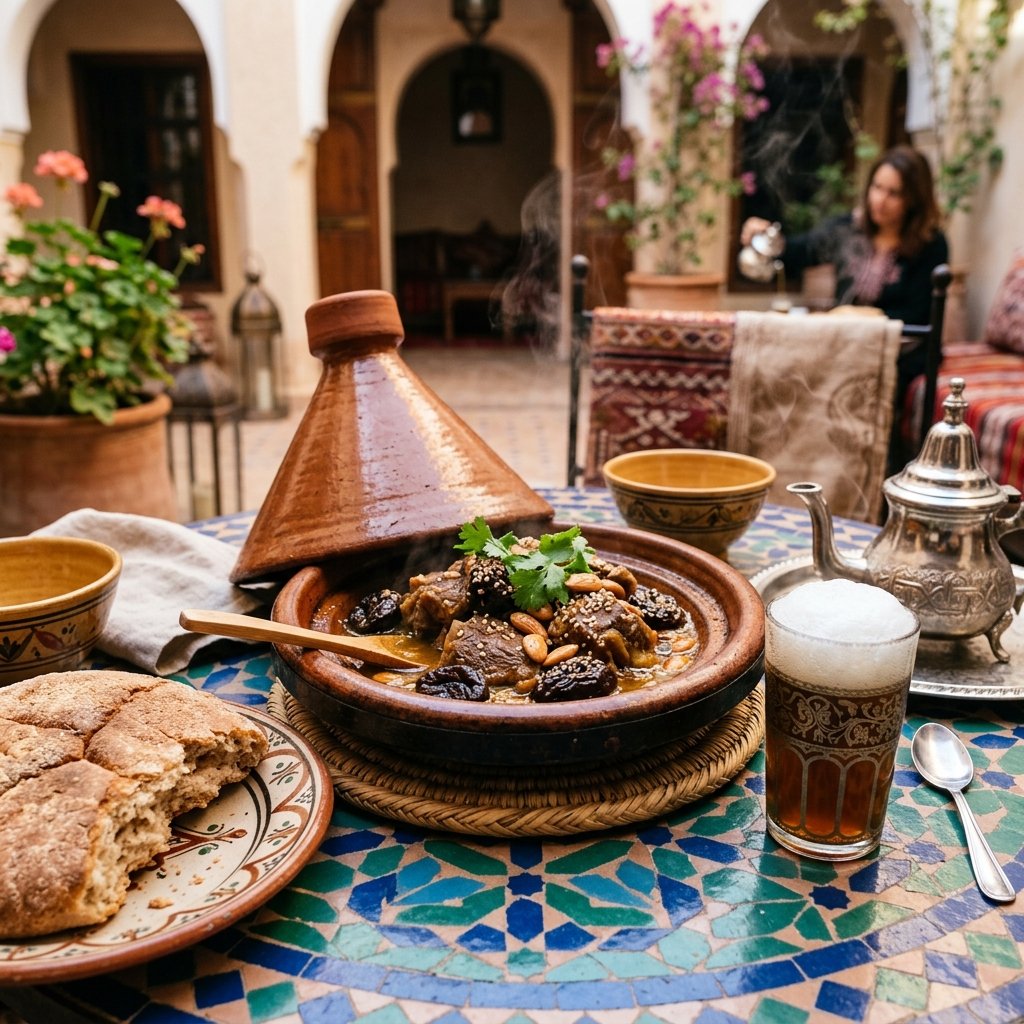
- Communal Eating: Traditional meals are served on a large shared platter. Eat exclusively from the triangular wedge directly in front of you. Reaching across the platter is considered bad manners.
- The Right Hand Rule: Always eat using your **right hand**. The left hand is considered unclean in Islamic culture. Tear off small pieces of crusty Moroccan bread (*khobz*) to scoop up tagine sauce.
- Atay (Moroccan Whiskey): Gunpowder green tea brewed with fresh spearmint leaves and plenty of sugar. It is poured from a height to aerate the tea and create a frothy crown in the glass. It is a symbol of hospitality; refusing it when offered is considered highly impolite.
- Must-Try Dishes: Try the classic **Lamb Tagine with Prunes and Almonds**, sweet-savory **Pastilla** chicken pie, and comforting **Harira** lentil soup.
Schengen and Visa Rules
Passport holders from the US, UK, Canada, Australia, and the EU can enter Morocco **visa-free for up to 90 days**. Your passport must be valid for at least six months from your arrival date, and you must have proof of return travel. Make sure to keep your physical passport secure at all times.
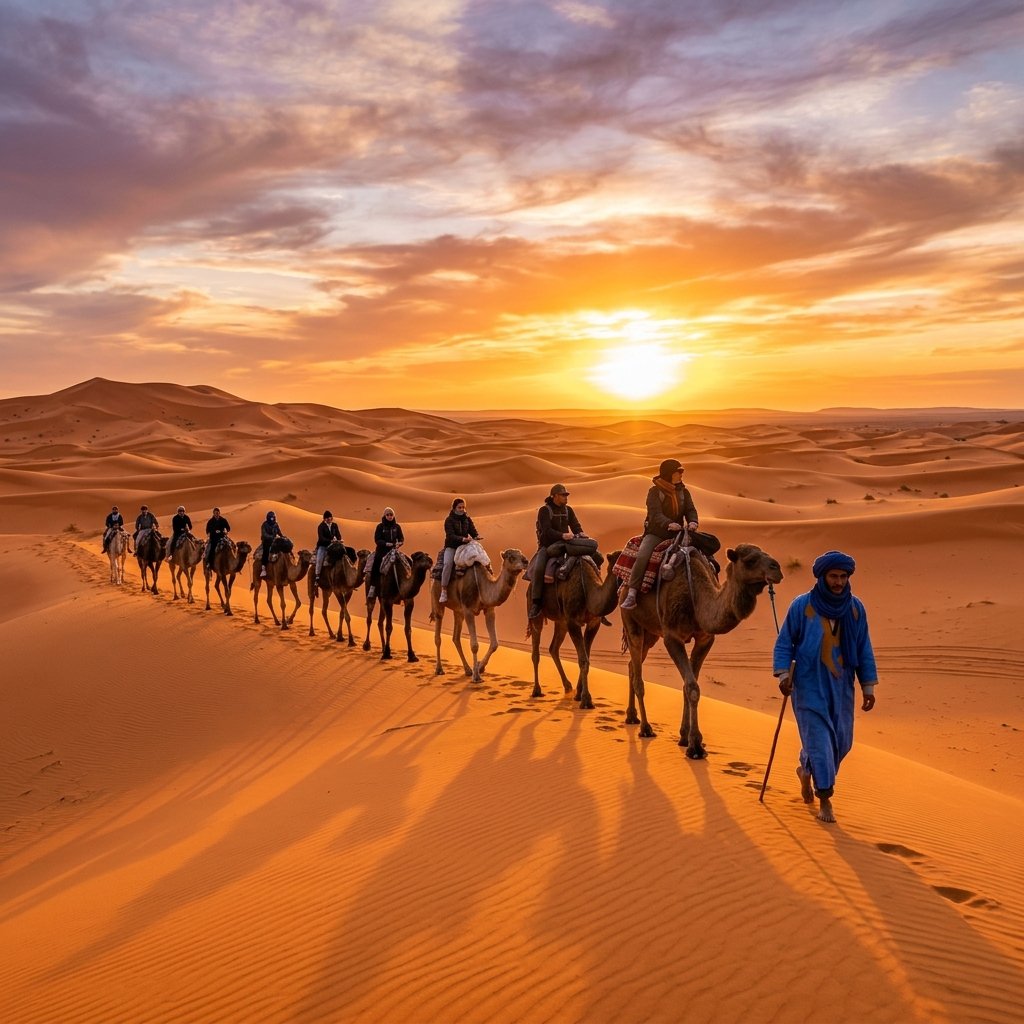
To easily coordinate high-speed ONCF train tickets, navigate medina alleyways with offline maps, and hail local taxis on app platforms, purchase a high-speed Morocco eSIM. It keeps you connected from Casablanca’s seaside architecture to the quiet dunes of the Sahara!