Wok-Heated Beef, Altitude Hacks, and Pristine Ruins: My Real-World Guide to Peru
The moment I stepped off the plane in Cusco, my chest felt tight and my head began to throb. At 3,400 meters (11,150 feet) above sea level, the air is thin, and the altitude hit me like a physical wall. Many tourists make the critical mistake of booking their first night’s stay directly in Cusco, only to spend the next 24 hours locked in their hotel room fighting altitude sickness (*soroche*). I followed the golden rule of seasoned Andean travelers: I grabbed my bags, walked straight past the airport exit, and took a pre-arranged private taxi down into the Sacred Valley. Landing in Urubamba (2,870 meters) allowed my body to acclimatize gradually, saving my trip from a painful start.
To avoid getting disconnected when trying to download local taxi apps, book luxury bus seats, or check train updates on the way to Machu Picchu, buy a high-speed Peru eSIM before you depart. Instant data the moment you land makes navigating Peru’s diverse terrain seamless.
Getting Around: Cabify in Lima, Luxury Buses, and Trains to the Citadel
Peru’s transportation is highly varied. While public buses in cities can be chaotic, here is how to navigate the country in comfort and safety:
- Lima Transit: Avoid street taxis entirely, as they are unregulated and have a history of scams. Use Cabify for the safest, most professional rides in Lima, or Uber for quick hops around Miraflores and Barranco. To beat Lima’s traffic, use the Metropolitano bus system, which runs on dedicated central lanes, but watch your pockets during peak hours.
- Luxury Intercity Buses: For traveling along the coast (Lima to Paracas or Huacachina), book the **Cruzero VIP** service on Cruz del Sur. These double-decker buses feature lie-flat seats (up to 160 degrees), personal entertainment screens, and strict airport-style security checks, including passport validation and luggage tagging.
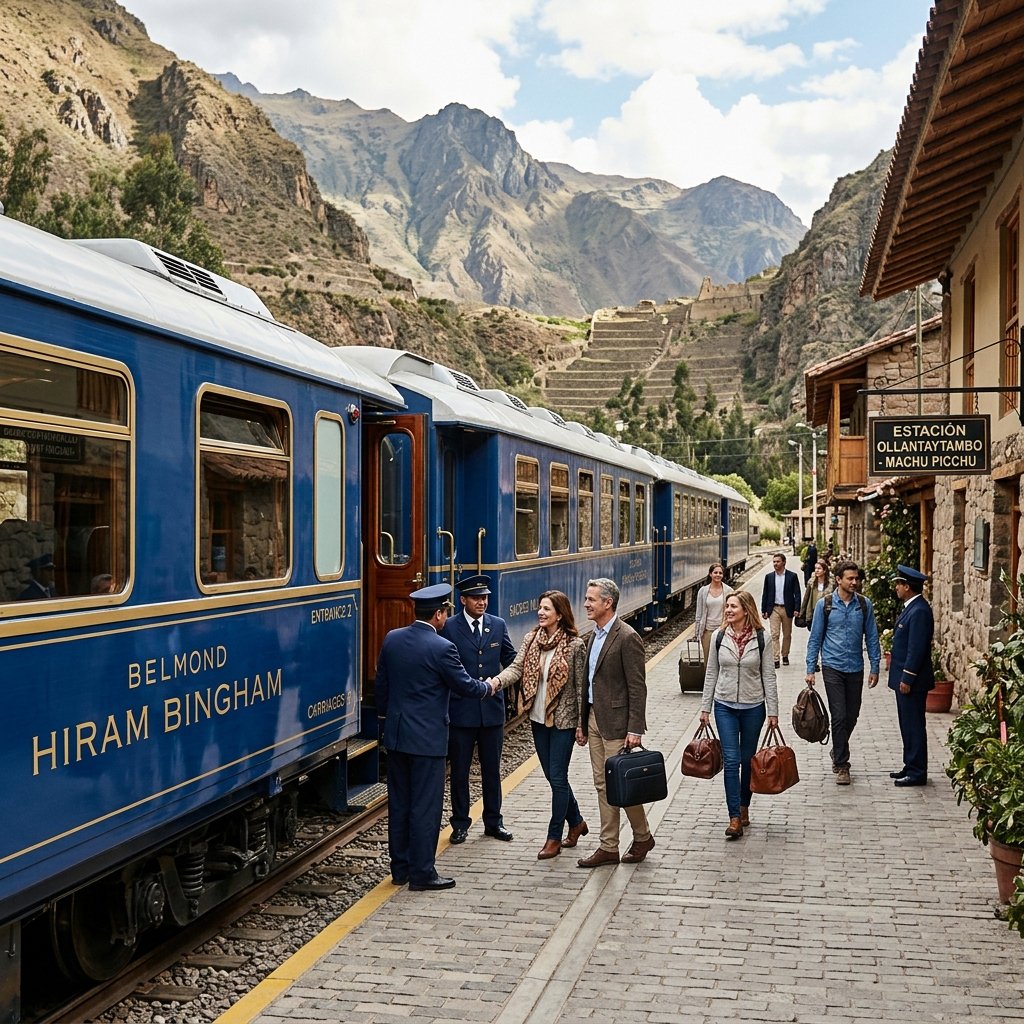
- The Train to Machu Picchu: To reach Aguas Calientes, you must take the train from Ollantaytambo.
- PeruRail: Choose the **Expedition** for a standard ride, the **Vistadome** for panoramic glass ceiling panels and a traditional dance show, or the ultra-luxury **Belmond Hiram Bingham** for a 1920s Pullman-style experience with a gourmet brunch and fine wines.
- InCare Rail: The **360°** service offers massive windows and an outdoor observation balcony to breathe in the cloud forest air.
Mountain Driving Warning: Never rent a car to drive through the Andes. The mountain roads connecting Cusco, the Sacred Valley, and Puno are narrow, winding, and run along steep cliffs. Hire a private driver, and carry local motion sickness pills (**Gravamin**) from any pharmacy.
The Sol Cash Reality: Fee-Free ATMs & DCC Warnings
The official currency is the Peruvian Sol (PEN). While hotels and upscale restaurants in Lima and Cusco accept credit cards, cash is absolute for local markets, street vendors, public restrooms, and small mountain towns.
- The Fee-Free ATM Hack: Most commercial ATMs (like BCP or BBVA) charge steep S/. 18 to S/. 36 fees per transaction. Avoid them and only use Banco de la Nación (MultiRed) ATMs. They are the only machines in Peru that **do not charge a local withdrawal fee** for international cards (though they limit withdrawals to S/. 400 per transaction).
- Decline the DCC Trap: When using an ATM or paying by card, the terminal will often ask if you want to be billed in your home currency. **Always choose Soles (PEN)**. Letting the terminal handle the exchange rate allows the bank to charge a predatory exchange rate with a 5% to 10% markup.
- Baksheesh (Tipping): Tip 10% in sit-down restaurants (if a 10% service charge is not already included). Tip S/. 20 to S/. 30 per day for private drivers, and round up the Sol for taxi apps. Keep small coins handy, as vendors cannot break S/. 100 notes.
Site Regulations: The Boleto Turístico & Machu Picchu Overhaul
To protect its historical treasures, Peru enforces strict site entry rules:
- Boleto Turístico (Cusco Tourist Ticket): This mandatory ticket is required to enter the major ruins around Cusco and the Sacred Valley (like Sacsayhuamán, Pisac, and Ollantaytambo). It **cannot be bought online**; you must buy it in person, in cash (Soles only), at the site gates. Note that it does not include Machu Picchu.
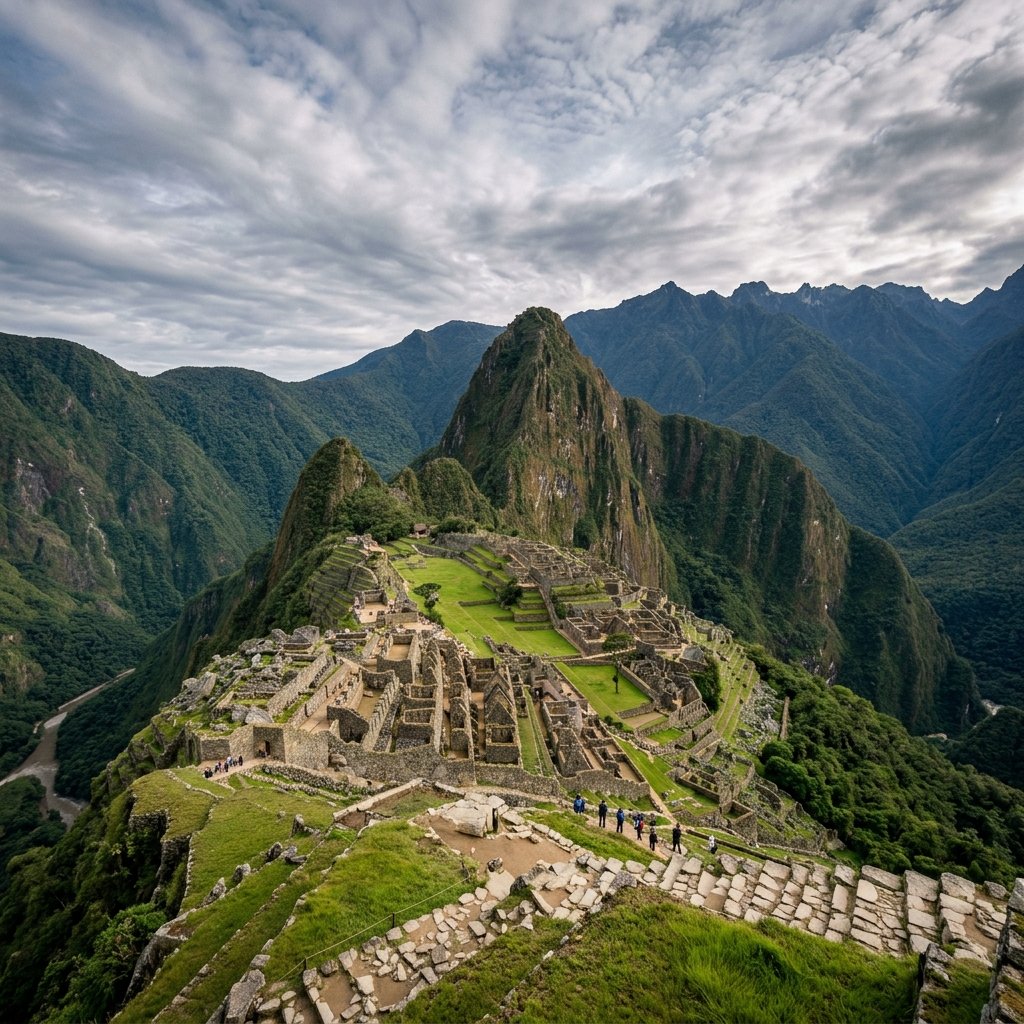
- Machu Picchu timed entry: Tickets must be booked months in advance at tuboleto.cultura.pe. You must choose one of three circuits:
- Circuit 1 (Panoramic): Offers the classic postcard viewpoint of the citadel.
- Circuit 2 (Classic): The complete, traditional tour descending into the heart of the ruins.
- Circuit 3 (Royalty): Accesses the lower sectors and adventure mountain climbs like Huayna Picchu.
- Strict Gate Entry: You must present your **physical, original passport** at the gate (no digital copies allowed). There is a strict 30-minute grace period on your timed ticket; if you are late, you will be denied entry. Officially, you must also be accompanied by a licensed tour guide.
Feasting on Ceviche, Lomo Saltado, and Pisco Sours
Peru has been voted the top culinary destination in South America for years. When dining out, don’t miss these classics:
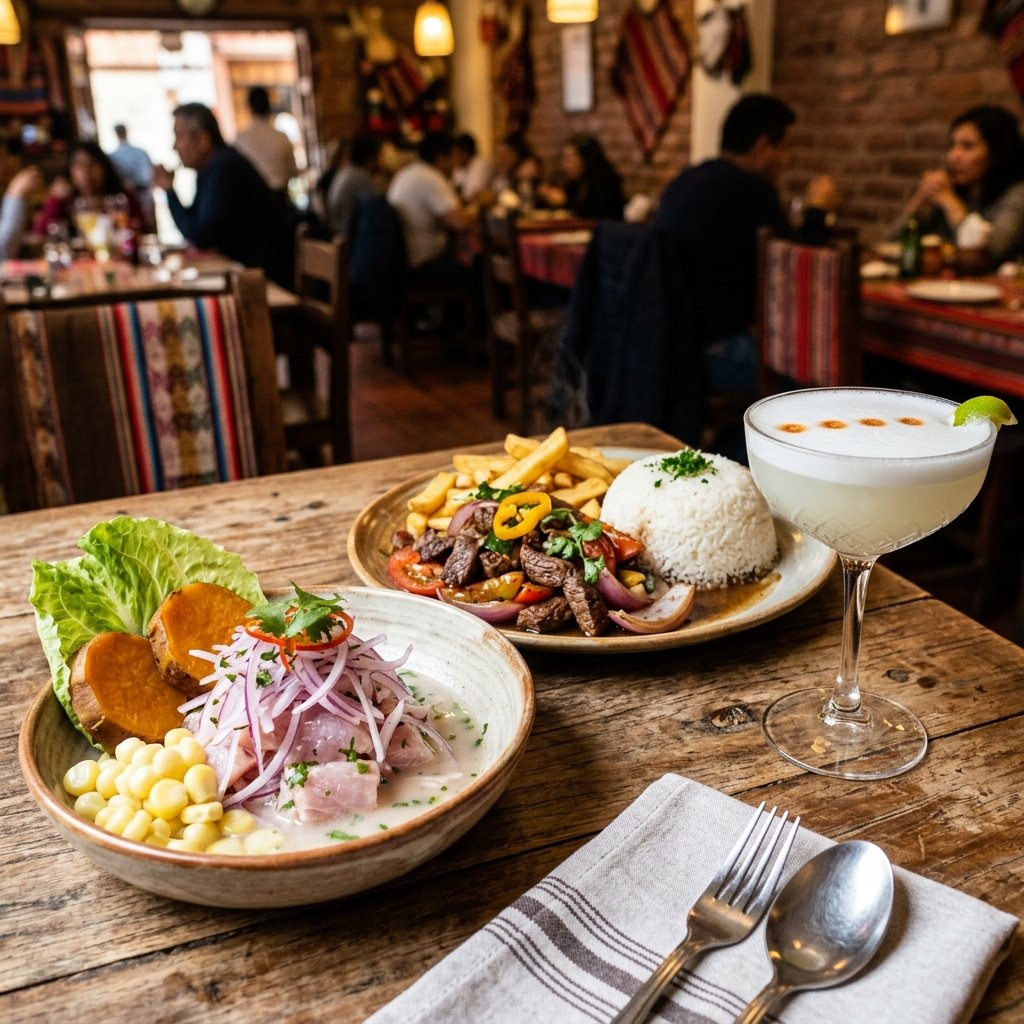
- Ceviche: Fresh local white fish cured in key lime juice (*leche de tigre*), served cold with giant sweet potatoes and Andean corn. *Only eat ceviche at lunch*, as locals believe fish should only be eaten fresh during the day.
- Lomo Saltado: A Chinese-Peruvian stir-fry featuring tender beef strips, red onions, tomatoes, and soy sauce, tossed with thick-cut french fries and served with rice.
- Pisco Sour: The national cocktail made from grape brandy, lime juice, simple syrup, egg whites, and topped with Angostura bitters.
- Cuy (Guinea Pig): A traditional Andean delicacy, typically roasted whole. It has a rich, gamey taste similar to rabbit.
- Altitude Diet Tip: Your digestion slows down at high altitudes. Avoid alcohol and heavy red meat on your first two days; stick to light soups and warm **Mate de Coca** (coca leaf tea).
Sacred Valley Hidden Gems & Scams
Skip the crowded tour bus stops and seek out these Sacred Valley wonders:
- Ñaupa Iglesia: An ancient, mystical shrine carved directly into a black cave wall near Ollantaytambo, featuring precise stonework that predates the Incas.
- Pumamarca: A pre-Inca fortress built by the Wari culture, overlooking green agricultural terraces above Ollantaytambo.
- Avoid the “Closed Hotel” Scam: If a street taxi driver claims your hotel or restaurant is “closed down” or “burnt down” and offers to take you elsewhere, ignore them. Use a ride-hailing app to eliminate taxi scams.
- Pickpocketing Warning: Keep your bags zipped and secured close to your body when exploring crowded markets like San Pedro in Cusco or the Pisac Sunday market.
Schengen and Entry Rules
Travelers from the US, UK, Canada, Australia, and the EU can enter Peru **visa-free for up to 90 days**. Your passport must be valid for at least six months from your arrival date. Entry details are recorded digitally, so there are no paper arrival cards to keep track of, but make sure your passport gets a physical entry stamp if crossing land borders.
To easily coordinate train connections, book luxury bus seats on the go, and map your hikes through the Sacred Valley, purchase a high-speed Peru eSIM. It keeps you connected from Lima’s coastal cliffs to the high-altitude peaks of the Andes!