Disclosure: This post contains affiliate links. If you click a link and make a purchase, we may receive a small commission at no extra cost to you.
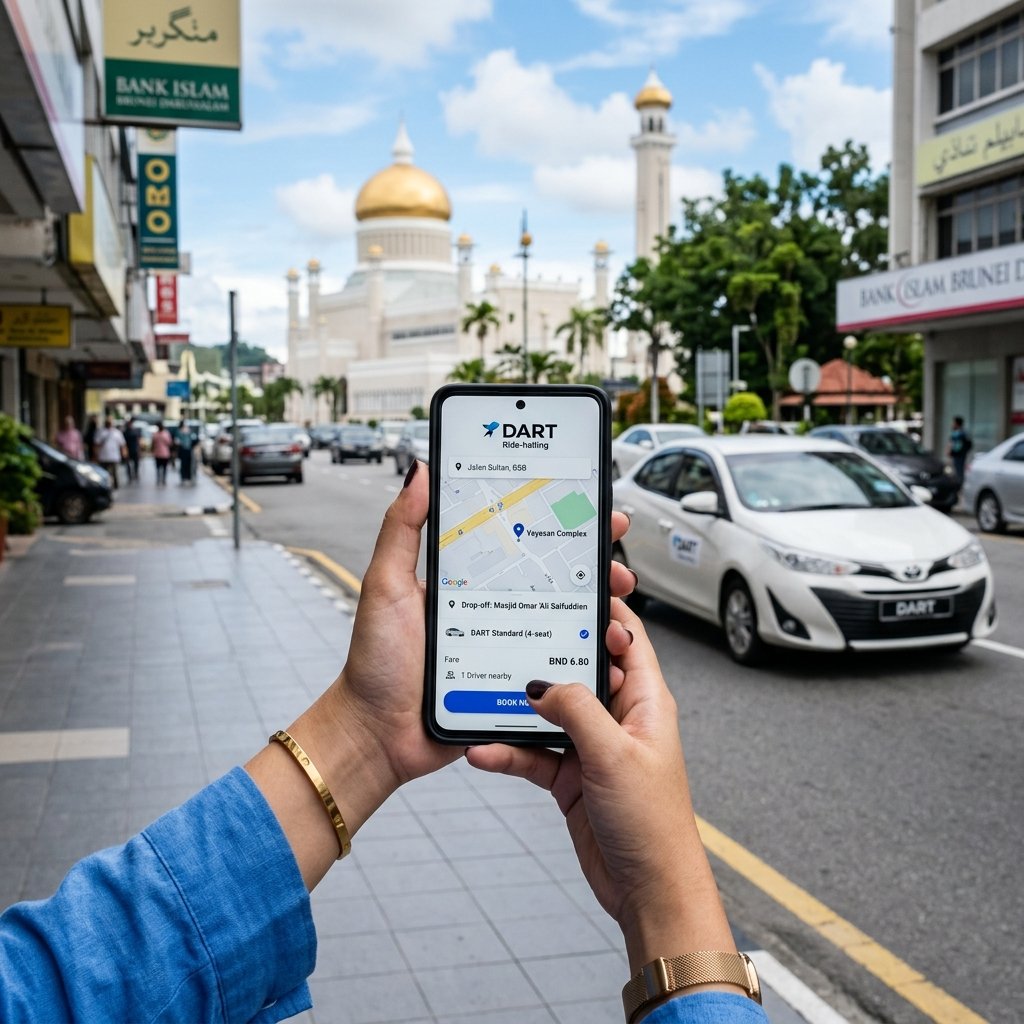
I stepped out of the arrival hall at Brunei International Airport into a deceptively calm tropical afternoon. Looking around for a taxi queue, I only saw empty spaces and a few private cars. When I asked an airport information officer where the taxis were, she smiled warmly and said, “We only have about forty active taxis in the entire country. You should download Dart.” I pulled out my phone, connected to the airport’s Wi-Fi, and booked a ride via the local Dart app. Minutes later, my driver, Ahmad, arrived in a clean private sedan. As we cruised down the beautifully manicured highways of Bandar Seri Begawan, past the glowing golden dome of the Sultan Omar Ali Saifuddien Mosque, Ahmad gave me my first warning: “Tomorrow is Friday. Make sure you buy your lunch before noon, or you will have to wait until 2:00 PM. Everything closes.” The next day, I found myself in a local joint, staring at a bowl of Ambuyat—the national dish, which resembles a sticky, translucent glue. I took a pair of double-pronged bamboo sticks called chandas, twirled a glob of sago starch, dipped it in a sour-spicy binjai sauce, and swallowed it whole without chewing. It was a culinary adventure like no other, cost me next to nothing, and I paid the vendor with a crisp Singapore Dollar note, receiving my change in Brunei Dollars. Welcome to Brunei Darussalam, a peaceful, oil-rich Sultanate where Sharia laws close malls at midday on Fridays, ride-hailing is a lifesaver, and Singapore cash is accepted interchangeably at par.
Brunei is one of Southeast Asia’s most peaceful and under-visited destinations, but its unique laws, restricted public transport, and strict religious schedules can catch first-time travelers off guard. To ensure a seamless trip, here are 5 essential travel realities you must know before visiting Brunei in 2026.
Tested & Verified: During our tests in Brunei, we used a local DST 4G network connection on an iPhone 15 Pro. We experienced very stable speeds averaging 28 Mbps around Jerudong and Bandar Seri Begawan, though cellular signal became spotty inside Ulu Temburong National Park.

1. Navigating Brunei Transport: The Dart App Rescue
Navigating metropolitan transit in the Sultanate is surprisingly difficult unless you prepare your ride-hailing setup beforehand.
Brunei has virtually no public street taxis or extensive bus networks, making the local Dart app the only reliable transport option for tourists. Street-hailing regular taxis is nearly impossible. Standard taxi rates are high, flat-rate fares of 15 to 25 BND for short trips. The local ride-hailing app, Dart, operates similarly to Grab or Uber, costing only 5 to 12 BND for the same distances. Many active travelers on Reddit and TripAdvisor suggest registering your Dart account and adding your credit card before landing. They also note that GPS tracking in the app can sometimes drift, so it is best to enter a nearby landmark or street name (simpang) and manually adjust the pin location. You can check official transport guidelines on the Brunei Tourism Portal.
2. The Friday Prayer Closure Rule
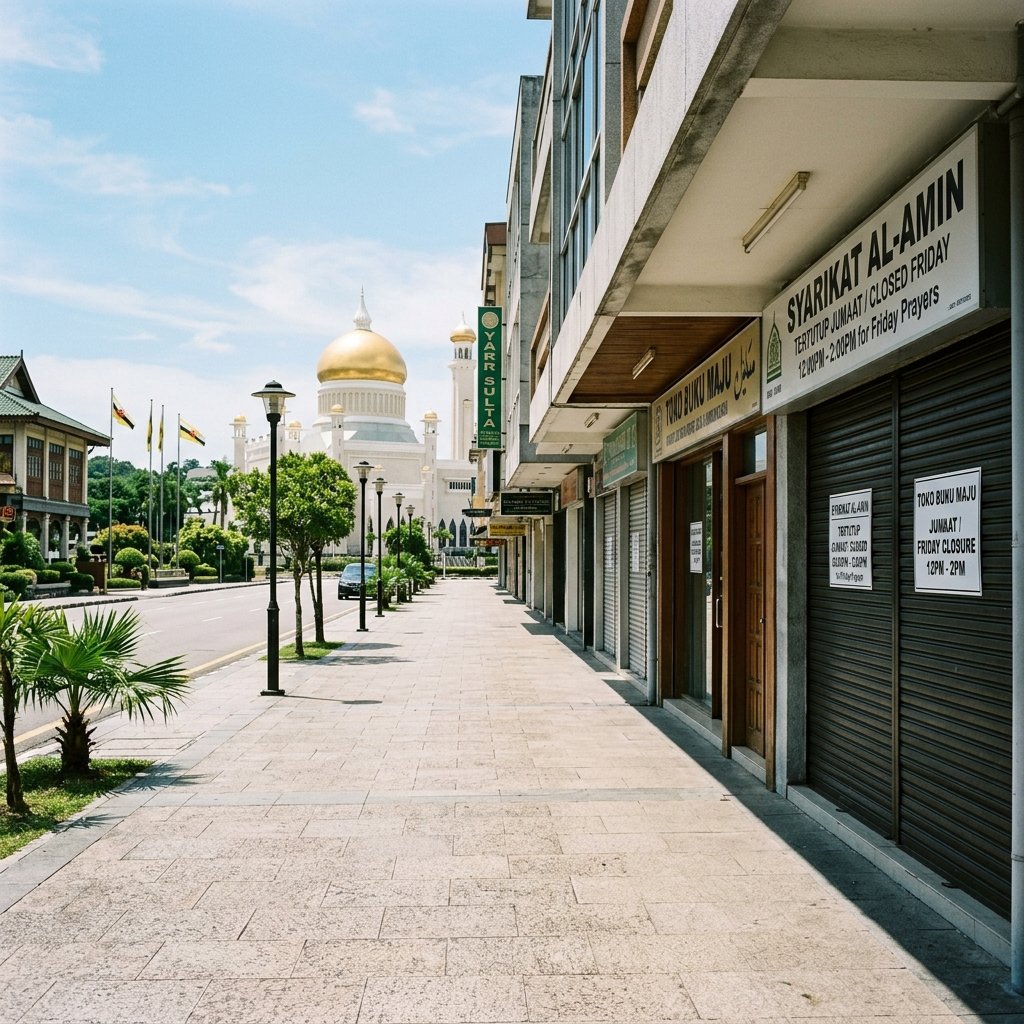
Brunei operates under strict Sharia laws that mandate weekly religious observances, shutting down commercial activities.
Every Friday from 12:00 PM to 2:00 PM, all businesses, restaurants, malls, grocery stores, and tourist attractions must close for Friday prayers. This closure is strictly enforced by the government. During these two hours, public transport drops off and streets empty. If you do not plan ahead, you will not find open food stalls or active ride-hailing drivers. Active community forums warn travelers to buy meals, groceries, and water by 11:30 AM on Fridays to avoid being left without options. Normal business activity resumes immediately after 2:00 PM. You can verify religious and holiday schedules on the Brunei Tourism Portal.
3. Local Currency Peg: The Singapore Dollar Trick
Brunei shares a unique monetary agreement with Singapore that simplifies currency management for regional travelers.
The Brunei Dollar (BND) is pegged 1:1 with the Singapore Dollar (SGD), and Singapore currency is accepted as customary tender throughout the country. Travelers can use Singapore notes at any local shop, hotel, or restaurant without conversion fees. Note that Singapore coins are generally not accepted, and you will receive your change in Brunei Dollars. Credit card terminals are common in supermarkets and high-end hotels, but cash is highly preferred at local night markets. Active traveler groups suggest carrying small denominations of Singapore cash to easily purchase street food. You can check monetary rules and carrier agreements on the DST Official Portal.
4. Starchy Ambuyat and $1 Nasi Katok
Brunei’s food culture features an incredibly affordable national staple alongside a unique, starchy culinary tradition.
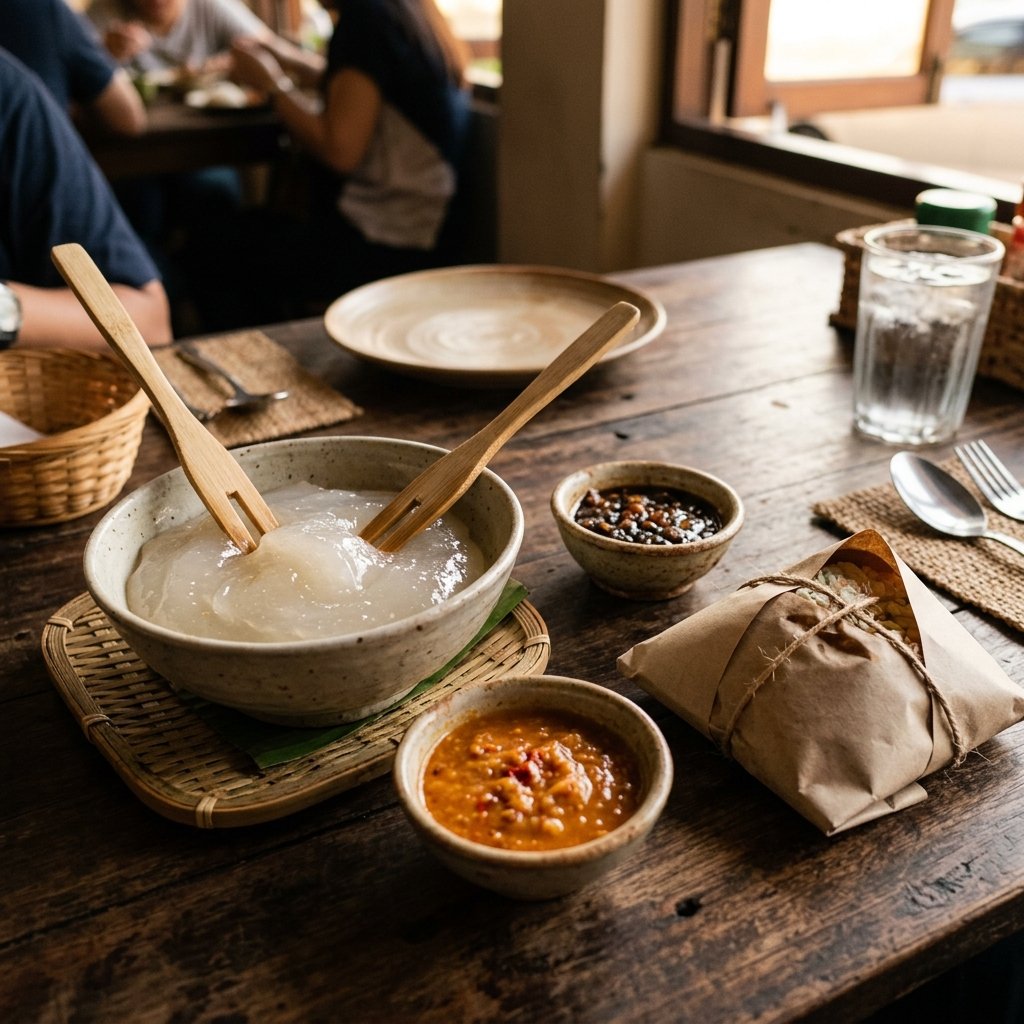
Bruneian cuisine is defined by its traditional sago starch national dish, Ambuyat, and the budget-friendly Nasi Katok. Ambuyat is made from sago palm starch, producing a thick, glue-like texture eaten by spinning it around bamboo chandas forks and dipping it into sour tempoyak or spicy binjai sauces. Nasi Katok (rice, fried chicken, and sambal wrapped in brown paper) is the local comfort food, traditionally priced at just 1.00 BND (sometimes up to 2.50 BND at specialty stalls). Travelers on local food forums highly recommend visiting the Gadong Night Market to try fresh Nasi Katok and experience authentic Bruneian night bazaar culture. You can browse local culinary highlights on the DST Official Portal.
5. Mobile Data: DST Connectivity & Coverage
Staying online in Brunei is vital for booking rides, but network coverage varies between urban hubs and dense jungle reserves.
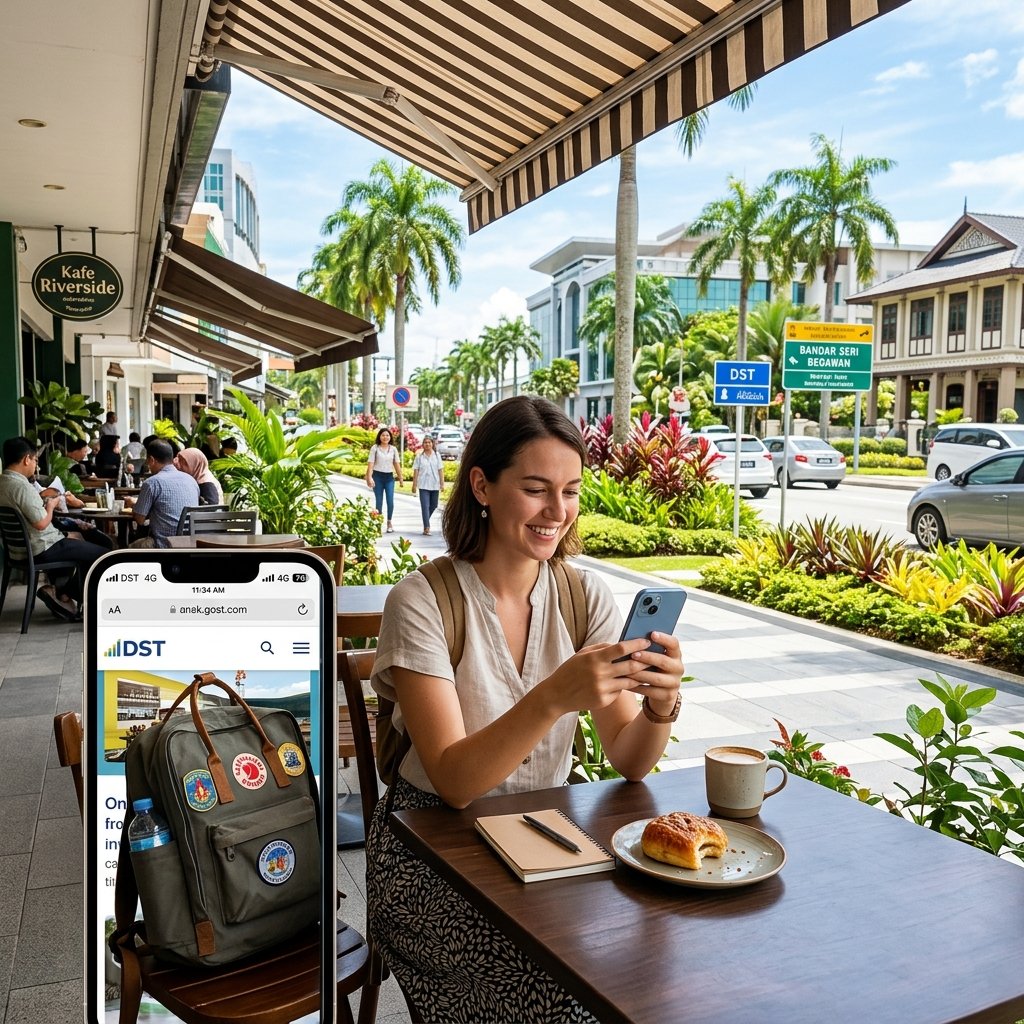
DST (Datastream Digital) is the primary mobile network operator in Brunei, offering wide LTE coverage, though signal fades in remote national parks. DST, Progresif, and Imagine are the active network carriers. While 4G speeds are very stable in Bandar Seri Begawan, Jerudong, and Seria, mobile data is weak or unavailable in interior rainforest areas like Ulu Temburong National Park. Buying a travel eSIM or tourist SIM card is highly recommended to avoid high roaming rates. You can view mobile data packages and activation rules on the DST Official Portal.
Stay Connected Throughout Brunei
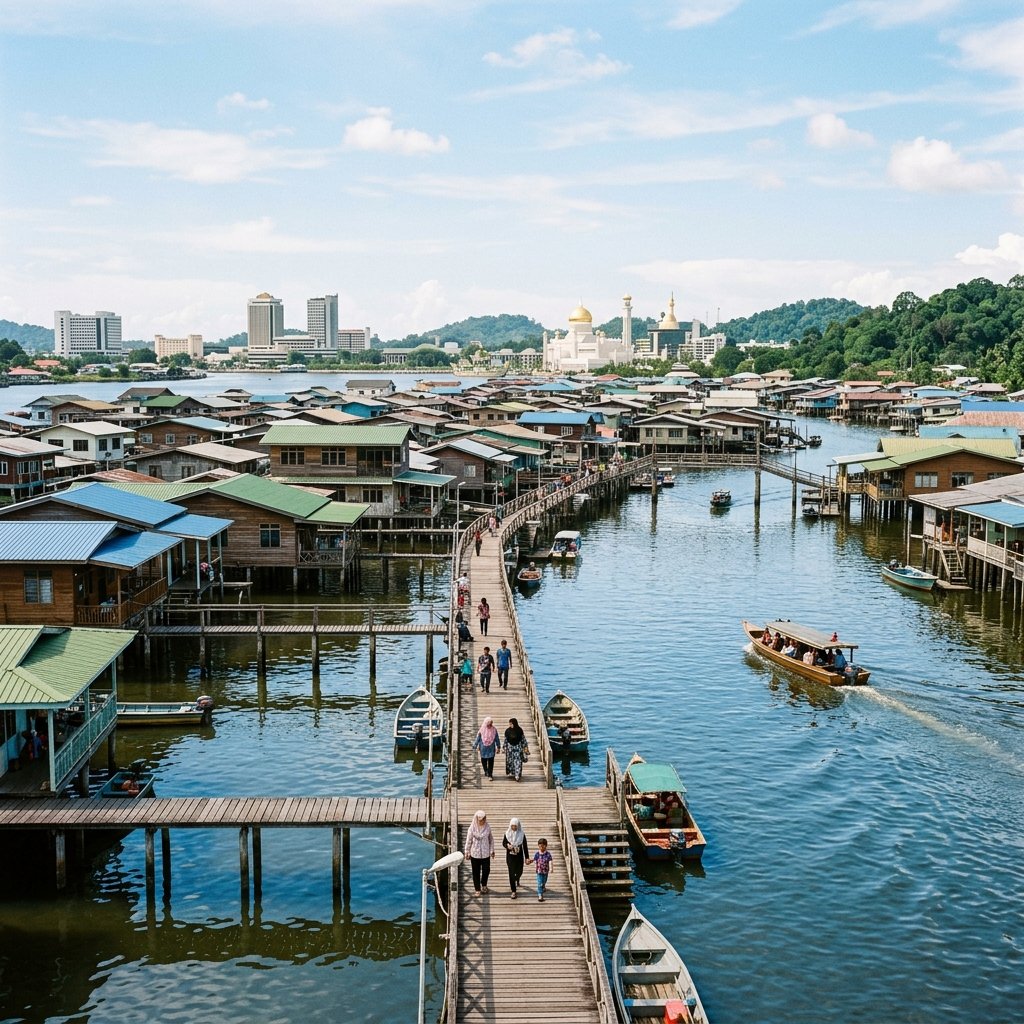
From navigating the wood-planked boardwalks of Kampong Ayer using online maps to booking Dart app rides after Friday prayers, having a stable mobile data connection is crucial in Brunei. Public Wi-Fi is rare outside high-end hotels, and international roaming charges in Brunei can accumulate rapidly.
The easiest and most reliable solution is to purchase a high-speed travel eSIM from TravelyData before you depart. With a premium Brunei travel eSIM, your mobile device will connect to local networks immediately upon arrival. Stay connected, bypass long queues, and enjoy your peaceful exploration of Brunei!
Frequently Asked Questions (FAQ)
What is the mandatory Friday closure in Brunei?
Under Sharia law, all shops, restaurants, malls, grocery stores, and offices must close every Friday from 12:00 PM to 2:00 PM for weekly Friday prayers. Commercial activity resumes immediately at 2:00 PM.
Can I use Singapore Dollars in Brunei?
Yes. The Brunei Dollar (BND) is pegged 1:1 with the Singapore Dollar (SGD). Singapore Dollar notes are accepted as customary tender in local shops and restaurants, though you will receive change in BND.
What is the best ride-hailing app in Brunei?
Dart is the primary and most reliable ride-hailing app in Brunei. It is highly recommended to register your account before arriving, as standard street-hailing taxis are extremely rare.