Paraguay Travel Summary: Asuncion Airport yellow taxis charge 120,000-150,000 PYG (Cash only). Muv or Uber apps cost 60,000-80,000 PYG. Tigo has the widest LTE, but TravelyData eSIM brings instant zero-KYC activation.
| Carrier | Coverage | eSIM Suitability |
|---|---|---|
| 📶 Tigo | Widest LTE | ID required |
| 📶 Personal | Strong speed | ID required |
| 📶 eSIM TravelyData | Auto-switch | Zero KYC, instant |
| Route/Option | Cost | Rules/Pickup |
|---|---|---|
| Yellow Taxi | 120k-150k PYG | Cash only, official rank |
| Muv / Uber | 60k-80k PYG | Designated app pickup zone |
| Colectivo (Bus) | 3,400 PYG | Requires Jaha/Más card |
Paraguay Survival Cheat-Sheet
Silvio Pettirossi Airport (ASU): Official yellow airport taxis charge flat rates of ~120,000 to 150,000 PYG (approx. $20–$25 USD) to downtown Asunción, payable in cash. Uber and local app Muv are legal and depart from designated zones outside the arrivals terminal.
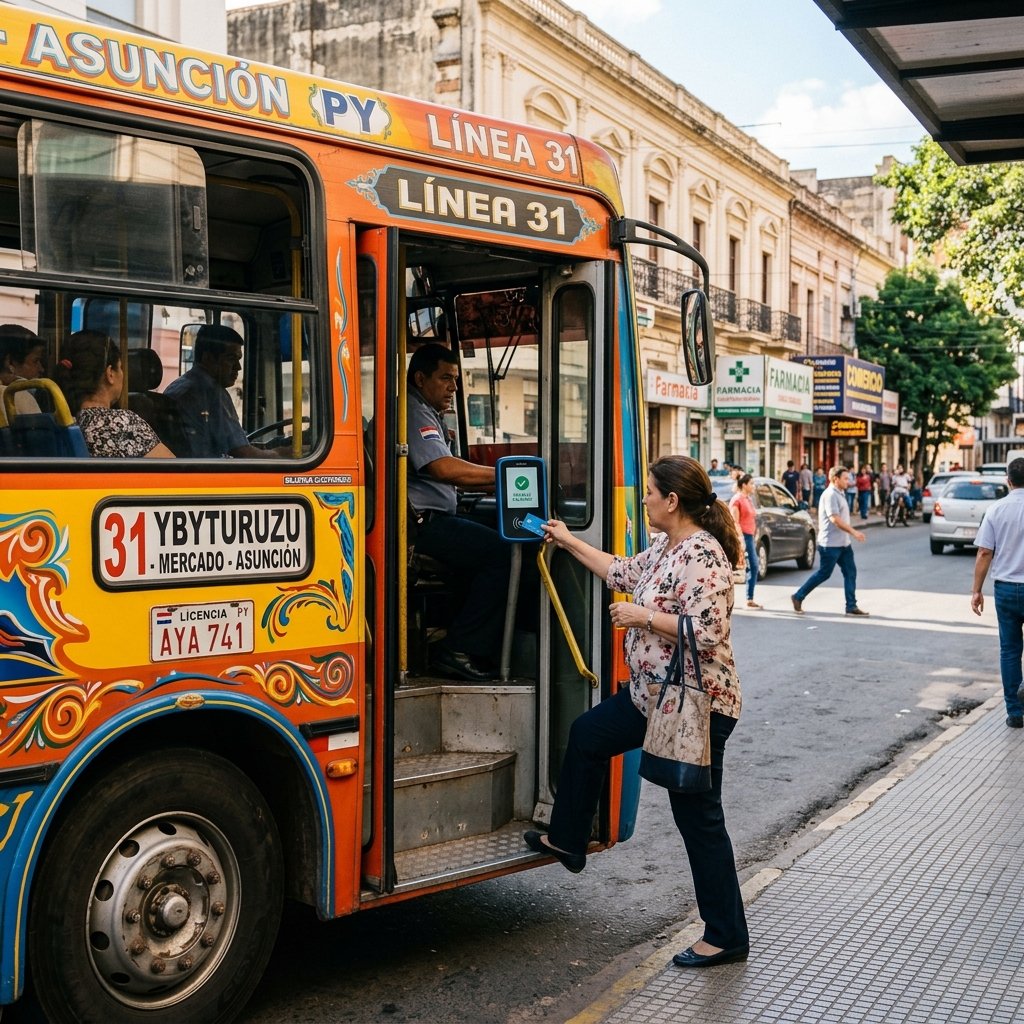
Asunción Bus Cards (Jaha/Más): Local colectivos in Asunción do not accept cash. You must buy a Jaha or Más contactless transit card from pharmacies (like Punto Farma) or kiosks before boarding.
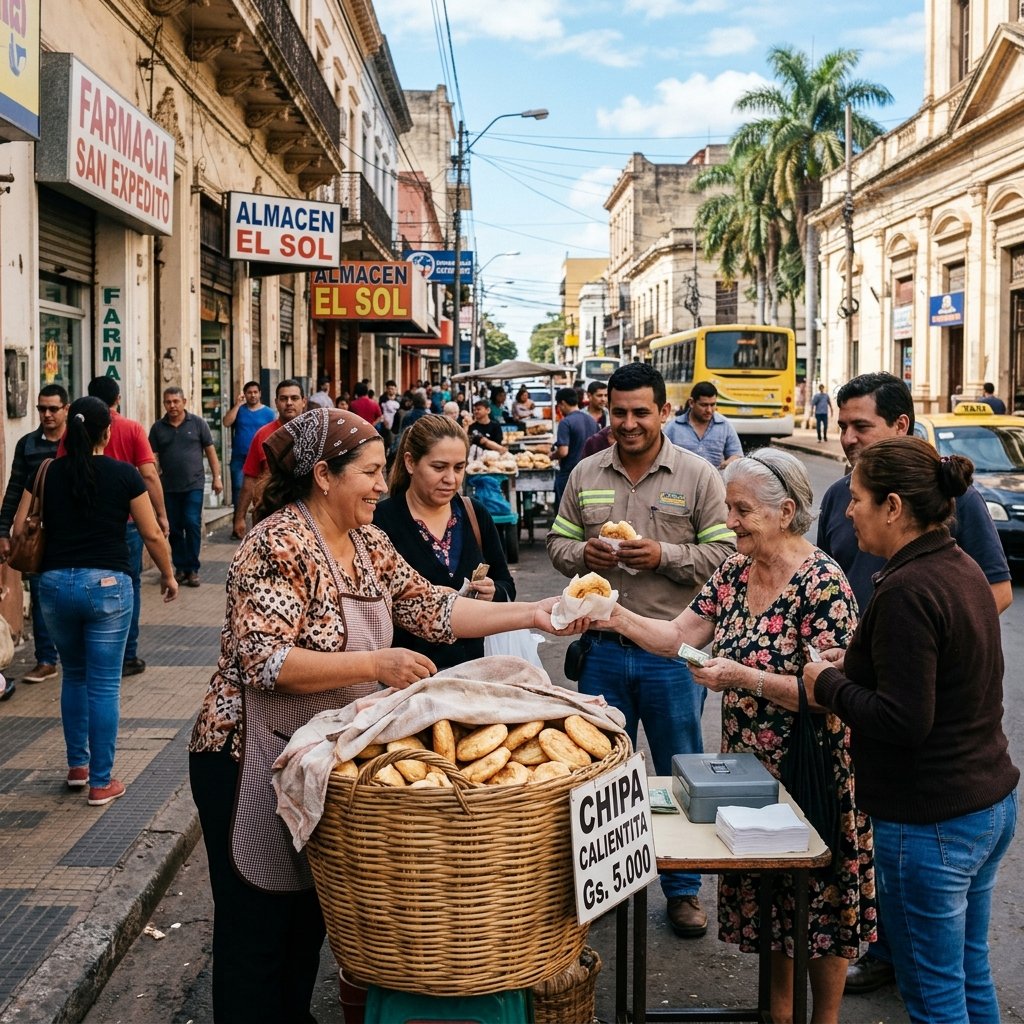
Tereré & Cash: Credit cards are widely accepted in modern supermarkets and malls, but cash is mandatory for street vendors selling Chipa. Sharing Tereré (cold yerba mate) is a key social custom.
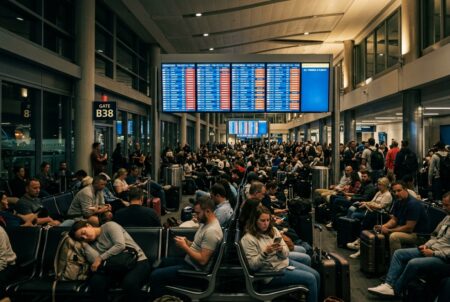
Walking out of Silvio Pettirossi Airport near Asunción, the warm subtropical breeze carries the scent of blossoming orange trees and fresh chipa. As you reach for your phone to book a ride, you will discover that both Uber and the local app Muv are ready to pick you up. However, traveling in Paraguay comes with its own set of rules. From cashless local buses to sharing Tereré with locals, here is your essential guide to navigating Paraguay.
Touchdown at Silvio Pettirossi: Airport Taxis, Muv Ride-Hailing, and Local Buses
Silvio Pettirossi International Airport (ASU) is your gateway to Paraguay, offering flat-rate yellow airport taxis, ride-hailing services (Uber, Muv), and a cashless local bus network.
Upon arrival, official yellow taxis are available at the curb. They charge a regulated flat rate of roughly 120,000 to 150,000 PYG (about $20–$25 USD) to downtown Asunción, payable only in cash. If you have active mobile data, you can save money by booking via Uber or Muv (Paraguay’s domestic ride-hailing app), which depart from designated zones. To buy tickets or load maps for your highway drive, activate your eSIM before departure. For official safety updates, check the Paraguay Secretariat of Tourism (SENATUR) portal.
To navigate around Asunción, the local colectivos (public buses) are cheap and frequent. However, public buses do not accept cash. You must buy a Jaha or Más contactless transit card from local pharmacies (such as Punto Farma) or kiosks. Compare transit options with our guides on airport taxis in Panama or using the SUBE card in Argentina.
The National Directorate of Civil Aviation (DINAC) and the municipality of Luque regulate the flat-rate yellow airport taxi services at Silvio Pettirossi Airport. The ride-hailing platforms Uber and Muv are fully legal and permitted to operate under local municipal transport laws in the Greater Asunción area.
Cash vs Cards: Navigating Supermarkets, Street Stalls, and Chipa Kiosks
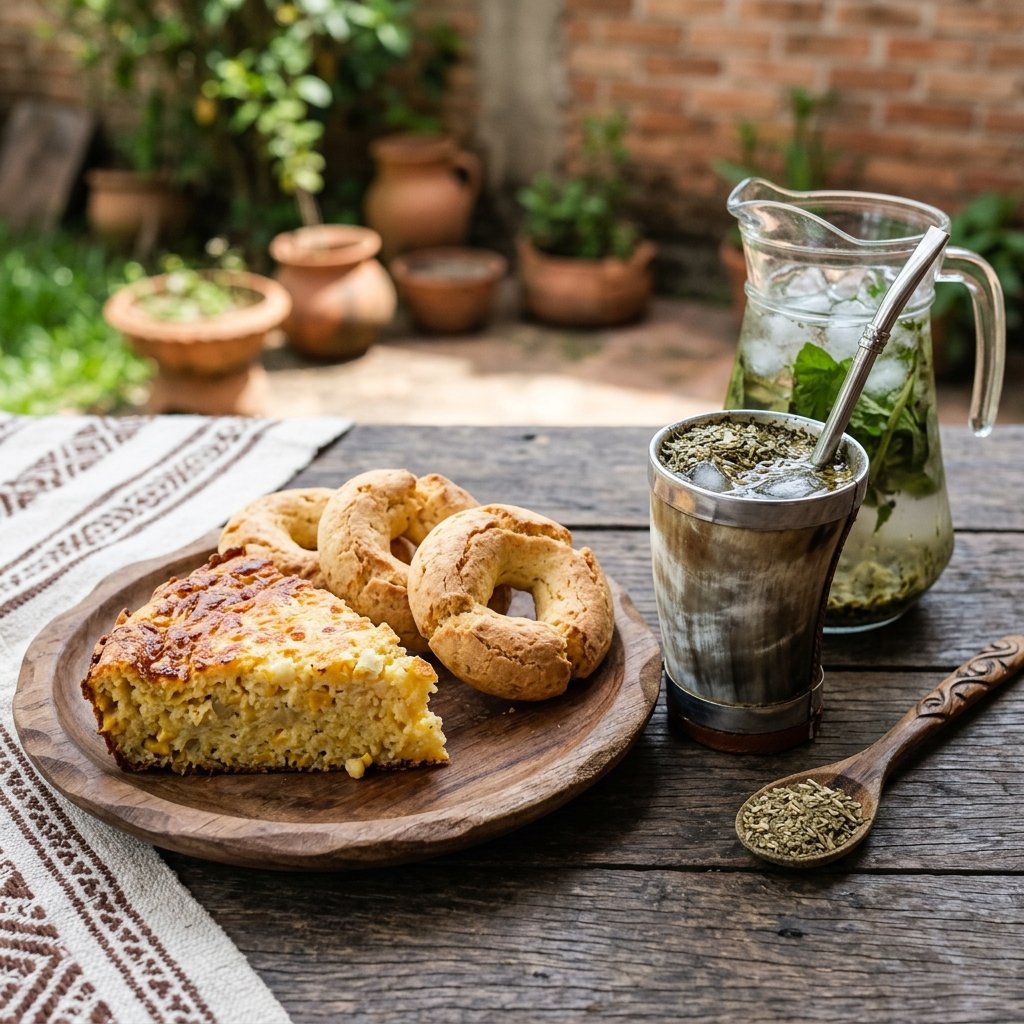
Visa and Mastercard are accepted in modern supermarkets and shopping malls, but cash is mandatory for street vendors selling Chipa.
Paraguay’s official currency is the Guaraní (PYG). While credit cards are widely accepted in upscale hotels and restaurants in Asunción, local markets, street food stalls, and chipa vendors only accept cash. Carrying small Guaraní notes ($5,000, $10,000, and $20,000 PYG) is highly recommended. For cash withdrawals, look for ATMs. Be sure to check card fees in our guides for Uruguay or Nicaragua.
Personal vs Tigo: Mobile Network Coverage and Connecting Your eSIM
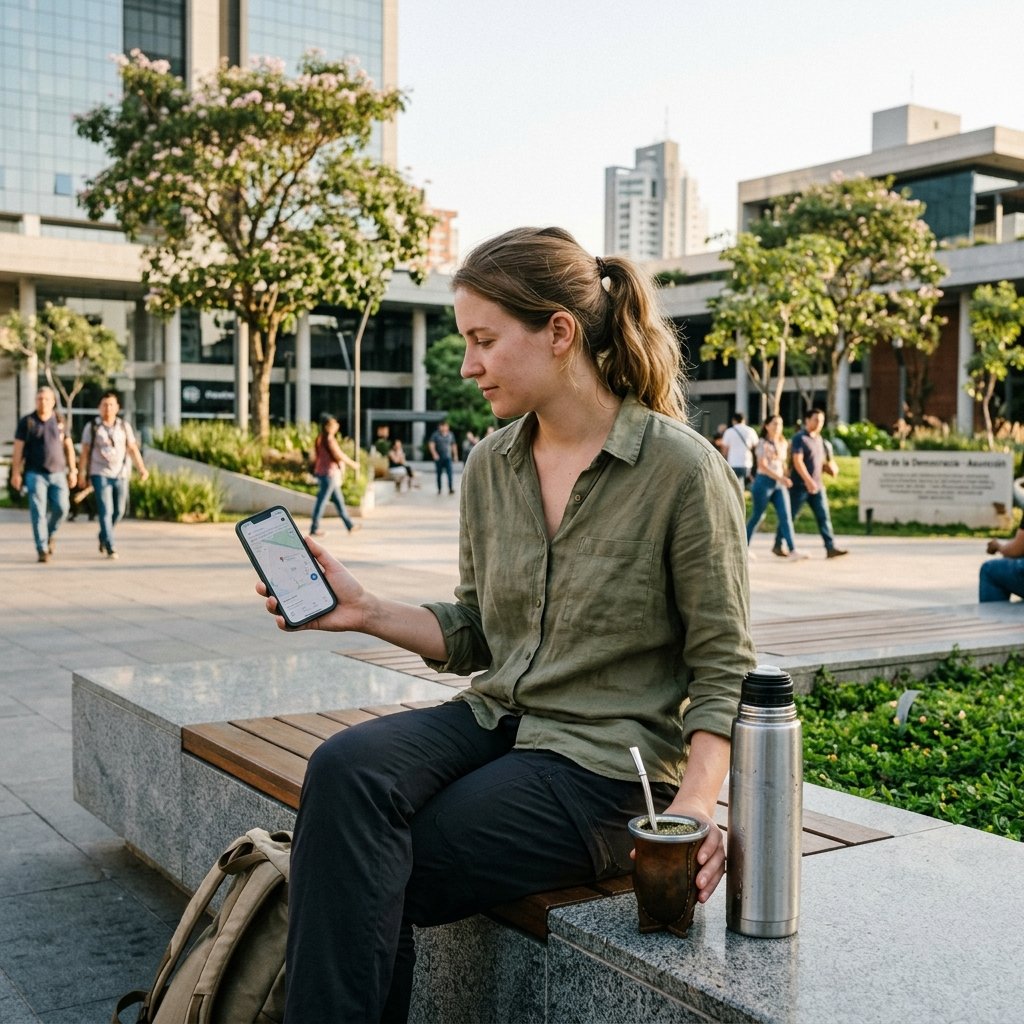
Tigo offers the fastest LTE data and widest national coverage, while Personal is competitive in urban centers. Avoid local registration times with a travel eSIM.
Tigo Paraguay has the largest network footprint, providing reliable signals even in the rural Chaco region. Personal Paraguay offers excellent speeds and competitive coverage in Asunción, Ciudad del Este, and Encarnación. Buying a local physical SIM card requires presenting your passport at an official store, which can involve long wait times. A travel eSIM from TravelyData connects you instantly to both networks upon arrival. For neighboring countries, explore eSIM Colombia or eSIM Costa Rica.
Tereré Etiquette and Safety: Social Customs in Paraguay
Sharing Tereré is a cornerstone of Paraguayan social culture, but travelers must follow local etiquette. Avoid drinking tap water to prevent stomach upset.
Tereré is the national social beverage of Paraguay, consisting of cold-infused yerba mate mixed with ice and crushed medicinal herbs (yuyos). If a local offers you Tereré, accept it as a sign of friendship. Drink the entire cup until it makes a slurping sound, then hand it back to the host (the cebador). Only say “gracias” (thank you) when you do not want any more rounds. For safety, stick to bottled water and try local street food like **Chipa** (savory cheese and starch bread) only from busy, high-turnover stalls.
From the streets of Asunción to the ruins of Trinidad, Paraguay is a beautiful destination. Armed with a Jaha bus card, fresh Guaraní cash, and a TravelyData eSIM, you will travel with ease.

Frequently Asked Questions (FAQ)
Can I pay with credit cards in Asunción?
Yes, credit cards (Visa and Mastercard) are accepted in supermarkets, shopping centers, and upscale restaurants in Asunción. However, cash is required for local markets and street food.
What is Tereré?
Tereré is the national beverage of Paraguay. It is a cold-infused yerba mate drink mixed with ice and crushed medicinal herbs, typically shared among friends.
How do I pay for city buses in Asunción?
Public buses in Asunción do not accept cash. You must buy a Jaha or Más transit card from pharmacies and tap it on the validator when boarding.
 Paraguay eSim