Surviving Israel: Rav-Kav Cards, Shabbat Shutdowns & Blue Entry Slips
Navigating Israel in 2026 requires understanding strict cashless transit systems, national Shabbat public transit shutdowns, and the critical blue entry slip needed to dodge a 17% VAT penalty.
100% Cashless (Rav-Kav card / Moovit app required). Drivers accept NO cash.
Buses & trains STOP Friday 2 PM to Saturday night. Use Sherut taxis.
No stamp! Keep your Blue B2 Slip or hotels charge +17% VAT surcharge.
Israeli New Shekel (ILS / NIS). Cards 95% accepted; cash for Sheruts & markets.
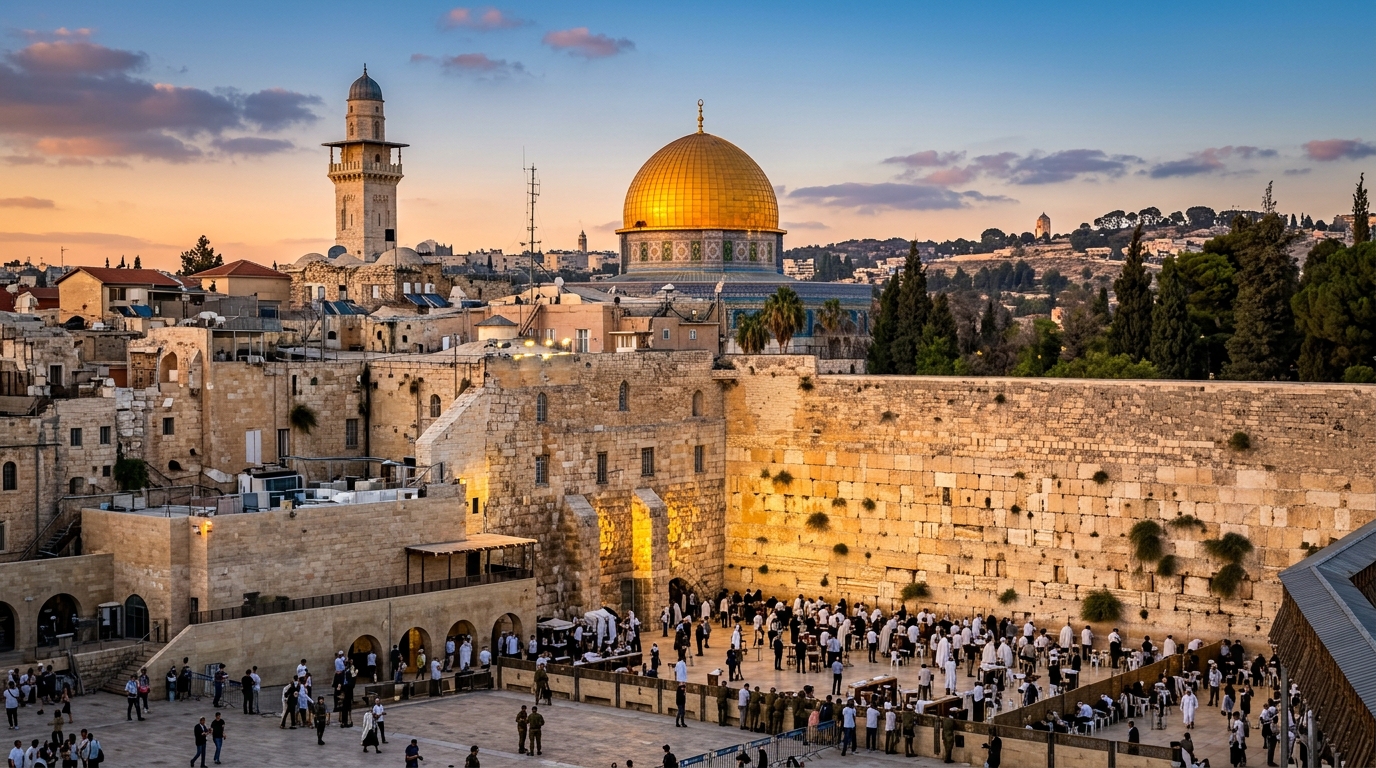
The historic Old City of Jerusalem at golden hour, where ancient traditions meet modern digital realities.
1. Airport Transit & Local Transport: The Rav-Kav & Shabbat Trap
Arriving at Ben Gurion International Airport (TLV) is smooth, but public transportation in Israel follows strict digital and religious rules that frequently catch first-time travelers off guard.
The Blue B2 Entry Slip: Do NOT Lose It!
Israel no longer stamps passports upon arrival. Instead, automated biometric passport kiosks at TLV print a small blue card called the Blue B2 Entry Slip (Stay Permit).
Foreign tourists in Israel are exempt from the standard 17% Value Added Tax (VAT) on hotel stays, hostel bookings, and car rentals. However, you MUST present your physical Blue B2 Entry Slip at check-in. If you lose or discard it, hotels are legally required to add 17% VAT to your bill! Keep it tucked inside your passport cover until departure.
100% Cashless Public Transit & The Rav-Kav Card
City buses operated by Egged, Dan, and Kavim are 100% cashless. Drivers will not accept single shekel coins or cash bills under any circumstances. You must pay using one of two methods:
- Smart Card (Rav-Kav): A reloadable smart card available at Ben Gurion Airport Terminal 3 arrivals train station. You can purchase an anonymous card for ~5 ILS and top it up with credit at train station kiosks or via NFC on your smartphone.
- Mobility Apps (Moovit, Rav-Pass, Cpty): Scan QR codes inside buses and light rail trains upon boarding. Note that mobile payment apps require an active cellular data connection.
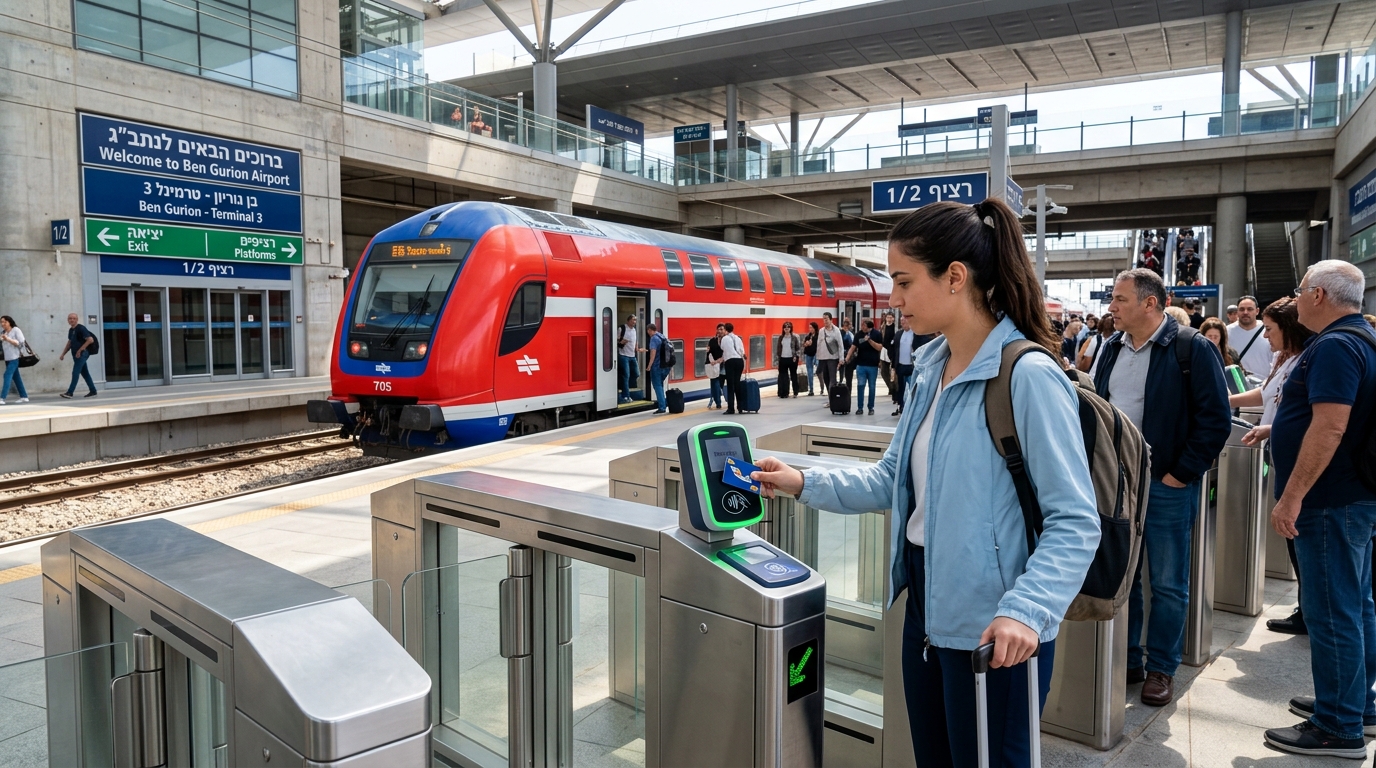
The high-speed rail line connecting Ben Gurion Airport to Tel Aviv and Jerusalem in under 25 minutes.
The Friday Afternoon Shabbat Shutdown
From Friday afternoon (roughly 1.5 to 2 hours before sunset) until Saturday evening after sundown, all public buses, national Israel Railways trains, and light rail lines shut down completely across Jerusalem, Haifa, and most of Israel.
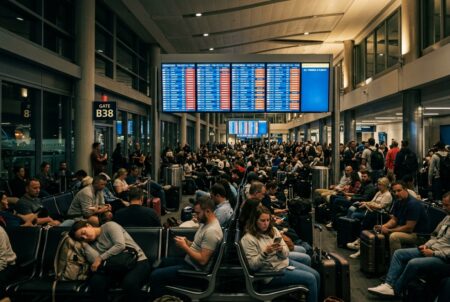
If your flight lands at TLV on Friday evening, you have three options to leave the airport:
- Gett App (Ride-Hailing): Uber is limited in Israel; Gett (GetTaxi) is the primary ride-hailing app. Fixed meter fares apply, but expect holiday surcharges during Shabbat.
- Sherut (Shared Minibus Taxis): 10-to-12 passenger shared minibuses operating fixed routes between TLV airport, Tel Aviv central station, and Jerusalem. Sheruts operate 24/7 during Shabbat and accept ILS cash only (paid directly to the driver).
- Private Airport Taxis: Available outside Terminal 3 exit. Always demand the driver activate the meter (“Moneh”) or agree on the official ministry table rate before entering.
2. Cash & Payment Realities: Israeli Shekels (ILS) & Cards
Israel is one of the most card-friendly countries in the Middle East. Over 95% of businesses in Tel Aviv, Haifa, and West Jerusalem accept contactless EMV cards and Apple Pay/Google Pay.
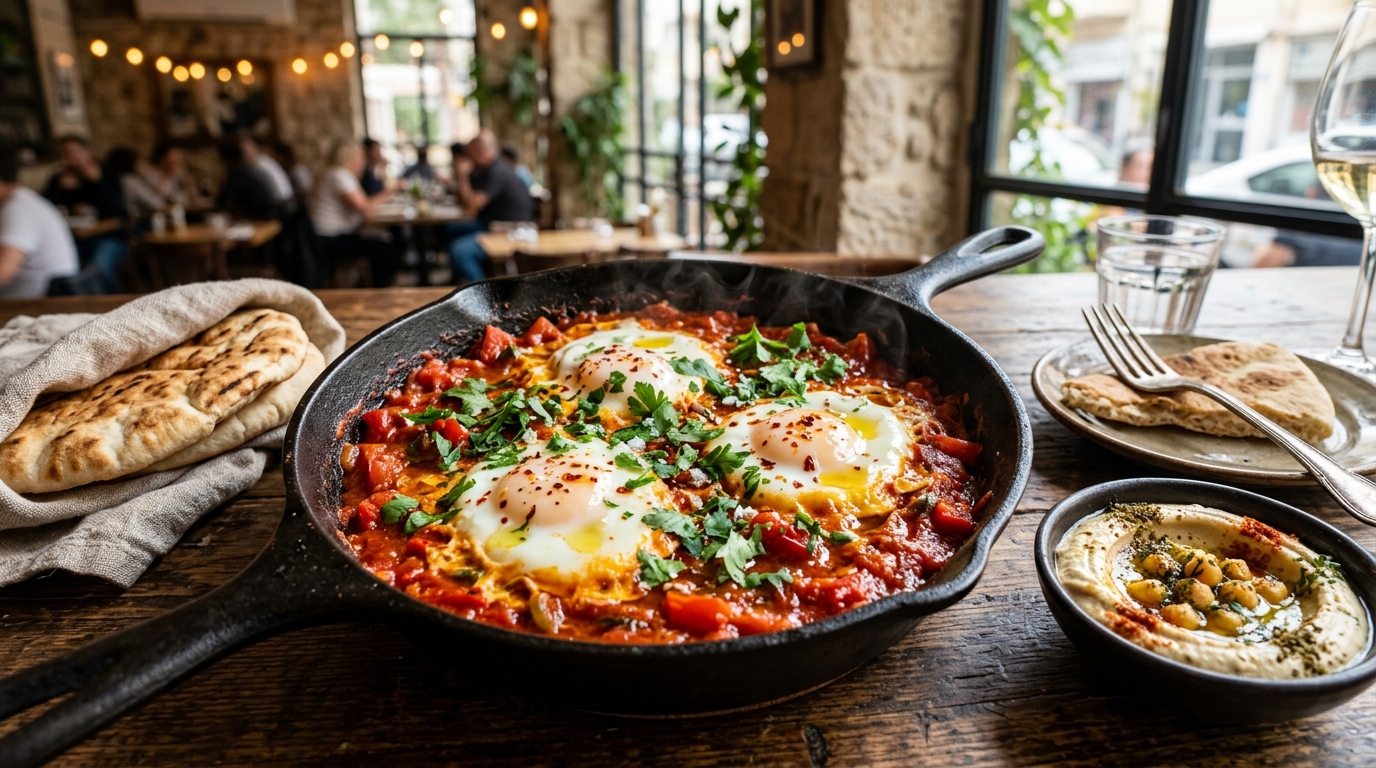
Fresh Shakshuka served hot at a market bistro in Tel Aviv, where contactless digital card payments are standard.
When Do You Need Physical Shekel (ILS) Cash?
- Open-Air Markets (Shuks): Stalls in Machane Yehuda (Jerusalem) or Carmel Market (Tel Aviv) accept cards for large purchases, but small purchases (fresh juices, single pastries, spices under 20 ILS) require cash.
- Shabbat Sherut Minibuses: Drivers do not have card readers; cash in small bills (10, 20, 50 ILS) is essential.
- Restaurant Tipping: Tipping is customary in Israeli cafes and restaurants (12% to 15%). While some terminals allow adding a tip via card, leaving cash on the table ensures the service staff receives it directly.
ATM Withdrawal Tips & DCC Markup Traps
Avoid standalone private ATMs (such as Euronet or non-bank kiosks near night markets) which charge conversion markups up to 10-14%. Instead, use official bank ATMs attached to major financial institutions:
- Bank Hapoalim (Hapoalim Bank)
- Bank Leumi
- Discount Bank
When withdrawing cash, the ATM will ask whether to charge your card in Israeli Shekels (ILS) or your home currency (USD/EUR). Always choose ILS (Local Currency) to force your home bank’s wholesale exchange rate.
3. Mobile Data & eSIM Options in Israel
Having high-speed mobile connectivity is vital in Israel for scanning bus transit QR codes, booking Gett taxis, monitoring Home Front Command security alerts, and navigating navigating historical sights.
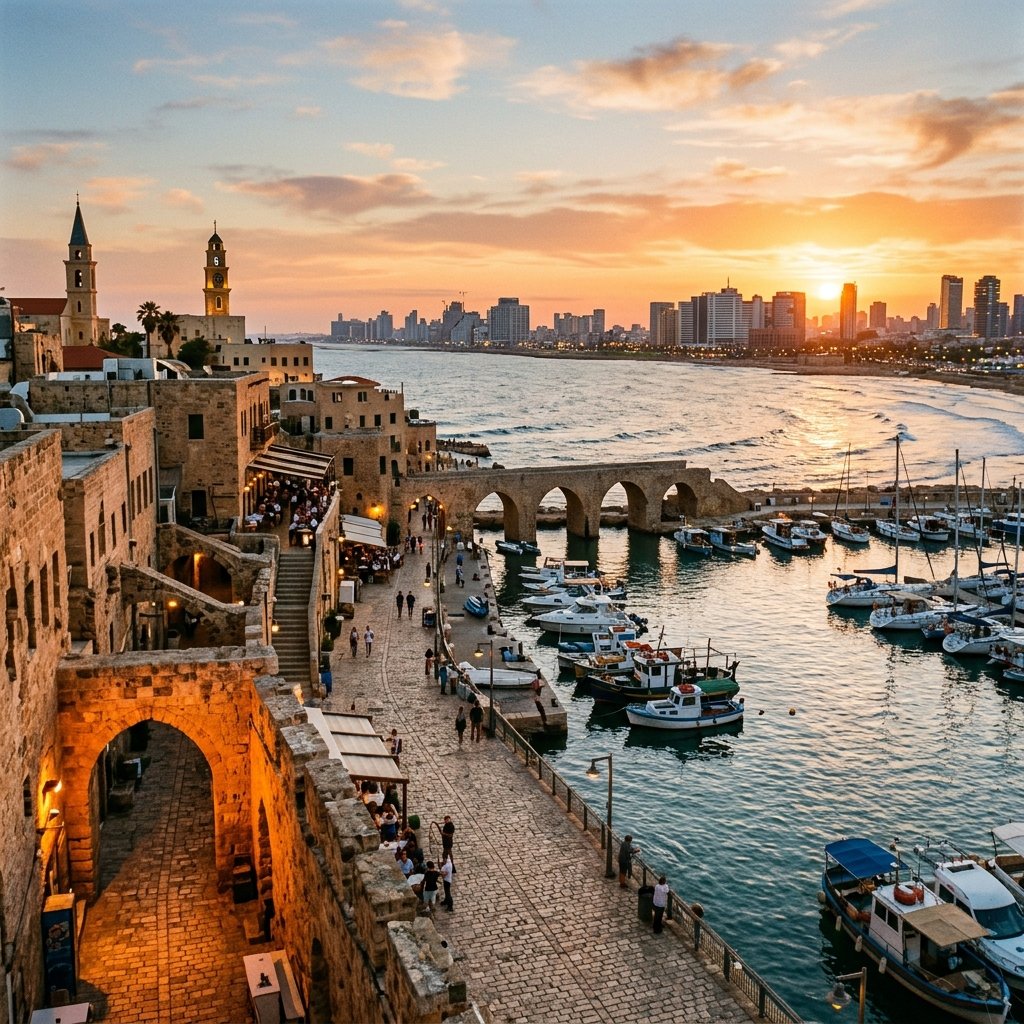
Fast 5G mobile connectivity along the Mediterranean coastline in Tel Aviv.
Physical SIM Stores vs. Instant Digital eSIM
Buying a tourist SIM card at Ben Gurion Airport arrival hall costs upwards of $40–$60 USD for basic packages and requires queuing for manual passport registration.
Switching to an instant digital TravelyData Israel eSIM allows you to install your data profile before departure. As soon as your plane touches down at TLV, your phone connects directly to tier-1 networks like Partner 5G or Cellcom 5G without passport registration hassle or airport markups.
Stay Connected Across Israel with High-Speed 5G Data
Instant QR code delivery. Automatic connection to Partner & Cellcom 5G networks. Zero roaming fees.
4. Safety, Cultural Etiquette & Emergency Warnings
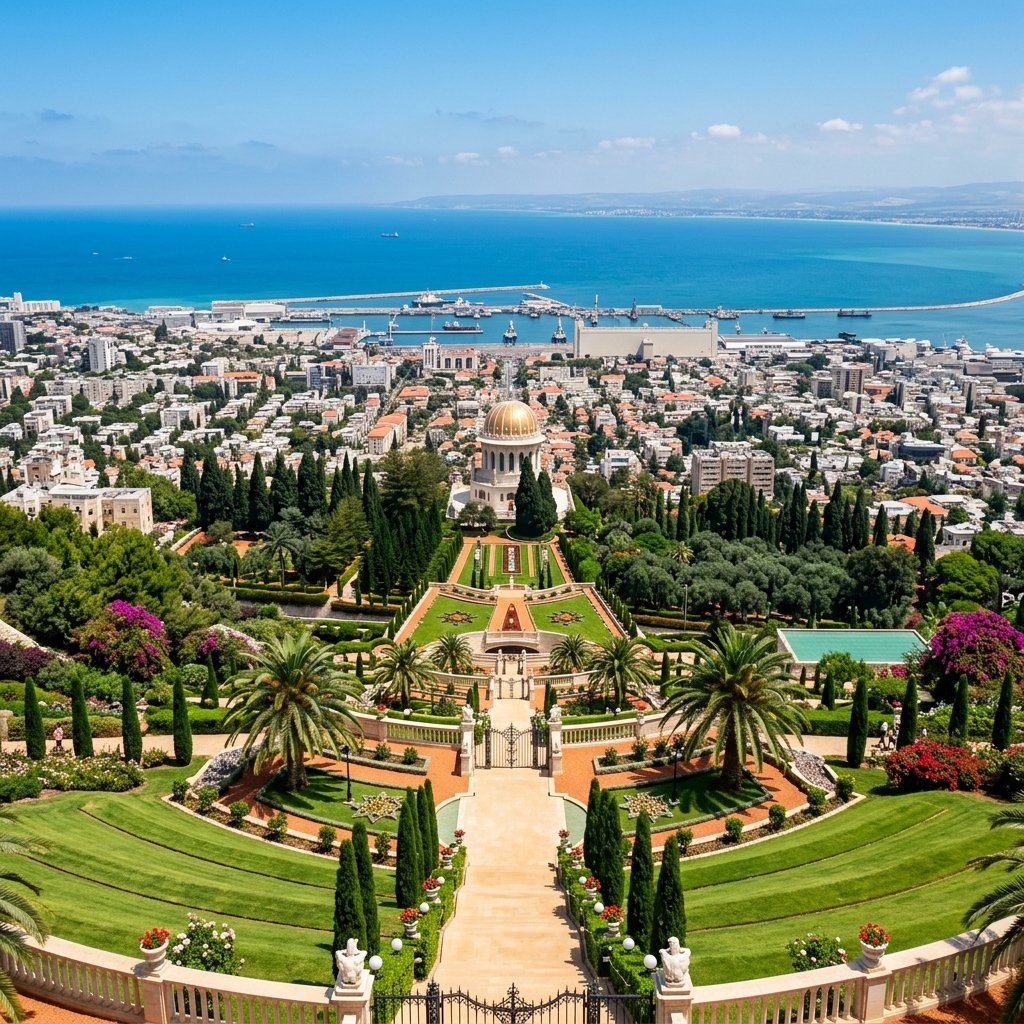
The natural wonder of the Dead Sea and ancient Judean desert landscape.
Security Realities & The Home Front Command App
All international travelers visiting Israel should download the official Home Front Command (Kumta / Tzeva Adom) mobile app. In the event of security alerts or sirens, the app broadcasts real-time location-based alerts and identifies the nearest public bomb shelter (Mamad).
Religious Etiquette: Mea Shearim & Holy Sites
- Ultra-Orthodox Neighborhoods: In areas like Mea Shearim (Jerusalem), driving motor vehicles, taking photos, or using mobile phones on Shabbat is strictly prohibited and heavily frowned upon.
- Dress Code Guidelines: Modest dress is enforced at religious sites (Western Wall, Church of the Holy Sepulchre, Dome of the Rock). Men should cover their heads (kippah provided at Western Wall entrance); women must cover shoulders and wear knee-length skirts or trousers.

The vibrant evening energy of Machane Yehuda Market in Jerusalem.
💬 Real Traveler Field Reports (r/IsraelTravel)
“Got caught at Ben Gurion on a Friday at 4 PM. Trains were dead, buses stopped. A taxi driver wanted $120 to Tel Aviv. Ended up finding a shared Sherut minibus for 40 ILS right outside exit 01. Always carry cash for Shabbat!”
“Don’t lose that blue paper slip they give you at border control! I threw mine in the hotel bin and when checking out of my Jerusalam hotel, they added 17% VAT to my bill. Had to pay an extra $85 because I couldn’t prove I was a tourist.”
Explore Neighboring Middle East & Mediterranean Travel Guides:
- Beyond Petra: Navigating Jordan’s Unspoken Rules & Strict Drone Fines
- Cairo Metro, Uber Card Rules, and Temple Tickets: A Cashless Guide to Egypt
- Barbed Wire, Left-Side Driving, and Squeaky Cheese: Surviving Cyprus Guide
- Athena Card Transit Passes and Cashless Guide to Greece
- Unlocking Anatolia: Bazaars, Bus Passes, and 2026 Cashless Survival Guide to Turkey
Frequently Asked Questions (FAQ)
Q: Does Israel stamp my passport upon arrival?
A: No. Passport control issues a blue paper slip (B2 Stay Permit). Keep this slip inside your passport throughout your visit to avoid a 17% VAT surcharge at hotels and car rentals.
Q: Can I pay cash on buses in Tel Aviv or Jerusalem?
A: No. All public buses and light rail trains are 100% cashless. You must use a Rav-Kav smart card or smartphone mobility apps (Moovit/Rav-Pass).
Q: How do I travel during Shabbat (Friday afternoon to Saturday night)?
A: Public buses and trains do not run during Shabbat. You must use shared minibus taxis (Sherut – cash only) or ride-hailing apps like Gett.
Q: Is tipping mandatory in Israel?
A: Yes, tipping 12% to 15% is standard at sit-down restaurants and cafes across Israel.
 Israel eSim