Quick Verdict: Navigating Romania Without Fines or Scams
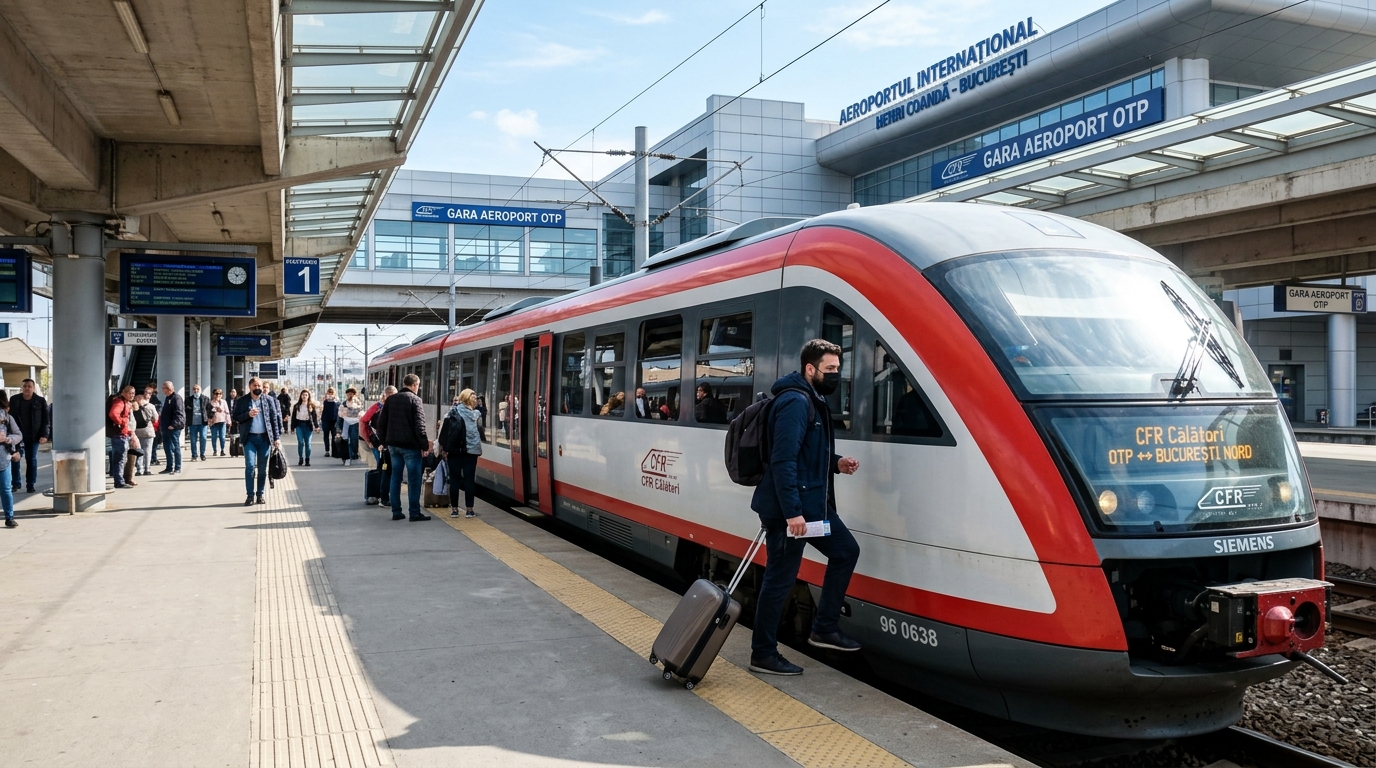
To navigate Romania seamlessly, pre-purchase the mandatory electronic Rovinieta road vignette online via erovinieta.ro before driving on any national highway to avoid automatic €100 camera fines. In Bucharest, contactless card taps on STB surface buses include 90 minutes of surface transfers for 3 RON, but do not cover Metrorex subway gates. Take the 5.50 RON CFR train from OTP Airport to Gara de Nord in 20 minutes, carry cash in Romanian Leu (RON) for rural Transylvania, and activate a TravelyData Romania eSIM for instant Orange and Vodafone 5G roaming.

1. How to Avoid Romania’s €100 Rovinieta Highway Vignette Fines
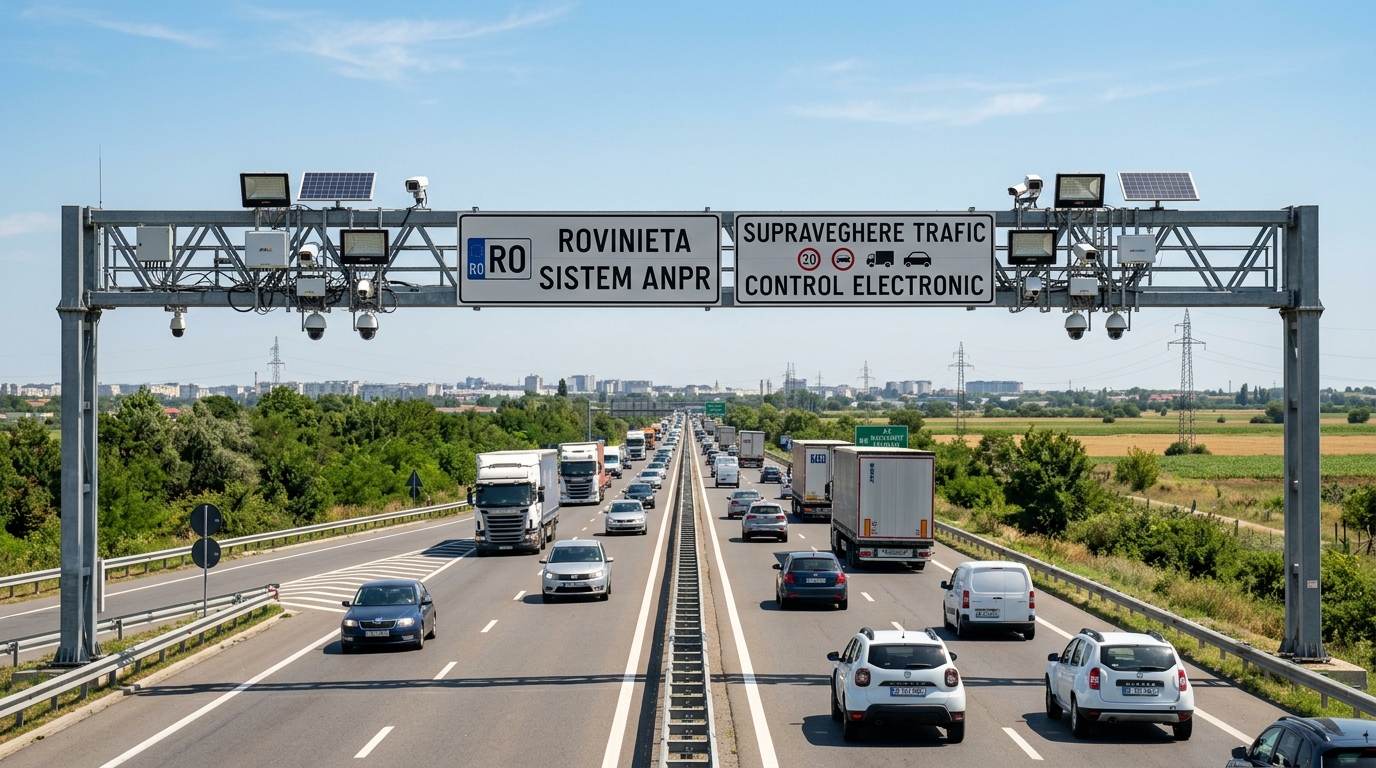
Driving on Romanian highways without an electronic vignette will trigger automatic €100 administrative fines from camera gantries within minutes. Physical windshield stickers were phased out years ago; Romania uses a 100% digital license-plate tracking system managed by CNAIR (Compania Națională de Administrare a Infrastructurii Rutiere).
The electronic vignette—known locally as the Rovinieta—is required for all motorized passenger vehicles driving on national roads (DN), European routes (E), and motorways (A1, A2, A3, A10). High-resolution ANPR (Automatic Number Plate Recognition) cameras installed across every major highway intersection instantly check your license plate against the central database.
Real Traveler Proof (Reddit r/RomaniaTravel): “I rented a car at Bucharest OTP airport and assumed the vignette was included. Two weeks after returning home, I received a 275 RON (~€55) fine notice per camera checkpoint passed. Always double-check if your rental company registered the Rovinieta, or buy it yourself on erovinieta.ro the minute you get your license plate numbers!”
Official 2026 Rovinieta Prices (Passenger Cars – Category A)
- 1-Day Vignette: €2.50 (~12.50 RON)
- 10-Day Vignette: €3.30 (~16.50 RON)
- 30-Day Vignette: €5.30 (~26.50 RON)
- 60-Day Vignette: €8.40 (~42.00 RON)
- 12-Month Vignette: €28.00 (~140.00 RON)
Crucial Toll Trap (Fetești Danube Bridge): The Rovinieta covers national highways, but does not include special bridge tolls. If you drive along the A2 motorway toward Constanța and the Black Sea coast, you must pay a separate bridge toll (Peaj Fetești–Cernavodă, ~13 RON) either online, via SMS to 7577, or at gas stations within 24 hours of passing.
2. Bucharest Public Transit: STB Buses, Trams, and Metrorex Subway Rules
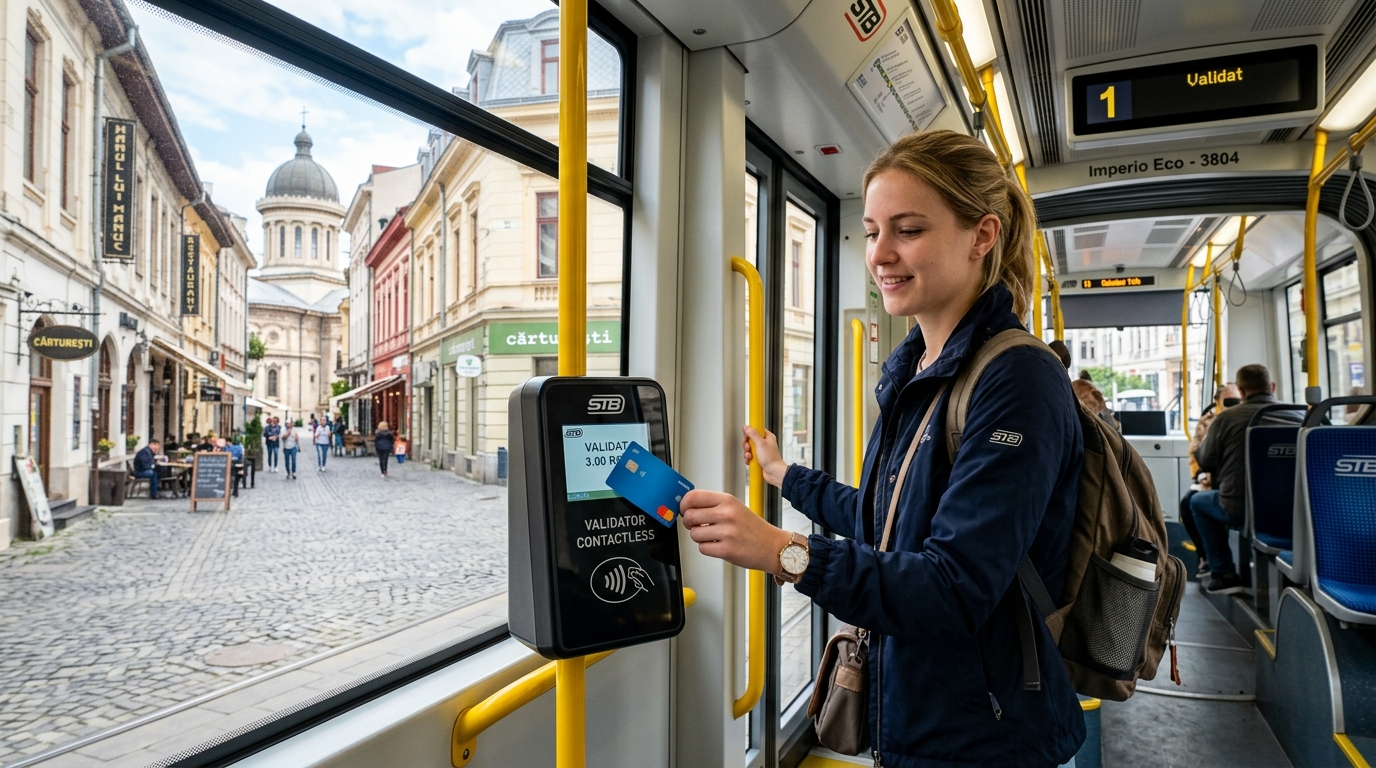
Tapping your bank card on a Bucharest bus gives you 90 minutes of surface transfers, but will NOT open the subway turnstiles. Bucharest surface transit (STB) and the underground metro (Metrorex) operate as completely separate transit systems with independent ticketing hardware.
On all STB surface vehicles (buses, trams, and trolleybuses), contactless Visa/Mastercard payments can be made directly on the yellow or orange validator touchscreens on board. A single tap costs 3 RON (~€0.60) and grants unlimited transfers across all surface buses and trams for 90 minutes. However, you must tap your card on the validator of every new bus or tram you board during your transfer window to validate your journey for ticket inspectors.
The Metrorex Subway Transfer Trap
When transferring from an STB bus to a Metrorex subway station (e.g., at Piața Unirii or Gara de Nord), your bus card tap is invalid at the metro gates. Metrorex turnstiles accept direct contactless card taps at the gates, but charge a separate 3 RON fare per entry. If you intend to mix subways and buses frequently throughout the day, purchase an integrated 24-hour pass (*Abonament integrat* for 14 RON / ~$3.00 USD) at any Metrorex ticket office or STB kiosk.
3. Bucharest Henri Coandă Airport (OTP) Transit Breakdown
The direct CFR express train from OTP Airport to Bucharest North Station (Gara de Nord) is the fastest, cheapest, and most reliable airport transit option. Avoid unlicensed airport solicitors who approach arriving passengers in the terminal halls.

4. Cash Rules: Romanian Leu (RON) vs. Card in Transylvania & Countryside
Romania uses the Romanian Leu (RON), NOT the Euro—and cash is mandatory once you step into rural Transylvania. While contactless bank cards and mobile wallets are accepted at 99% of businesses in Bucharest, Cluj-Napoca, and Brașov, cash remains king in smaller villages.
Where Cash in RON is Strictly Required:
- Trailhead & Castle Parking: Parking meters at Bran Castle (Dracula’s Castle), Peleș Castle in Sinaia, and Râșnov Fortress frequently require physical RON coins or small banknotes.
- Mountain Cabins & Rural Guesthouses: Traditional pensiune guesthouses in the Apuseni Mountains, Maramureș, and Bucovina lack card terminals due to weak landline banking connectivity.
- Traditional Food Markets & Souvenirs: Artisan cheese stalls, chimney cake (*cozonac secuiesc*) vendors, and local craft markets near Transylvanian castles require exact cash.
ATM DCC Warning: When withdrawing cash from ATMs (Banca Transilvania, BCR, BRD), always select “Without Conversion” / “Charge in RON”. Choosing Dynamic Currency Conversion (DCC) allows local ATM networks to apply hidden exchange markups of 10% to 14% on top of your bank rate.
5. Mobile Connectivity: Orange, Vodafone, & TravelyData eSIM Options
Romania boasts some of the fastest mobile internet speeds in Europe, but physical prepaid SIM purchases require passport identity registration. Skipping local telecom store queues with an instant eSIM ensures uninterrupted navigation across Transylvanian highways.
6. Planning a Regional Eastern & Central European Trip?
If your travel itinerary extends across Romania’s borders into neighboring Eastern and Central European nations, explore our factual local survival guides:
- Hungary: Learn about Budapest BKK transit scans, ruin bar card rules, and thermal bath etiquette.
- Ukraine: Check Kyiv overland train entries, curfew rules, and Carpathian mountain kolybas.
- Moldova: Read about Chișinău trolleybus tap-to-pay rules, Transnistria border cash tips, and Moldova eSIM guide.
- Bulgaria: Discover Sofiya tap-to-pay metro rules, taximeter traps, and Euro transition steps.
- Serbia: Read Belgrade airport taxi vouchers, Car.Go app, and cash kiosk bus ticket rules.
7. Frequently Asked Questions About Traveling in Romania
Do I need to buy a Rovinieta highway vignette if I only drive inside Bucharest?
No, the Rovinieta is only required when driving on national roads (DN), European routes (E), and motorways (A) outside urban municipality boundaries. If your vehicle stays strictly within Bucharest city limits, no vignette is required.
Can I use Euros to pay for meals and hotels in Transylvania?
No, Euros are not accepted in everyday transactions in Romania. All local businesses, restaurants, parking meters, and guesthouses legally operate in Romanian Leu (RON). Always pay with credit card or local RON cash.
Does tapping my credit card on a Bucharest STB bus cover the metro?
No, STB surface transit (buses/trams) and Metrorex (subway) are separate systems. Tapping your card on a bus costs 3 RON for 90 minutes of surface transfers, but does not grant entry through subway turnstiles. You must pay 3 RON again at the metro gate or buy a 14 RON integrated 24-hour pass.
What is the best way to get from OTP Airport to central Bucharest?
The CFR express train is the best option. It costs 5.50 RON (~$1.20 USD), runs 24/7 every 40 minutes, and arrives at Gara de Nord in just 20-25 minutes without traffic delays.
Do I need to register my passport to activate a TravelyData Romania eSIM?
No, TravelyData eSIMs require zero passport scans or identity verification. You can purchase and scan the QR code before your flight and enjoy instant 5G data on Orange and Vodafone networks upon landing.
Stay Connected Across Romania & Transylvania Without Passport Registration
Get instant high-speed 5G data on Orange and Vodafone networks. Zero roaming fees, zero passport scans, and instant setup.
 Romania eSim