Nestled in the geographical heart of Europe, Slovakia offers dramatic castle ruins, rustic sheep-farming culture, and the jagged peaks of the High Tatras. But for travelers arriving from neighboring hubs like Vienna or Prague, crossing the border brings a distinct set of electronic rules and cash-only realities. A single missed highway camera or an incorrect tap on a Bratislava tram can result in heavy administrative fines or duplicate ticket charges.
Slovakia Travel Summary: Quick Answer on Rules & Connectivity (2026 Guidelines)
Driving on Slovakia’s highways requires a pre-purchased electronic vignette (e-vignette) registered via eznamka.sk to avoid automated €500 fines. Bratislava city buses/trams accept contactless cards, but they default to 30-minute tickets (€1.09) and require a tap on every transfer. High-altitude Tatra mountain huts and remote restaurants are strictly cash-only (Euros), and a Slovak Telekom eSIM offers the most reliable alpine data.
Slovakia Mobile Network Comparison (2026)
| Carrier / Option | Urban 4G/5G Speeds | Alpine & Rural Coverage | Biometric Status & eSIM Delivery |
|---|---|---|---|
| Slovak Telekom | Excellent in Cities | Best Coverage in High Tatras & Valleys | Passport registration required for local prepaid SIMs |
| Orange Slovensko | Very High Speeds | Good Regional Coverage | Passport registration required for local prepaid SIMs |
| O2 Slovakia | Solid Urban 5G | Moderate in Mountains | Passport registration required for local prepaid SIMs |
| TravelyData eSIM | Multi-Carrier 4G/5G Network | Seamless Alpine Roaming (Telekom/O2) | Instant Digital Delivery; 0 Passport Registration |
Vienna & Bratislava Airport Transit Options
| Transport Route / Mode | Price Range | Travel Time | Key Advantage & Booking Tip |
|---|---|---|---|
| Vienna Airport to Bratislava (Slovak Lines Bus) | €4 – €8 ($4.50 – $9 USD) | 40 – 50 mins | Most popular; hourly direct coaches. Pre-book online for lowest rate. |
| Bratislava Airport to Center (Public Bus 61) | ~€1.20 ($1.30 USD) | 25 mins | Cheapest; ticket bought at stop machine or direct card tap. |
| Bratislava Airport to Center (Bolt app ride) | €8 – €18 ($9 – $20 USD) | 15 mins | Official airport partner. Bolt Kiosk TapBox available in Arrivals hall. |
| Airport Rank Taxi (Traditional) | €15 – €25+ ($17 – $28 USD) | 15 mins | Expensive; ensure driver uses taximeter or agree on price upfront. |
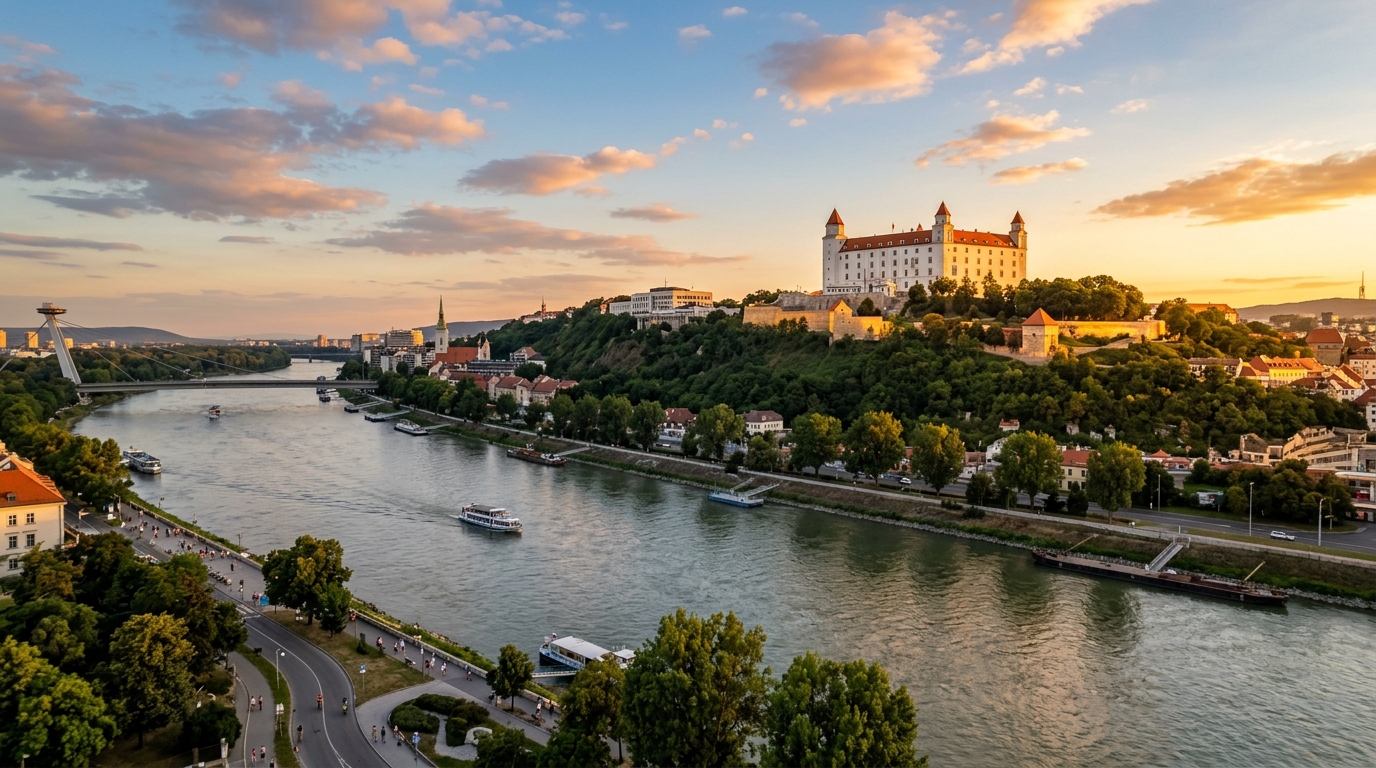
Avoiding Slovakia’s €500 eznamka Highway Fines
Driving on Slovakia’s motorways and expressways requires a fully digital e-vignette linked to your license plate. Automated ANPR cameras scan vehicles instantly at toll points; entering a toll road without one results in automated fines up to €500.
Under Slovak highway regulations, electronic vignettes (e-vignette or e-znamka) are 100% digital and must be purchased before entering toll road sections. High-resolution highway cameras check every license plate against the active database. Administrative fines for non-compliance range from €150 to €500.
There are no physical sticker vignettes to purchase at the border or place on your windshield. The entire national highway network is monitored by automated cameras operated by the National Highway Company (NDS). You must purchase your e-vignette online at the official official Slovakia Highway Portal, or physically at Petrol service stations before crossing borders from Austria, Hungary, Poland, or the Czech Republic. The prices are fixed by law: a 1-day vignette costs €8.10, a 10-day vignette is €10.80, a 30-day vignette is €17.10, and a 365-day vignette is €90.00.
On my first drive crossing the border from Austria into Slovakia near Petržalka, I didn’t realize the toll cameras start scanning the second you enter Slovak highway asphalt. I spent three days waiting in anxiety before getting my e-vignette sorted, luckily avoiding a €150 fine by registering online within a narrow grace window.
If you are planning a multi-country road trip, check our neighboring country guides: Austria Vignette Purchase Windows, Budapest BKK Transit Scans, Czech Republic Prague Trams, Poland Warsaw Transit, Ukraine Local Quirks, and Slovenia e-Vinjeta Fines.
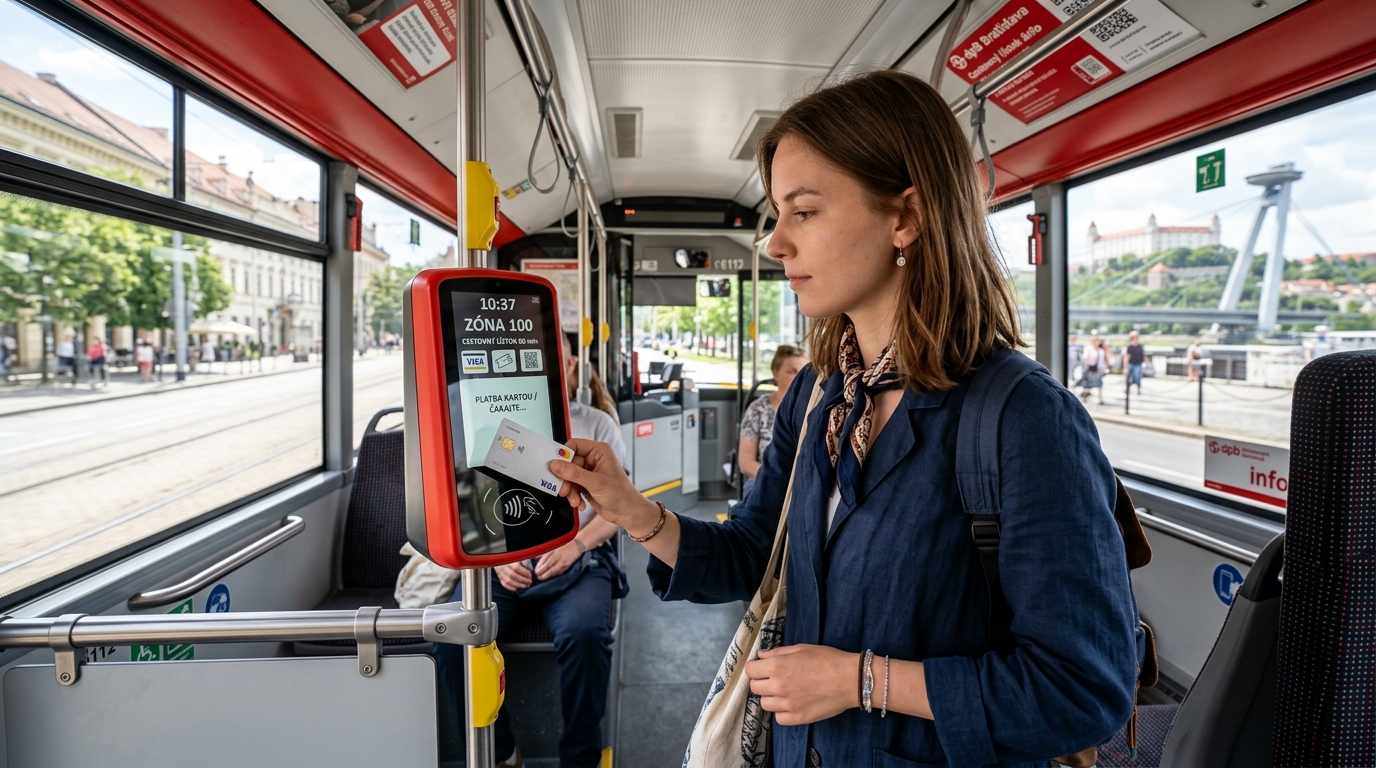
Bratislava Public Transit: Navigating the Touchscreen Traps
Bratislava’s DPB buses, trams, and trolleybuses accept contactless Visa/Mastercard payments. However, tapping a card defaults to a 30-minute ticket (€1.09); for longer durations, you must select them on the screen first. Additionally, you must tap your card again on every transfer vehicle, or face a truant fine.
The public transit validator system operated by Dopravný podnik Bratislava (DPB) accepts contactless bank cards and mobile wallets. While this is highly convenient for a single trip, a common pitfall is the transfer rule. If you transfer to another bus or tram within the 30-minute validity period, you are not charged again, but you MUST tap your card on the validator of the new vehicle. If an inspector boards and scans your card, and the system shows no tap on that specific vehicle, you will be fined for fare evasion even if you are within the 30-minute window of your first tap.
For the absolute cheapest fares, avoid bank card taps and use the official IDS BK mobile app. The app offers discounted electronic tickets, charging just €0.97 for a 30-minute transfer ticket compared to €1.09 via contactless tap or €1.10 for physical paper tickets. Keep in mind that if you purchase physical paper tickets, you must insert them into the orange validators to stamp them the exact second you step on board. Plain-clothes inspectors are frequent and show no leniency to tourists who delay validation.
Tatra Peaks & Rustic Kolibas: Where Cash is the Only Currency
High-altitude mountain huts (chatas) in the High Tatras have no cellular signal or grid connection, making card terminals useless. Cash in Euros (€) is strictly required for food, drinks, and overnight stays, as well as trailhead parking meters and rustic mountain kolibas.
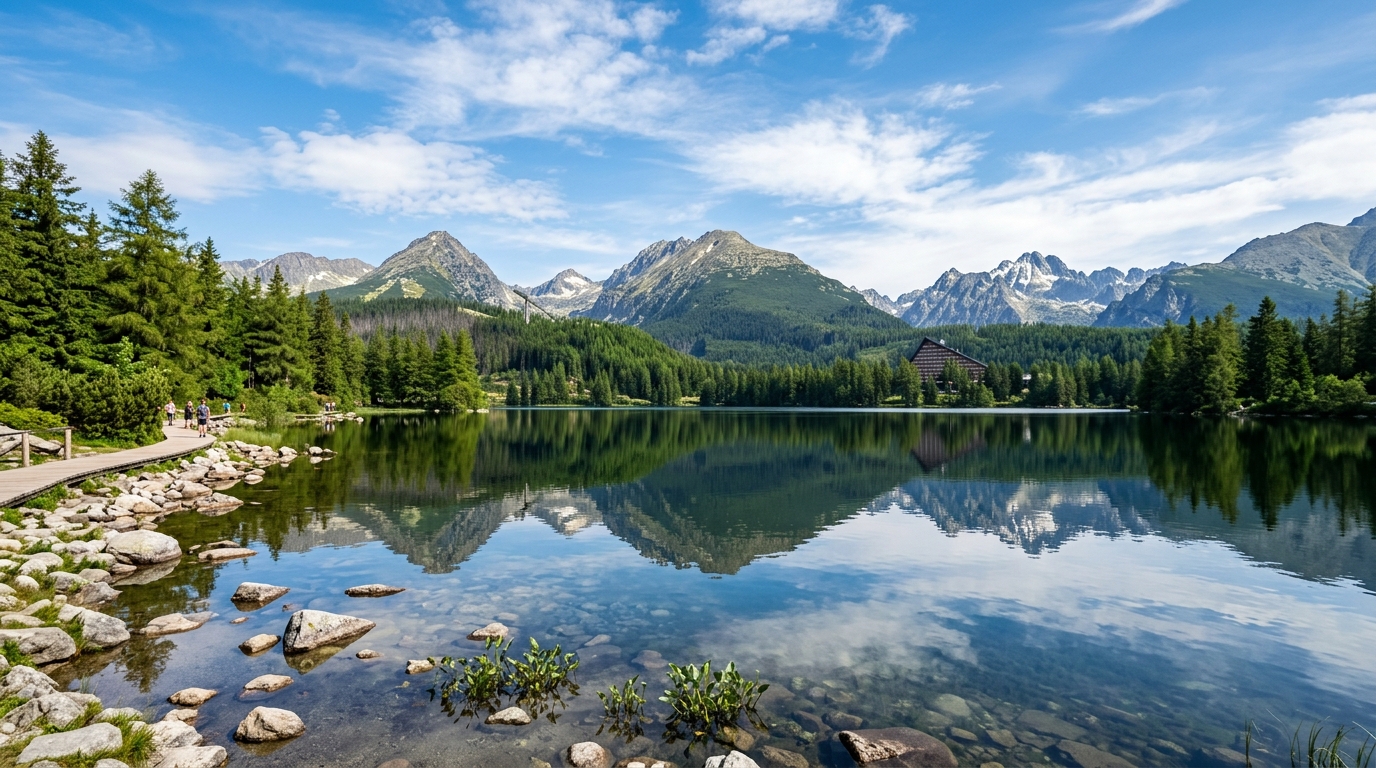
Hiking in the High Tatras (Vysoké Tatry) is a national passion, but digital payments stop at the tree line. Famous high-altitude shelters (chatas) such as Chata pod Rysmi, Téryho chata, and Zbojnícka chata are supplied entirely by human carriers (sherpas) and operate without a connection to the internet or electric grid. If you attempt to buy a hot bowl of lentil soup or secure an emergency bed, credit cards and mobile payments are completely useless. Carry a sufficient stash of Euro banknotes.
When I reached Téryho chata after a grueling three-hour trek up the Malá Studená valley, my phone was at 4% battery and there was zero mobile signal. My travel partner had no Euro cash, expecting to tap-to-pay. If it weren’t for a kind Slovak hiker who lent us a €10 note to buy warm lentil soup, we would have had to hike back down on empty stomachs. High Tatras chatas are strictly paper Euros only—no exceptions.
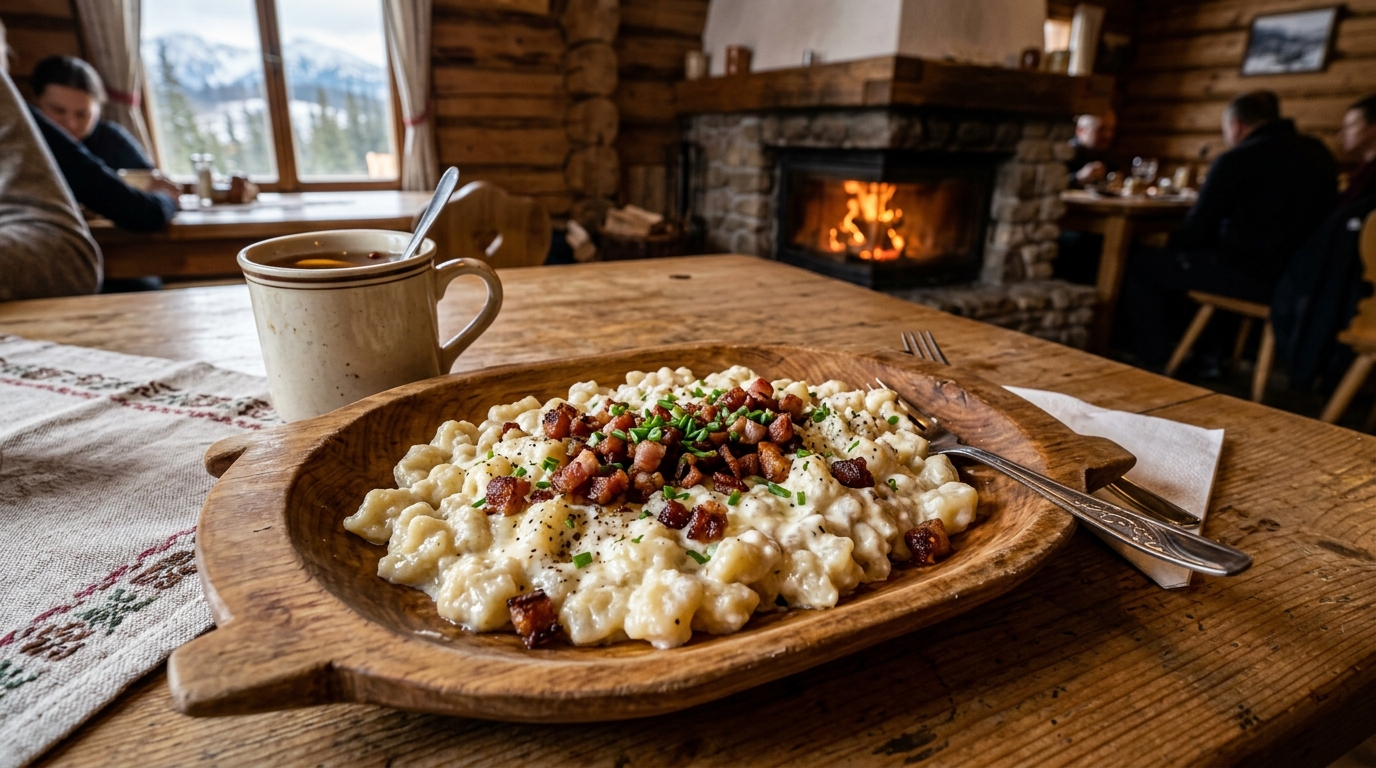
Similarly, traditional rustic farm restaurants (*koliba*) in rural areas serving Slovakia’s national dish, *bryndzové halušky* (potato dumplings with sheep cheese and bacon), often reject credit cards due to poor rural telecom links. Additionally, trailhead parking meters at major spots like Štrbské Pleso or Popradské pleso frequently have offline card readers or only accept physical Euro coins. Keep a bag of coins in your glove box to avoid parking tickets.
Vienna Airport to Bratislava Transit: Navigating the Main Gateway
Since Bratislava Airport (BTS) offers limited direct routes, Vienna Airport (VIE) serves as Slovakia’s primary air gateway. Direct Slovak Lines, FlixBus, and RegioJet buses run VIE to Bratislava in 40–60 minutes for €4 to €8 if booked online.
Most travelers flying to Slovakia land at Vienna International Airport (VIE), located just 60 km west of Bratislava. Standard airport taxis from Vienna to Bratislava charge a flat rate between €60 and €100. However, hourly direct express buses leave from the bus station directly outside Vienna’s arrivals hall. Slovak Lines is the local favorite, offering comfortable seats, free bottled water, and a robust luggage allowance. Book your ticket online in advance to secure fares starting around €4–€8; buying last-minute from the driver can cost up to €15.
If you do land at Bratislava Airport (BTS), bus line 61 departs regularly to the Bratislava Main Railway Station (Hlavná stanica) in 25 minutes for just a standard €1.20 ticket. For ride-hailing, Bolt is the official airport partner and operates dedicated pick-up bays in the P1 parking lot. If you do not have a working mobile internet connection upon landing, you can use the official Bolt “TapBox” interactive kiosks in the Arrivals hall to book and pay for your ride with a credit card, bypassing rank taxis that often charge inflated tourist rates.
💬 What the Travel Community Says (Updated 2026 Insights)
“Don’t try to use credit cards in High Tatras mountain huts. Chatas like Zbojnícka or Téryho chata have no satellite connections, they operate on cash only. Also, if you buy paper bus tickets in Bratislava, validate them the exact second you step on. The inspectors wear plain clothes and show no mercy to tourists.” — r/slovakia travel thread
Frequently Asked Questions About Traveling in Slovakia
How do I buy the Slovakia motorway vignette?
The electronic vignette (e-vignette) must be purchased online at the official eznamka.sk website or through the official eZnamka mobile app before driving on any toll highways. Fines for driving without one range from €150 to €500.
Can I pay with credit card on Bratislava public transport?
Yes, all DPB buses, trams, and trolleybuses accept contactless card payments. Tapping your card charges €1.09 for a 30-minute ticket. You must tap again on every transfer vehicle. For cheaper rates, buy tickets via the IDS BK app (€0.97).
Do High Tatras mountain huts accept credit cards?
No, high-altitude shelters (chatas) like Chata pod Rysmi do not have grid electricity or cellular networks. They accept cash only in Euros (€).
Which mobile network has the best coverage in Slovakia’s mountains?
Slovak Telekom on Wikipedia has the widest and most stable 4G/5G coverage in the High Tatras, national parks, and deep alpine valleys. TravelyData eSIM roams on Slovak Telekom and O2 networks for reliable connectivity.
 Slovakia eSim